Search Our Site
Leerburg 2010 Catalog Weekly Newsletter Newsletter Sign Up Request a Catalog Download Catalog Table of Contents Dog Training Videos New Releases DVD DVD Box Specials FREE Streaming Video Dog Training Equipment Dog Training Equipment Dog Training Books K9 Healthcare Products Web Forum Discussion Discussion Forum How to Register Dog Training eBooks Dog Training Podcasts Affiliate Program Dog Training Articles Articles Question & Answers Leerburg Kennel Our Kennel Current Litters Customer Testimonials Stud Dogs Adult Dogs for Sale Our Kaiserhaus Malinois Dog Training Categories Dog Training Dog Obedience Training Aggression Problems Dominance Problems Dog Fight Problems Puppy Training HouseTraining Problems Feeding Dogs Breeding Dogs Electric Collar Training Schutzhund Training Police K9 Training Leerburg's Top DVDs Your Puppy 8 Weeks DVD Basic Dog Obedience DVD Electric Collar Training DVD Dominant Dogs DVD Raising a Working Pup DVD Bite Training Puppies DVD All 120 Dog Training DVDs How to Order View Shopping Cart Foreign Orders Shipping Charges See Our Horses Request a Catalog Contact Us Meet Leerburg Staff

Bloodhounds

Myth and Fiction

Bloodhound

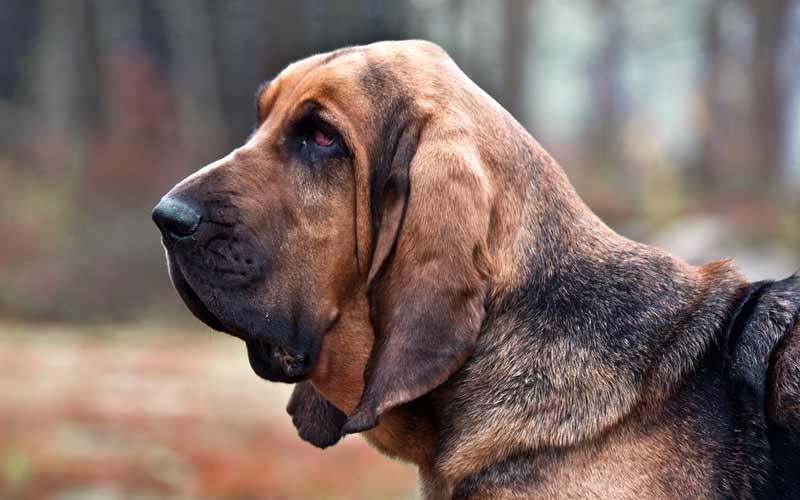
When the average civilian thinks of a tracking dog they picture a bloodhound for one reason, the media. Just as people think of German Shepherds as police dogs the same people think of bloodhounds as trackers. I disagree with the credit this breed is given for its scenting ability, especially when compared to other working dogs. I am not a fan of undeserved repudiations or bad police work, which is why I also don't agree with the claims that many bloodhound handlers (not all) make concerning the scenting ability of this breed of dogs.

Before I wrote this article I talked with a number of friends who are police K9 instructors in North America and Europe. I consider these men experts in the field of training police tracking dogs. I have spent time at the RCMP police dog school in Innesfail Alberta (the finest police tracking school in North America) and at both of the federal police dog schools in Holland (Rotterdam and Nunspeet). To a man, the men I have talked with agree with what I am going to write in this article.

Let me begin by saying that I am not claiming that Bloodhounds can not track. A well-trained bloodhound that has good drive can track just as well as any other breed of working dog. What I am saying is that just because they are bloodhounds does not mean that they can track. Too many beginners (and department administrators) in this business miss that point. They don't understand that "drive, nerves and desire" play a very important part of a dog's ability to be trained to follow a track. In addition bloodhounds cannot perform the superhuman feats that many inexperienced bloodhound handlers claim they can.


Training a Competition Tracking Dog

$65.00+s&h
Training a Competition Tracking Dog DVD


For example:

1- They cannot follow tracks any better than any other good tracking dog.

2- The cannot consistently use a scent article to pick up a track and follow it.

3- They cannot follow tracks on concrete that are a couple of days old in a
downtown metropolitan area.

4- They cannot follow people who have gotten into cars and driven down the
highway.

5- Bloodhounds can not smell human blood or human urine and then scent
discriminate that person from a line up.

6- They also cannot follow a track that is a couple of hours old and then pick
the person they were following from a line up.

I am attaching a copy of a handout, (see the end of this article), that a local bloodhound handler passed out to sheriff's deputies on his department. This document is typical of the claims made by bloodhound handlers. It is also a clear indication of a lack of understanding of the law, a lack of understanding of proven scientific evidence of a dog's scenting abilities and a lack of understanding of safe tactics. I will use this document as an example of the problems I have with a large number (again not all) of bloodhound handlers in this country.

The opening statement of this document is misleading. It indicates that a trained bloodhound has the ability to smell human scent left on an object and then pick this scent from a group of tracks. In other words, this bloodhound handler and many others like him, claim that at the beginning of a track a bloodhound can scent discriminate one track from a group of tracks. Neither I or any of the tracking instructors I talked to believe that any breed of dog can do this. My Dutch friend (Simon Prins) calls this mission impossible.

From a legal standpoint there are holes in the theory of using scent articles. If the handler wanted to use his dog as evidence in a court he would have to demonstrate, through training records, that he started every training track with a scent article. This would not be a problem if he actually did this. His training would have to include cases where the dog was given scent from an article and NO TRACK leads away from the scene. This proves the negative aspect of the dogs ability to select the correct track and make a decision.

Another problem arises when there is no scent article at a scene. How can that handler then show through training records that his dog found the correct track? The answer is he can not.

Every track has it's own characteristics, we call this a track picture. It takes most dogs 50 to 100 yards of following a track to lock on to the track picture of a particular track. Once a trained dog has locked onto a track many can then scent discriminate that track picture from others. Some dogs are better at this than others. But no dog that I have ever seen can consistently scent object and then pick that track from a group of tracks.

Item one on this document, while it does not relate specifically to Bloodhounds, is a concern. It recommends back-up officers stay 20 yards behind the handler. In felony situations, this is too far back. When things turn bad a Bloodhound is not going to protect his handler. If things turn bad and the handler runs up on a man with a gun or even a knife, backup needs to be right behind the handler where he can do the most good.

Lines 3 and 5 and 8 are referring to scent articles. I have already gone though my opinions on this. But in line 8 this handler refers to a foot print as a scent article. It is not a scent article, a foot print is a track. It would not take a smart defense attorney very long to twist things around and make this handler look like he did not understand what he was talking about.

A human scent picture is a combination of skin rafts that naturally flake off the body combined with the scent from footwear and the scent left from a person crushing ground vegetation as he or she steps on it. Dogs can distinguish between tracks left by people of different weights. (The Germans have done experiments to confirm this effect). There is no documented scientific evidence that human blood or human urine has individual scent characteristics, nor has there ever been a study of this. Yes, it would add to the scent picture, but there is no evidence that the smell of blood is unique to each person. Therefore, to say that Bloodhounds can use blood and urine as scent articles blows gapping holes in credibility for potential court testimony.

Scent identification, in it's simplest form is the term used when a dog is allowed to smell an object and then identify that human scent on that object by indicating on a second article which contains the same scent. This second article is picked from a lineup of identical articles. The Dutch have worked on scent discrimination for years and are considered the leaders in this field. I have written articles on my web site about their work. The science behind the Dutch training has been confirmed by Dr. Adee Schoon. Dr. Schoon did her PHD thesis on a dog’s ability to scent discriminate. She is the person responsible for getting the Dutch courts to accept evidence on a trained dogs ability to scent discriminate. I have a English copy of Dr. Shoon's thesis (sorry I can not hand out copies, it is to thick). Her conclusions are based on solid scientific experiments, not seat of the pants guesses (which is what bloodhound handlers base many of their claims on). The Dutch has proven that the scent from human hands is different than the scent from the body of a human. So where does this leave the bloodhound people with their scent articles? I don't know.

What the Dutch have found is that not every dog can scent discriminate. They have also found that many dogs make excellent tracking dogs, but the same dog will not do well in scent discrimination. So the Dutch do not use the same dogs to track and do scent discrimination. The interesting thing is that Bloodhound Association expects everyone of their bloodhounds to scent discriminate to get certified by their organization. Who knows, maybe they have reinvented the wheel.

Now lets talk about the law. The fact is that tracking evidence has a miserable track record in a number of state courts, (in many cases because of poor police work and false claims). The state of Minnesota does not accept tracking evidence. The sate of Illinois has a case law that holds Bloodhounds as unreliable. Indiana says that evidence is too uncertain, Iowa calls it weak and uncertain, Montana goes further and calls it "incompetent" and Nebraska calls it "unsafe."

In the attached document the handler continually refers to concerns about protecting the scent, concerns about contaminating the scent with flares and auto imitations. The problem with this is that any expert knows that we can not mask scent. Once scent is there we are not going to take it away. The wind may blow it away, the sun may burn it up but nothing we do at the scene is going to take it away. We may add additional scents to it but a good dog is going to be able to track through the problems once he has acquired the scent picture. To write these things down only gives defense attorneys ammunition to attack and distort a handler’s testimony. The name of the game is to throw doubt upon the jury.

Any law enforcement office should question the claims that are made by bloodhound tracking dogs handlers. Once again we are not saying they can not track, we are saying they cannot be selective about the people they track. If a dog is placed on a track and demonstrates (through training records) that it will stay on that specific track, then dogs are capable of some pretty amazing things. But being able to run line ups and follow cars is crazy.

Bloodhound
If you want to read some emails I have gotten on this article click here.


Comment:

I am a bloodhound handler and I think that I understand what you mean. The problem is basically the same with just handlers of any breed. Some handlers will just flat out lie about their dogs ability. My bloodhound can track very well, he even has a little aggressive side to him, but I know his limitations. I also, realize that if I tell you he can do something, to keep me from looking like a damn fool, he better be able to do it. Furthermore, if the handler lies and says the dog can do a job, and the dog was not able to do the job from the beginning then we as LEO have wasted very valuable time. For example I was asked to run a track in town that was about 1 and 1\2 hours old, I refused because I knew that my dog would not do it. Once again, I fully understand your article.

Craig

Response:

There should be more handlers like you. I give you credit and I also say that there are plenty of GSD and Mal handlers with the same problem.

Ed Frawley


The following is a handout from a Bloodhound handler that was given to Deputies on his Sheriff’s Department. I have removed the handler’s name and the department’s name.

USE OF BLOODHOUNDS FOR MAN TRAILING

Basic Scent Knowledge

The properly trained bloodhound is a scent-specific K9. Human scent, like fingerprints, is unique to a person. If the properly trained Bloodhound is given one person’s scent, that is who the K9 will trail.

Crime Scene Protection

When a K9 team is called out; the following procedures shall be utilized to maximize the opportunity for success:

1. An armed, sworn officer shall be assigned to the K9 team at all times during a criminal investigation. When following K9 and handler the back up officer should stay about 20 yards behind.

2. The primary officer or supervisor in charge shall take immediate steps to limit the number of personnel in or about the crime scene.

3. It is imperative that all personnel arriving at the scene remain at the scene until the arrival of the K9 for scent identification.

4. The primary officer shall protect the crime scene from contamination and preserve possible scent articles.

5. Any article that has been touched by a subject is a potential scent article and must not be touched by anyone or anything prior to the arrival of the K9.

6. The primary officer must ensure that all automobile engines at the crime scene or any other place the K9 will be used are shut off in order to avoid contaminating the scent.

7. The scent articles must be left where they are found until the arrival of the K9 team. If the scent article must be picked up, a stick, wire or tongs can be used to place the article in a clear, non-deodorized, plastic bag.

8. Footprints in the dust or mud can also be used as scent articles, and must be protected from contamination.

9. The officer at the scene should avoid the use of flares to prevent scent contamination.

Scent Article

I prefer to collect my own scent articles and will arrive prepared to do so if necessary. A scent article may be any human body byproduct such as blood, urine, saliva, etc. A scent article can be any item which has been worn, handled, or come in contact with the subject. This would include car seat, steering wheel, clothing, personal items (wallet, toothbrush, hairbrush, tools, car seat, footprints, victims clothing touched by suspect, etc.) Certain items are more desirable than others as scent articles. These include upper body clothing, shirts, underwear, and jackets. Human scent is very fragile. It is very important that the officer collecting the scent article does not contaminate it. Treating the item as if 'toxic,' it is wise to use rubber gloves and move it at arms length. Small items should be placed in Ziploc type bags. Larger items are placed in new, clear, trash bags and sealed.

Scene Preservation

In order to give the K9 team the best advantage to develop the missing persons' trail, the following guidelines are suggested:

1. The K9 needs to start at the actual crime scene and be scented on the suspect or missing person. If officers have been at the crime scene, they need to stand by so the K9 can eliminate their scent.

2. Protect the place last seen from unnecessary contamination. Keep officers and spectators away from this point until arrival of the K9 team.

3. Do not park running vehicles where exhaust fumes will saturate the starting point.

4. Provide the best scent article possible under the circumstances. If obtained and handled according to the guidelines, it will improve the K9 teams' chances

5. In cases where a scent article is not available, a K9 team can still provide valuable assistance to a search by using the scent left at the scene. (This type of scenting has been successful in many cases due to the suspect's scent being so much stronger with chemical changes).


Training Tracking Dogs for Police or S&R Dogs

$65.00+s&h
Training Tracking Dogs for Police or S&R DVD


Testimonial

November 1, 2005

Ed, I am a handler and trainer from a Canadian city of 850,000.

I have been involved in training tracking dogs for 15 years. I have travelled all across North America learning from many great dog trainers. The highlight of my tracking training has been the 4 months I spent with the RCMP in Innisfail Alberta.

I have attempted to research the Bloodhound myth on my own, attending blood hound seminars in the United States and even begining my own research with the training of a Bloodhound dog here myself.
I specifically went to your web site in order to see if you had any Bloodhound tapes showing some of the unbelieveable feats that many Bloodhound trainers have made.
I was surprised to see your article on the Bloodhound myth. I have read your entire article and my experiences echo exactly what you have said.

I can tell you that Canadian Police have a very good reputation (thanks mostly to the RCMP) for their tracking ability. I can tell you that there are NO POLICE agencies in Canada that are using bloodhounds. That fact it self is telling.

Although I have not seen it personally, I am sure that the right Bloodhound has the ability to track as good as a German Shepherd, Malinois or Lab.

Unfortunately the stories told by most Bloodhound experts and in most Bloodhound books of: week old tracks and longer, or the tracking of suspects in vehicles, only serves to discredit us all. Convincing courts on the use of the "Scent Transfer vacuums" etc, makes a mockery of all dog trainers. Equally harming is their claims of scent discrimination. We all know it is possible and has been proven in the controlled conditions of a labratory. It is however NOT possible following the tracking training done even in our 16 week training courses, which are pretty much mandatory in Canada.

The most surprising part of your article was the responses that you received as a result. I have run into the same mentality with the Bloodhound breeders that I have spoken to, unfortunately none of them have been able to show me any proof to back up their claims.

I give you credit for standing up and telling the truth... It is unfortunate that there are so many people hanging on to the Bloodhound myth, because they are unfortunately hurting the legitimate potential of the breed.

I am known for having an open mind and have gone to great lengths to convince myself of the potential of the Bloodhound breed unfortunately I have so far been disappointed every time. I even watched your tracking tapes from Holland with some skeptism even though my friend Kevin Sheldahl was there. The impressive point your tape shows however is the dog tracking beautifully, nose glued to the ground over hard surface areas. I was hoping that you would have had an equally impressive training tape with Bloodhounds. Maybe you will get invited now, to tape some of their amazing claims and then you can work to convince the rest of us.

Thanks for your article.... the responses you received have further convinced me of why the Bloodhound myth continues to this day....

Cliff Samson
Winnipeg Police Service
President of the
Canadian Police Canine Association


Testimonial

October 31, 2005

Ed,

I am a Salt Lake City Police K9 Officer-Bloodhound Handler. I have done this successfully for 6 years plus. I agree with majority of your statements and beliefs. When I first started training my bloodhound I believed it all!!!!!! After putting endless hours, weeks, years, I became depressed thinking that there was something wrong with my dog or me. However I kept my training basic enough that I produced a great tracking bloodhound. I still thought I was doing something wrong because I could not track that several hour old track through downtown. Although my dog was finding lots of bad guys just from being able to deploy on reasonable cases where criminals fled. This is what kept me going, I just thought oh well he is not a miracle worker like those other bloodhounds but he sure catches a lot of criminals.

I began going to bloodhound seminars and started to see through the bull-shit. Every time I would go, it was clear as day that my bloodhound was the best dog hands down. I would ask these other handlers how many bad guys have you caught, and all of them gave similar answers on how they produce investigational leads, but most of them have not had any or very many actual finds. While, my bloodhound cannot produce miracles but, he sure catches lots of bad guys. (30-40 successful tracks a year). I also fully admit I lose more bad guys than I catch because I deploy in situations where most of the time I have no containment.

I guess what I am trying to say is I fully understand your frustration. It frustrates me even more because I fully believe that a properly trained bloodhound is the best tracking tool out there. The problem is that these other people are destroying the bloodhounds reputation. I am doing everything I can to keep it real. You can ask any law enforcement agency in my area about my bloodhound and me and I am confident they will say nothing but positive things about us. This is because I keep it realistic and produce results/bad guys.

Again, I agree with you for the most part. The only thing I do not agree with is that I have never seen any dog track as well as my bloodhound. My results on how I catch bad guys speak for themselves. My dog is very focussed and can track block after block on cement through neighborhoods for very long distances. Any other dog (mostly shepards and Mals) usually get distracted with contamination or shut down after 1 or 2 blocks and begin taking the handlers for walks. Do not get me wrong I have seen them do wonderful tracks, just not in difficult conditions like with my bloodhound. Also, there are plenty of times where my dog and I lose the track quickly for unknown reasons. But overall the other breeds seem to have a disadvantage when it comes to tracking.

Because of our success we are getting more bloodhounds in my area and I am doing my best to keep these handlers on the same page as me and not to buy into the bull-shit. I am glad you spoke out!! Although I am asking you not to post my department or my name because I know these other crazy bloodhound handlers and I do not want to be blackballed from buying a puppy when I need another one.

Thanks,
Officer Serio


TESTIMONIAL:

Hello Ed.

I am a Police Sergeant with the Essex Police Dog unit in the UK. We have for the last nearly 3 years been trailing Bloodhounds using the Scent Article Method.

I have recently completed a 6 month assessment concerning these dogs and, on recently finding this article, was amazed to see that I have arrived at virtually the same conclusions as the author.

I am particularly interested in finding out a bit more about the weight no longer put on this type of resource by the State of Illinois, and other areas.

How are trailing dogs viewed overall in your country? Does your legislation cover the whole country, or is it like the USA, where it seems to vary state to state?

I have attached the case law as it applies to all tracking dogs in the UK, which I think you may find interesting!

Our independent expert, (who happened to be the project pioneers buddy), comes from Illinois.

Can you give me a lead by way of case names where the Bloodhound evidence was challenged for them to arrive where they are now?

I have read a number of your articles and find them very informative, thank you.

Pat Kirby


Training Police Tracking Dogs

$65.00+s&h
Training Police Tracking Dogs DVD


Article from the Times Law Reports - 11/11/94

Criminal Evidence - Admissibility -
Tracker Dog Evidence

Court of Appeal
Regina v Pieterson
Regina v Holloway

Before Lord Taylor of Gosforth, Lord Chief Justice, Mr. Justice French and Mr. Justice Longmore. [Judgment November 8]

If a dog handler could establish that the dog had been properly trained and over a period of time, the dog’s reactions indicated that it was a reliable pointer to the existence of a scent of some particular individual, the evidence could properly be admitted in a trial.

Safeguards which were to be emphasized were that a proper foundation had to be laid by detailed evidence establishing the reliability of the dog in question and the care they needed to take a look with some circumspection at evidence of tracker dogs, having regard to the fact that the dog might not always be reliable. and could not be cross-examined.

The guidance was given when the Court of Appeal dismissed appeals by Matthew Pieterson, aged 23 and James William Holloway, aged 19, against conviction at Oxford Crown Court (Judge May and a jury) on a joint count of robbery contrary to section 8(1) of the Theft Act 1968 in that they together with another unknown on May 31, 1993 robbed a woman and a man, in the Royal British Legion Club at Marston, Oxford, of some £5,800 and a litre bottle of brandy, which they put into a holdall. They were sentenced to five years imprisonment and five years detention in a young offender’s institution.

Within minutes of the robbery a woman police constable handler of Ben, a Thames Valley german shepherd police dog, searched an area surrounding the club and Ben picked up a track where persons had recently walked from the club into an alleyway, and he indicated a strap.

The woman in the club immediately identified the strap as having been part of the holdall, which, with Holloway’s name in it, was later found by police in Pieterson’s flat with a 1.5 litre brandy bottle nearby.

Mr. Rupert Pardoe, assigned by the Registrar of Criminal Appeals, for Pieterson, Mr. Gareth Morley, assigned by the Registrar of Criminal Appeals, for Holloway. Mr. Neil P. Moore for the Crown.

THE LORD CHIEF JUSTICE, giving the judgment of the court, said that both appeals were substantially based on the contention that the judge was wrong in his ruling in each case to admit evidence concerning the tracker dog’s actions in following the trail and arriving at the strap in the alleyway.

The submission was that the evidence was, in effect, or certainly analogous to, hearsay because there was only the handler’s evidence of the actions and reactions of the dog, which could not be cross-examined.

Alternatively it was submitted that the evidence with regard to such tracker dogs was unreliable, that a dog had a will of its own and might act mischievously or even without that, might act in a way inconsistent with the Pavlovian reaction sought to be induced in the dog by its training.

There was no authority hitherto in English law as to admissibility of evidence concerning a tracker dog. Mr. Pardoe drew to the judge’s attention and to that of their Lordships a number of authorities for other jurisdictions.

His Lordship considered the South African case of R v Trouped (1920 SALR (AD) 58) which held that evidence concerning the activity of a tracker dog was inadmissible. No South African case overruled Trouped had been found.

His Lordship considered also R v White ([1926] 3 DLR 1) in British Columbia, which was overruled in R v Haas ((1962) 35 DLR (2d) 172) where a five-judge court held that, once the qualifications of a tracking dog to follow a scent and that of his trainer to handle the dog has been established, evidence of tracking the accused by scent from the scene of crime by such a dog was admissible on the trial of the accused and the only question concerning the weight to be given to such evidence.

Other decisions included R v Lindsay ( [1970 [ NZLR 1002), followed in the R v McCartney ( [1976} 1 NZLR 472), where it was stated that the judge had at least to draw the jury’s attention to the nature of the conclusions to which they were asked to come on the tracker dogs evidence and the risks of arriving at that conclusion from evidentiary material which had not to pass the acid test of cross-examination.

In the present case the judge held that, provided the proper foundation was laid for the reliability of the dog in question to be able to follow a scent by reason of it’s training and of experience, then the evidence should be admitted. Their Lordships, as a matter of principle, agreed with the ruling of the trial judge and they followed the approach, which had been adopted in the cases cited from jurisdictions other than South Africa.

In their Lordships’ judgment, if a dog handler could establish that the dog was properly trained and over a period of time, the dog’s reactions indicated that it was a reliable pointer to the existence on a scent of some particular individual, then that evidence should properly be admitted.

However, of course, it was important to emphasize the safeguards:

1 A proper foundation had to be laid by evidence in detail establishing the reliability of the dog in question.

2 The judge had, in giving his direction to the jury, to alert them, as mentioned in the cited cases, to, the care they needed to take to look with some circumspection at evidence of tracker dogs, having regard to the fact that the dog might not always be reliable and could not be cross-examined.

Their Lordships did not agree with Mr Pardoe’s submission that he had given inadequate warning to the jury. He had dealt with the matter succinctly and had given them sufficient warning about the care they needed to take in examining evidence on the tracker dog.

Another point taken by Mr. Pardoe concerning the evidence establishing the dog’s credibility. When the judge had given his ruling on the point of principle he said he would require to have from the prosecution evidence to show that the dog was sufficiently reliable for it’s activities to be led in evidence. The prosecution produced a supplementary statement from the dog’s handler.

The question for their Lordships was whether the statement was sufficient account of the training and reliability of the dog, Ben, to render the evidence concerning the dog admissible for the jury.

The witness said: “I have been a dog handler in the Thames Valley police since 1985. I have worked with police dog Ben for 18 months following the departure of Ben’s previous handler and the death of my previous police dog. Ben is a German shepherd and will be eight years old in December 1993. He commenced his training at a year old in the Thames Valley police force and had six and a half years experience of the work required from him in May 1993.”

In their Lordships’ judgment that statement was insufficient. It gave no account of the nature of the training he had been given or of the reliability of the dog, or of any tests that had been carried out in control conditions to see whether the training had produced a reliable response from the dog.

Accordingly, bearing in mind the scrupulous care which had been set to be necessary before such evidence could properly be adducted, their Lordships did not think that the foundations had been properly laid in the present case. To that extent, therefore, that evidence ought not to have been admitted, and there had been an irregularity. Nevertheless, in views of other evidence about the strap and bag, the irregularity was not material and other grounds of appeal failed and the appeals were dismissed.

Solicitor: Crown Prosecution Service, Reading.


Article from the Star Tribune - 1/5/2003

Bloodhound handler's credentials questioned in search for missing men

by Randy Furst

Experts are questioning the usefulness of a bloodhound handler from Milwaukee who has volunteered to help two families search for their missing sons in Minnesota.

Penny Bell, 54, has claimed responsibility for several successful searches. But bloodhound experts doubt her contention that her dog, Hoover Von Vacuum, can pick up a scent more than two months after two young Minnesota men disappeared.

Chris Jenkins, a 21-year-old University of Minnesota student, disappeared after leaving a downtown Minneapolis bar on Oct. 31; Josh Guimond, 20, was last seen Nov. 9.

He disappeared from St. John's University in Collegeville, Minn. Bell said she volunteered her bloodhound to help Jenkins' father, Steve Jenkins, after he spoke on TV about his son. She has since joined the search for Guimond.

William Meyer
Authorities so far have established no connection between the cases. Bell has taken Hoover on searches for about five years. She said that about a month ago he tracked a scent to the westbound entrance ramp to Interstate Hwy. 94 at W. Broadway in Minneapolis.

Because some people have speculated that the disappearances of Jenkins and Guimond are connected, and I-94 goes to Collegeville, Bell went with Steve Jenkins and members of Guimond's family to the St. John's campus last Sunday. There, the dog followed what Bell said might be a scent to St. John's Abbey. But abbey officials refused to let the dog into the monastery. Bell and her dog returned to St. John's on Saturday to search the abbey and other buildings, this time with the collaboration of the Stearns County Sheriff's Office, which was not involved in her last search.

Detective Dave Hoeschen said he watched her with the dog Saturday and said he has no confidence in her work. He said that on a couple of occasions she pulled the dog in the direction she wanted it to go rather than letting the dog lead, which is how a search dog should be handled.

Tracking scents
Experts question whether a bloodhound can track a scent much older than a week.

"The longest fresh trail on a human scent that I would attempt realistically is seven days with a hound," said Ellen Ponall, president of the North America Search Dog Network, an international organization. "I would realistically not give the family or the police any hope."

Asked about following a seven-week-old scent, Jerry Nichols, president of the Law Enforcement Bloodhound Association, headquartered in Denver, said, "I don't know any dog, any credible dog . . . that can do that. . . . The best chance is within the first 48 hours. After that chances diminish greatly because of time, and because of the elements."

Bell insists that it's easy to track much older scents. "I've done it over and over and over again," she said. She said her dog has tracked a scent that was two years old.

Dogs often are used in searches, frequently on a volunteer basis, but some fire and rescue personnel familiar with Bell's work criticize her methods, training and motivation.

"The dog does not have a clue," said John Zautke, a battalion chief with the Milwaukee Fire Department. He has instructed police to keep her away from search scenes, where she shows up uninvited. He said she and Hoover contaminate sites.

"She wants to get her picture in the paper," said Zautke, previously director of Milwaukee's fire rescue team. "The more she sees her name in the paper or on the news, the bolder she gets."

Bell disagreed. "I have never sought out the news," she said. Bell, a part-time data-entry technician, said she trained Hoover herself after attending about a week of seminars some years ago. She said she's also learned from television shows, including "CSI: Crime Scene Investigation." Hoover has no accreditation.

Most states, including Minnesota, don't require accreditation. But Julie Cramer, director of Great Lakes Search and Rescue K-9 Inc., near Milwaukee, said it's considered important. She said she is accredited by two national organizations and has passed a written exam. "You have to travel to seminars and workshops, and you have evaluators or master trainers who observe the dog through prescribed testing and exercises." The dogs and handlers pass or fail on the basis of the dog's performance."

Bell defended her methods. "Basically, bloodhounds don't need any training -- it is natural instinct," she said. "I believe bloodhounds should not be certified. . . . Why should I be teaching my dog something that it does naturally?"

Search and rescue experts say handlers need to be able to prove that their bloodhound is credible if they have to testify in court. Bell said she has never testified.

She said she has been praised by officials for finding bodies in Oconomowoc and Muskego, Wis., near Milwaukee.

John Ludwig, fire chief in Muskego, said Saturday that Bell's dog came within 10 feet of finding the body of a boy who drowned in a lake, but that that was only about four or five hours after the accident.
On another occasion, he said, the dog failed to track two boys who ran away and eventually returned home.

"I think the dog should have found the trail home that night, but it didn't," he said.

Bell also cited a 1998 case in which she said Hoover found a body in the Menomonee River in the Milwaukee area.

Zautke, the Milwaukee battalion chief, said Bell had nothing to do with finding that body. He said it was thought to be along a 2-mile stretch of river. After it was discovered, Bell told reporters that Hoover had found it, Zautke said.

"Not even close," he said. "She said the dog pinpointed it. This dog stopped every 10 feet along there and drank some water. We have some real good search teams here, and they didn't want anything to do with her." The fathers of Chris Jenkins and Josh Guimond still believe in Bell. "People don't want to believe it -- that it's an extra-special dog," Brian Guimond said.

Steve Jenkins said he has spoken with two families in La Crosse, Wis., who spoke highly of her searches.

Bell is not being paid for her work involving the two missing young men, but she said Steve Jenkins has insisted on paying her expenses.


Hard Surface Tracking
It's Not Impossible

$39.00+s&h
Hard Surface Tracking DVD


The Case of the Dog That Couldn't Smell Straight
No evidence, no problem for cops in case against James Ochoa
by R. SCOTT MOXLEY
Orange County Weekly
November 4, 2005

Tony Rackauckas' personality swings wildly between wooden and stiff, but ask Orange County's top prosecutor about the case of the canine catastrophe, and Rackauckas comes alive.

It was 1996, and Rackauckas, then a superior court judge, presided over a trial involving the brutal murder of an Irvine woman during a burglary. He allowed the testimony of Larry Harris, a police dog handler who claimed his bloodhound fingered a 17-year-old high school student, Earl Henry Rhoney, as the killer.

Except for Harris and his scent-sniffing dog, Duchess, there was no physical evidence that tied Rhoney to the crime. After a guilty verdict, Rackauckas shocked the district attorney's office. He declared that Harris lacked credibility and overturned the jury's decision. Without Harris' claim, the DA's case collapsed. Rhoney was freed after spending 42 months in jail.

According to Rackauckas, it was "crystal clear" that Harris had dragged Duchess in Rhoney's direction during identification, that Harris had used a questionable homemade device to allegedly capture Rhoney's scent from the crime scene for the dog, and that the retired McDonnell Douglas engineer-turned-cop-aide was as "biased as any expert this court has ever seen."

After he became district attorney in 1999, Rackauckas described the case for the Weekly as "ridiculous."

The DA apparently has amnesia. On Nov. 7, Rackauckas' office is scheduled to prosecute James Ochoa, a 20-year-old Buena Park man, for an armed robbery/carjacking in May. Like the Rhoney case, there is no physical evidence that ties Ochoa to the crime -- except for the controversial work of Larry Harris and his newest bloodhound, Trace.

But the case against Ochoa, a dirt-poor Latino who has been locked in a maximum security cell at Theo Lacy Jail for more than five months, isn't just the result of work by the 75-year-old Harris. It's a catalog of sloppy police work, callous prosecutors, indifferent judges and a brazen contempt for exculpatory evidence. The story would be comical if the consequences weren't so dire. An armed robber likely walks free today while Rackauckas' deputies are determined to send Ochoa to prison for the next 50 years.

* * *

At 12:30 a.m. on May 23, two men talked in a parking lot near the Ozz Supper Club in Buena Park. A bandit wearing a black baseball cap and gray flannel shirt approached, lifted his shirt to display a handgun and said, "Turn around. Don't look." An important fact: the man wore no gloves. He demanded their wallets and the key to a blue 2002 Volkswagen Jetta that belonged to one of the victims. After jumping in the car, the bandit pointed the gun at the terrified men, made a threat and drove away with $600 in stolen cash.

In his haste, the bandit left the victims with their cell phone. They immediately called 911, and three minutes later officer Kevin Gano arrived at the scene. The victims -- waiters who were 20 and 24 years old respectively -- described the bandit as a thin, twentysomething, 6-foot, 1-inch or 6-foot, 2-inch "half-Hispanic, half-white" male on drugs and suffering from facial acne. Asked to describe the color of the bandit's cap, one of the men said he didn't get a good look because "I was just looking at his gun." Neither victim volunteered any description of the bandit's hair, which was hidden underneath the baseball cap. Gano pressed on. Could the bandit's head have been shaved? "Yeah, maybe," they guessed.

This weak response led Gano and the Buena Park Police Department to a half-baked conclusion that the bandit was Ochoa, who stands 5 feet, 11 inches, shaves his head, lives a few blocks from the crime scene and had been released from prison a month earlier after serving time for a drug possession conviction. Eighty minutes before the robbery, Gano had found Ochoa sitting on his bicycle talking to two teenage friends. The officer frisked Ochoa, made an official report of the contact and ordered him home.

Ninety minutes later, Gano believed he'd quickly solved the robbery. Officers showed the victims three mug shots: two teenagers who didn't fit the suspect's description and Ochoa. The victims said Ochoa looked "like" the bandit but also noted it was not an identical match.

In the meantime, police activated the stolen car's LoJack anti-theft system. The Jetta had been abandoned two blocks away, just 50 yards from Ochoa's house and in the heart of an area dominated by the Eastside Buena Park gang, which police say answers to the Mexican Mafia. In the car, police discovered the bandit's baseball cap, shirt, the gun -- a BB pistol, it turned out -- and the stolen wallets minus the cash. Harris and his dog, Trace, were called to the scene in hopes of getting a scent for tracking.

Police would later report that Trace went "directly" to Ochoa's front door; that would turn out to be untrue. At 5:50 a.m., officers raided Ochoa's house, awoke his entire family, found the suspect barely clothed, placed him in handcuffs and stood him in his front yard. No evidence of the crime was found during a search. The victims were asked to identify the suspect again. This time -- almost six hours after the crime -- both were "positive" it was Ochoa who robbed them, according to police.

Police arrested Ochoa, and he underwent a high-pressure, two-hour interrogation by Detective Frank Nunes. Nunes tried to trick him repeatedly, but Ochoa adamantly proclaimed his innocence dozens of times. He even offered three times to take a polygraph test. After learning that the victims said the bandit had been on drugs, Ochoa volunteered to take a drug test. Nunes scoffed. He already had an airtight case, he said, and just wanted a confession. Ochoa asked why police were so certain.

"We have this amazing tool in police work called a bloodhound," Nunes said. "These dogs are 100 percent accurate . . . and the dog mapped a perfect track to your house without us saying a word."

"So you're gonna put me in jail because of a dog?" an incredulous Ochoa replied.

Nunes, who has recently been promoted to sergeant, then told Ochoa that his DNA and fingerprints eventually would be found in the stolen car and on the baseball cap and shirt the bandit left behind.

"I'm gonna be real mad [if DNA and fingerprints are found]," Ochoa told Nunes. "Because I know I was in no car and I know I didn't have no DNA in no car, and if I do, it's gonna be like some UFO kind of stuff, you know what I mean?"

"Ain't no UFOs in Buena Park, man," the detective replied.

* * *

Police and prosecutors have difficult jobs routinely dealing with society's sociopaths, but they also have an ethical obligation to either make a solid case against a suspect or keep searching for the guilty person. Law enforcement officers privately acknowledge the case has "huge issues." These problems include:

-- Orange County Sheriff's Department forensic scientist Danielle G. Wieland "eliminated" Ochoa as a possible source of any DNA or fingerprints found in the stolen car, on the baseball cap or shirt worn by the gloveless bandit, or on the gun he carried.

-- Strongly suggesting another man was the bandit, tests linked DNA found on the baseball cap and the gun to the same unknown individual.

-- A fingerprint found on the stolen car's gearshift knob did not match Ochoa or the victims, who said nobody else drove the vehicle.

-- Police led the victims to originally identify Ochoa after showing them two photos of individuals who had no physical characteristics in common with the bandit.

-- Officers compounded the error with a second contaminated identification after they'd already shown the victims a picture of Ochoa.

-- Police now downplay the significance of the victim's first description of a "half-Hispanic, half-white" bandit, which does not match Ochoa's facial features.

-- Although the victims said they saw no tattoos on the bandit, Gano nevertheless filed a report claiming that they'd told him about three black dot tattoos on the man's left hand. The officer may have consulted police gang intelligence files that mistakenly indicate that Ochoa has such a tattoo.

-- Police disregarded the statements of three relatives who insist they were eating and watching television with Ochoa at the time of the 12:30 a.m. crime, instead deducing that Ochoa must be guilty because a younger brother gave conflicting statements about Ochoa's whereabouts at 8 p.m.

The weakness of the case is only underscored by Harris' pivotal role in the arrest. Though police claim that Harris' bloodhound, Trace, ran directly to Ochoa's front door, the real story is far less incriminating. In truth, Trace twice ran by Ochoa's residence without noticing. According to a police report obtained by the Weekly, it wasn't until Harris pointed the dog back toward Ochoa's house that she allegedly ended her hunt there.

"This was the only door she showed any interest in all evening," Harris wrote. "It was later confirmed that the subject that lived at that location was involved."

There are three problems with Harris' claims:

-- His description of the dog's scent tracking run of about 50 yards to Ochoa's residence doesn't explain why police logs show it took Trace 63 minutes to find the house.

-- Oddly, the cops -- satisfied that the dog allegedly tracked a scent to Ochoa's front door -- let Harris and Trace leave without identifying Ochoa.

-- Harris claims his dog's identification was solid but failed to note a breach of FBI guidance regarding sniffer dogs: instead of keeping the stolen-car crime scene clean, police swarmed it. Those same officers later surrounded Ochoa's home -- and were followed by Trace. It's conceivable, in other words, that Trace had done nothing more than follow the scents of officers she had first picked up around the stolen car.

Four days after I notified the DA's office that I was investigating the Ochoa case and would write about it, Deputy District Attorney Christian Kim declined to comment. But after an Oct. 31 internal DA meeting, Kim's boss, Assistant DA Marc Rozenberg, announced in a telephone interview with the Weekly that the government had decided not to call Harris as a witness during the trial.

Rozenberg said he believes in the case and dismissed questions about the lack of Ochoa's DNA on the clothing and in the stolen car: "In my mind that's not conclusive evidence one way or the other." Regarding crime lab evidence that a person other than Ochoa and the victims touched the stolen car's gearshift knob: "That doesn't necessarily mean anything either."

* * *

DA Tony Rackauckas

Scott Borthwick reads the lack of evidence this way: his client is innocent. A former Modesto public defender, the 32-year-old defense attorney now works with the Law Offices of Meyer & Villalobos in Santa Ana and has taken the case pro bono.

"This case is all about an abuse of power," said Borthwick. "My client has been locked up in jail for five months for a crime I believe the DA's office should know he didn't commit."

But instead of dropping charges as exculpatory evidence was uncovered after the arrest, Rozenberg and Kim added gang enhancements against Ochoa during a preliminary hearing. If an Orange County jury finds him guilty, the enhancements add decades more behind bars.

On Aug. 24, Superior Court Judge John McOwen heard Buena Park gang cop Mike Riley's assertion that Ochoa is a member of a gang and that the May 24 robbery and carjacking was done for the gang. Riley’s proof? The officer said Ochoa grew up in an area dominated by the gang, wears oversized clothes, plays with two teenage friends who are suspected gang members and allegedly "once" visited a gang hangout.

Borthwick asked Riley why he was certain the crime was gang-related.

"I know that people that I spoke to in the community that surrounds that area were aware that a member of the Eastside Buena Park [gang] had committed a carjacking in that area after the fact of that via the grapevine," testified Riley.

Pressed by Borthwick, the officer grew feisty but conceded his testimony was based on "eighth-hand information . . . and I have no way of tracking it back to its original source."

Judge McOwen was nonetheless impressed by the DA's presentation. At the conclusion of the Aug. 24 hearing, McOwen approved the prosecution's case and added the gang enhancements.

The trial begins Monday in Judge William Evans' court. Ochoa's mother, Luz, doesn't speak much English, but she has a question for Rozenberg, Kim, DA Rackauckas and Judge McOwen: "Why are you doing this to my boy?"


Article from the Associated Press - 1/8/2003

Families, police clash on use of bloodhound Watch video

MINNEAPOLIS (AP) - Two families searching for their missing sons have turned to a bloodhound handler for help, but authorities are questioning whether the tactic is just giving the families false hope.

Bloodhound experts doubt Penny Bell's contention that her dog, Hoover Von Vacuum, can pick up a scent more than two months after two young Minnesota men disappeared.

Chris Jenkins, a 21-year-old University of Minnesota student, disappeared after leaving a downtown Minneapolis bar on Oct. 31. Josh Guimond, 20, was last seen Nov. 9 after he disappeared from St. John's University in Collegeville.

Bell, a 54-year-old part-time data-entry technician, said she volunteered her bloodhound to help Jenkins' father, Steve Jenkins, after he spoke on TV about his son. She has since joined the search for Guimond. Authorities so far have established no connection between the cases. A month ago, Bell said her dog tracked a scent to a westbound entrance ramp to Interstate 94 in Minneapolis. Subsequent searches have been conducted at the St. John's campus.

Detective Dave Hoeschen of the Stearns County Sheriff's Office said he watched her with the dog on one of the searches and said he has no confidence in her work. He said she occasionally pulled the dog in the direction she wanted it to go rather than letting the dog lead. Experts question whether a bloodhound can track a scent much older than a week.

"The longest fresh trail on a human scent that I would attempt realistically is seven days with a hound," said Ellen Ponall, president of the North America Search Dog Network, an international organization. "I would realistically not give the family or the police any hope."

Dogs often are used in searches, frequently on a volunteer basis, but some fire and rescue personnel familiar with Bell's work criticize her methods, training and motivation.

"The dog does not have a clue," said John Zautke, a battalion chief with the Milwaukee Fire Department. He has instructed police to keep her away from search scenes, where she shows up uninvited.

"She wants to get her picture in the paper," said Zautke. "The more she sees her name in the paper or on the news, the bolder she gets." Bell disagreed. "I have never sought out the news," she said.
Bell said she trained Hoover herself after attending about a week of seminars some years ago. Hoover has no accreditation.

"Basically, bloodhounds don't need any training - it is natural instinct," she said. "I believe bloodhounds should not be certified. ... Why should I be teaching my dog something that it does naturally?"
She said she has been praised by officials for finding bodies in Oconomowoc and Muskego, Wis., near Milwaukee.

The fathers of Chris Jenkins and Josh Guimond still believe in Bell. "People don't want to believe it - that it's an extra-special dog," Brian Guimond said.

Steve Jenkins said he has spoken with two families in La Crosse, Wis., who spoke highly of her searches.

Bell is not being paid for her work involving the two missing young men, but she said Steve Jenkins has insisted on paying her expenses.


TESTIMONIAL:

Hello,

Very interesting story about the ability of Blood hounds. I agree with you to one extent that these dogs are over exploited.

I'm from West Virginia and have had many Blood Hounds that I use for search and rescue. Interesting enough, I use a black lab for most of my heavy area searches and have good result with him too. But you are right, there are trainers and handlers that make there animals out to be super hounds.

It is only making it harder for real life threatening searches and the little test that are done in the court rooms for the Juries, only fraud the real scent tracking ability these dogs have.

I would sleep pretty rough if my dog convicted an innocent man of a crime just to make me and my dog look good.

I loved your story and hope others have read it too.

Kenneth Churning EMT-P


Someone who takes an opposing view on blookhounds (and misses the point):

You seriously need to get your facts straight about the bloodhound. Even though you may not realize it the truth is if I put any of my trained scent tracking Bloodhounds against one of your Shepards they would totally leave them in the dust. I'm not saying Bloodhounds are perfect, but half the crap you put up there bloodhounds CAN do, and most of the stuff there no dog I've ever seen can do. So I'm not sure what your trying to prove but as far as I'm concerned your knowledge on the breed needs serious help. Maybe your just jealous of how much credit these amazing dogs get.
Jenny Douglass


Ed,

I am a trooper with the Oklahoma Highway Patrol. In August of 2004 I was saddled with the task of coming up with a method of catching bad guys who had elected to bail from their homes, vehs, etc. and run into the abundant hitherlands of rural Okla. I had no formal experience at training police dogs. I did have extensive experience with hounds tracking about anything that would run from me. I spent twenty of my first thirty years following a bunch of hounds chasing wild hogs, deer, coon, bobcat and about anything else that would flee.

To make a long story short I made a few phone calls and obtained seven hound dogs from the Texas Dept. of Criminal Justice and raised a litter of pups from these dogs. These dogs run off leash and in a pack of five or six. All of them are open-mouthed (bark) on track. They move a track so fast the Dept. bought mules for my partner and I to ride so we could stay close to them. These dogs will bay or tree a man and if he elects to try to keep running they will pull him down. These dogs have become so good at what they do I am confident that if we can get to his point of departure within a reasonable amount of time,( 1-6 hrs ) his fate is almost a foregone conclusion providing he stays rural and dont get in a veh. ( I havent mastered tracking people down highways in vehs that has been gone for days as some hound dog handlers claim) anyway I am completely happy with the results we are getting except in one situation. It seems that many officers and depts. think to call for our services only after every officer within a 100 mile radius has flown to the scene and flushed into the woods like a covey of quail. After the fervor has died down to an acceptable level and they realize they cannot catch this guy with all the running about someone will call us. So about the only option I have is to make a wide circle outside of all the activity and hope to pick up his trail. This works sometimes and sometimes it dont.

So here is why I am sending this E- mail. I have no time to waste on futile activities. I have read most everything I can find about the feasibility of attempting to train a dog to start an individuals trail using an article with his scent on it and do this ignoring all other human scent in the area. I know the Bloodhound people claim to do this routinely but some of the things I hear coming from some sources make me somewhat gunshy. I read an article that you posted titled ( Things Bloodhounds cannot do) You seem to indicate that dogs cannot do the operation that I just described and even quoted Mr. Prins ( I Think) saying this was an impossible task for a dog. Then in another article ( Hard Surface Tracking With the Rotterdam Police ) you describe them tracking a subject started from scent obtained from a door handle and successfully tracking or trailing this individual ignoring the scent of the many people present. If you will please clarify this for me and give me an honest opinion as to whether or not dogs can be trained to smell a scent article with an individuals scent on it and then track or trail that individual to the exclusion of all others scent trails present. P.S. - These dogs we run are not bloodhounds, they have been bred for at least seventy-five years out of Redbone, Blue-Tick, Black and Tan stock, I guess that explains their inability to track people that have been gone for months.

Ed's Answer to Hounds Trained to Track

I have always felt hounds could be used in the manner that you are working. It is refreshing to see what you are doing.

The best advise I can offer is to focus on training and not on listening to the bull shit that bloodhound handlers claim this dogs can do. You will find that the good bloodhounds have handlers who focus on training training training. We have a handler like this on the Sheriff Dept. I worked with here. Dale Dholmes (sp?)is the best bloodhound handler I know. He is a hard trainer and catches people.

Some dogs can be trained to scent discriminate but these are special dogs and the training is specific and detailed. My advise is to set up training and try some experiments. Let specific dogs scent off of car seats where the cars are parked in high foot traffic areas. Do this with one dog at a time - and I would try it on a 20 foot leash. I don’t think you are going to put a number of dogs in there that will work.

To give you a feel for this, the Dutch have normal police dogs but they have specialized tracking dogs. I don’t have specific numbers but its something like 1 tracking dog for every 100 patrol dogs. Their tracking dogs are special dogs. These are dogs that when you let them go outside they ALWAYS have their nose on the ground - even when not working or training. They live through their nose. They also have excellent nerves.

Your problem with other cops running around and screwing up the scene is universal. It can only be fixed by educated supervisors who control their people. It's a pain. One thing I will say is that if you get in the habit of taking officers that are the best runners with you when you go they will get motivated to call you because they will learn to love the hunt.

One word of warning - don't get caught up in these bloodhound handlers who claim thier dogs can track a man who gets into a vehicle or track a track that is week old. It's 100% bull shit hype.

Terry's Reply:

Ed, thanks for your prompt reply, I think I will attempt to train one of my dogs to do the operation we discussed. I have a three yr. old bluetick that has an unbelievable desire to track and hardly ever picks his nose off the ground when out of the pen. Once he is solidly on a track the only way he will quit is to find the target or be caught and dragged away jumping, squirming, and bawling his head off. There is no question that he has the desire it will just be a matter of being able harness and channel this desire in the right way. I dont know if I'm cultured enough to get this done but it should be fun trying , I'll let you know how it goes in a couple of months.

In answer to your questions about how we train and our success rate. I have the pack of dogs I aquired from Texas whose average age is around three yrs. these dogs are considered finished dogs and are ran on two training tracks each wk. These tracks are aged from two to six hrs. and are 1 1/2 to four miles in length. The track layer is told where to start and where to end up, other than that the tracks are varied as his imagination will permit. Believe me these guys get pretty wild with some of thier tracks. In addition to this they are taken out once or twice weekly and dragged around three miles with no tracks present to increase stamina and obedience. I also have five puppies that are fourteen months old and are the cream of a litter I raised from the older dogs. Thier training began at eight wks. with little games of hide and seek around the house and pens. The games keep progressing each week until they are taken into the woods for walks.

When they are following me by sight I will start to run away from them for short distances and let them find me. Once they find me I will roll on the ground with them and let them pull and tug at my clothing. These games increase in length and intensity until they are using thier nose and consistantly tracking me on 1 mi. tracks 30 to 45 min. old. At this point I start letting another person lay the tracks and I follow them on our mules.

From this point it is just a matter of running longer and older tracks and
introducing distractions and difficulties until they are finished. From a litter of ten, I culled five and have five left. These pups will be going on selected manhunts by Spring and should be finished by Fall.

As for our success rate, if every call is considered we are at about seventy five percent. If you count only the calls where an active track is started, the dogs have found the bad guy over 90 percent of the time. The only ones I've lost have gotten to a blacktop road or into a town. One of the subjects we lost at a road was picked up by a motor veh. Some of the others were tracked to residences but was not found during a search.

Don't worry I will not fall prey to all the misinformation and such that seems to permeate the subject of track dogs. Keep calling an ace an ace and a spade a spade and one day all the crap will be exposed as such and the good dogs and trainers will have a much easier time doing thier job.


QUESTION on GSD Compared to Bloodhound Tracking Ability:

I’m a reporter for The Press of Atlantic City. We had a bank robbery here last month and two different police agencies brought different dogs to the crime scene. The lead agency prevailed and used a German shepherd to try to track the robber. The dog apparently could not pick up any trail. Now the agency with the bloodhound intimated that their dog might have had more luck. I wanted to ask you about the natural abilities of German shepherds compared to bloodhounds. In your experience, are German shepherds good at tracking?

Thanks for any help you can provide.

Michael

ANSWER:

Training a dog to track involves two distinct areas:

1- the ability of the specific dog

2- the ability of the handler to train that dog

Bloodhounds (as a breed) are most certainly no better trackers than GSD’s or Malinois – handlers that claim they are blowing smoke up your ass. The RCMP in Canada have proven this (they are the best tracking trainers in North America) and they will not use bloodhounds. The same goes with the Dutch federal police. They laugh and claim bloodhounds can't track their way home. I am not sure that’s a fair complaint but it indicates an attitude based on experience.

You have read my article on bloodhounds. The department I used to work on had a bloodhound handler that is a GREAT TRAINER – he is out there 2 to 4 times a week running training tracks. He finds bad guys based on the ability of his dog and his hard work. He would get exactly the same results with a good GSD.

Good luck with your article.


Leerburg® Dog Training eBooks

Leerburg eBooks


Leerburg

Leerburg Podcasts

Dog Training Podcasts

When purchasing any product from Leerburg Enterprises, Inc. it is understood that any and all products sold by Leerburg Enterprises, Inc. are sold in Dunn County Wisconsin, USA. Any and all legal action taken against Leerburg Enterprises, Inc. concerning the purchase or use of these products must take place in Dunn County, Wisconsin. If customers do not agree with this policy they should not purchase Leerburg Ent. Inc. products.

Dog Training is never without risk of injury. Do not use any of the products sold by Leerburg Enterprises, Inc. without consulting a local professional. The training methods shown in the Leerburg Ent. Inc. DVD’s are meant to be used with a local instructor or trainer. Leerburg Enterprises, Inc. cannot be held responsible for accidents or injuries to humans and/or animals.

Copyright 2009 Leerburg® Enterprises, Inc. All rights reserved. US Copyright Link. By accessing any information within Leerburg.com, you agree to abide by the Leerburg.com Privacy Policy and Terms of Use.