



The Theory Behind Engagement and Motivation in Dog Training


I am 76 years old. For the past 50 plus years, dog training has been my passion. It's what I do. It's what I study. I am still getting good ideas from friends in the dog training community. It's also something I have been lucky enough to make as a living at since 1982.
Maybe it's my passion to find a better way that makes me want to share what I learn. Or maybe I am just trying to make up for all the bad training I did with my old dogs (who all deserved better than what I gave them). I want to help people not make the mistakes I made along the way.
Dog training is a journey and it's a journey that doesn't have an end. Whenever we think we have everything figured out, something jumps up and slaps us in the face to remind us we still have a lot to learn.
With that said, the most important concept that every new pet owner must learn, if they want to become an effective dog trainer, is how to get and maintain engagement with their dog.
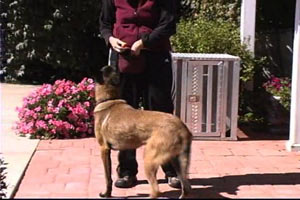
Engagement is a learned behavior that is a state of mind in our dog. A dog that's engaged is totally 100% focused on his handler. A dog that's engaged wants to be with us and he wants what we have. What we have is either his favorite toy on earth or a high-value food treat. While very few dogs will maintain engagement because they simply want to be praised by their owner, the vast majority of dogs need more than handler praise to maintain engagement. I'll talk more about that later in this article. For now, engagement simply means our dog is more interested in what his handler is doing and what his handler has than anything else in the world.
A dog that's engaged with his trainer is not interested in a strange dog that's walking across the street or even a dog that's walking past on the bike path. A dog that is engaged is not interested in the kids playing ball next door or the 15 dogs that are running around on the other side of the dog park fence that's 50 yards away. A dog that is engaged is not interested in the doorbell or guests that come into the home. They are only interested in their owner, what the owner is doing, and what the owner has.
Once dog owners understand that engagement can become a trained behavior that can be put on cue (on command), they are way ahead of the game. In the old days, we used to be more interested in training behaviors first. We taught the dog to sit, down, come, and heel. Then we worried about getting a happy attitude. We had it backward. We found out that dogs that learn engagement as their first behavior become dogs that have a great attitude towards learning and training. Dogs that are trained to engage with their owners all have stronger bonds with the owner.
Understanding how to put engagement on cue, or on command, has changed the way we raise puppies in our home. We now spend the first 6 to 8 months of our puppy's lives teaching them to engage with us when we ask. The time we spend with our puppies is spent on getting engagement in changing environments. In other words, we teach them to engage in places that have more and more distractions.
We constantly look for the limit on the level of distraction that our dog can handle. When we go past that limit, they won't engage. When we then back off that level of distraction, the dog will engage. At that point, our goal becomes to interact with our dog in ways that make it want to engage in a place it wouldn't before the training.
This work becomes the essence of how we socialize our dogs. We don't teach dogs to get along with other dogs. We teach them to focus on us in the presence of other dogs. We don't want our puppies to interact with strangers. Rather, we teach them to engage with us in the presence of strange people.
We call distractions "motivators" because a distraction motivates a dog to pay attention or focus on them. When we train engagement, we learn to become our dog's most important motivator. Our goal is to teach our dog to engage with us, to look at us as the strongest motivator in the presence of lesser motivators. Other motivators can be other people, other dogs, doorbells, cats, etc.
If we could get people to think of dog problems in terms of competing motivators, then trainers could look at a problem as an opportunity for them to do something that will elevate themselves to become a higher motivator to their dog than the motivator that's causing the problem.
High-level Motivators
Several years ago, I produced a number of training videos (DVDs) and online courses that teach dog owners and professional trainers exactly how to train engagement. They are:
These DVDs and courses will go in-depth about motivators and engagement. If you are looking for a fun and satisfying way to train your dog, these DVDs and courses will fulfill that.
The Old System vs. The New
The old system of dog training had its foundation based on one of these two ways:
- Guiding a dog through a behavior with a leash and then praising the dog for doing what was asked
- Using food to lure a dog through an exercise such as SIT or DOWN, then rewarding the dog with a food treat for doing what was asked
The thinking was that if this was done enough times the dog would figure out what was expected and then work for the reward.
There is a hole in both methods. Your dog needs to be in the right frame of mind. They must have the desire to cooperate. If the dog is in an environment that has something going on that is more interesting than cooperating with you, then you have a problem. We call this situation 'competing motivators'.
Examples of competing motivators occur when we ask the dog to do something but it is far too interested in something else. For example:
- When you tell your dog to SIT, but he is too focused on children playing in the yard.
- When you tell the dog to COME, but it is paying attention to another dog.
- When the dog refuses to go into his dog crate when the doorbell rings.
In the old system, when that happened, the owner had to either force the dog to pay attention by using a leash or by using some other form of physical pressure. Over time, this pressure made our dogs dislike obedience training. It also damaged the bond between the trainer and dog.
Unfortunately, most dog training obedience classes still use these old training systems. If you think of an obedience class in terms of "competing motivators", it doesn't take much to see that a room full of 10 to 20 new dogs and strange people is far more interesting than their own owner.
The typical obedience class scenario starts off with the dog thinking class is a cool place but it doesn't take long for that attitude to change because his owner has to FORCE or pressure the dog to pay attention when it's focused on other dogs. When that happens, we first see dogs walk into training and act very curious but as the sessions progress, so too does their attitude. They start to come in and act a little subdued, their tail is down, and they can even act nervous about being there. The new dog trainer thinks their dog is acting like that because of all the commotion and other dogs. However, the dog acts like that because it knows it's about to be pressured into doing something it isn't interested in doing.
Think in Terms of Motivators

If we can teach new dog owners to think in terms of competing motivators and then train these owners how to make themselves the most interesting thing their dogs care about, we will end up with dogs that love to learn. These will be dogs that love obedience training and we will have handlers who have a great bond with their well-mannered dog.
The name for this work is ENGAGEMENT. Engagement simply means the dog wants to be with you, it's totally focused on you and it wants what you have.
The Foundation of Engagement
No dog trainer can take a brand new dog and motivationally engage that dog when it's barking at the door after the doorbell rings. Nor can they pull a rabbit out of their hat and make their dog want to come when called if their dog is chasing after their own rabbit on a busy highway.
But an experienced trainer can, over time, teach a dog that they must mind and when they do mind, they will be rewarded with cool things.
I have been producing dog training DVDs for thirty years and from day one, I have explained that good dog training is accomplished by breaking a behavior into small training steps and then teaching each piece by itself. Once the pieces are trained, they can be put together into a behavior. The same concept applies to engagement.
We train engagement by starting with marker training. I wrote an extensive article on marker training, produced a DVD, and even created an online self-study course. After first establishing what treat a specific dog considers a high-value food treat, we establish the value of our marker. The word we use for a positive mark is YES. To put it shortly, YES means that the dog will get a high-value treat.
Once the MARK has been established, we teach the dog the LOOK command or the ARE YOU READY command. This basically means “look in our eyes” because when you do, we MARK the eye contact and give a reward.
From that point on, we expand and enhance the presentation of the reward. We turn reward deliveries into a game. By that, I mean when we MARK a behavior, we toss the food, or hold the food out and make the dog chase our hand, or jackpot the delivery of rewards. We can mix and match as well. We do this to keep our dogs interested and engaged. It never knows what is going to happen, it never knows how many rewards it is going to get. In doing this, it is constantly paying attention because it doesn't know when the game will end.
As training progresses, we gradually increase the expectation of what we expect a dog to do before it gets a reward. The road to that work is beyond this article. It's covered in the many training DVDs we have done. I will say this though, new trainers expect things to happen much quicker than they actually do in real life. They end up creating problems with motivation because they skip training steps or they don't spend enough time on perfecting the building blocks of each training step.
If you want to perfect your engagement skills with your dog, you can enroll in these self-study online courses or purchase the DVDs:


Most Popular Articles
-
01
-
02
-
03
-
04
-
05
Related Products
-
 $1.55 - $31.00



Ask Leerburg.