Search Our Site
Leerburg 2010 Catalog Weekly Newsletter Newsletter Sign Up Request a Catalog Download Catalog Table of Contents Dog Training Videos New Releases DVD DVD Box Specials FREE Streaming Video Dog Training Equipment Dog Training Equipment Dog Training Books K9 Healthcare Products Web Forum Discussion Discussion Forum How to Register Dog Training eBooks Dog Training Podcasts Affiliate Program Dog Training Articles Articles Question & Answers Leerburg Kennel Our Kennel Current Litters Customer Testimonials Stud Dogs Adult Dogs for Sale Our Kaiserhaus Malinois Dog Training Categories Dog Training Dog Obedience Training Aggression Problems Dominance Problems Dog Fight Problems Puppy Training HouseTraining Problems Feeding Dogs Breeding Dogs Electric Collar Training Schutzhund Training Police K9 Training Leerburg's Top DVDs Your Puppy 8 Weeks DVD Basic Dog Obedience DVD Electric Collar Training DVD Dominant Dogs DVD Raising a Working Pup DVD Bite Training Puppies DVD All 120 Dog Training DVDs How to Order View Shopping Cart Foreign Orders Shipping Charges See Our Horses Request a Catalog Contact Us Meet Leerburg Staff
Leerburg's
Remote Collar Training
for Pet Owners DVD

2 Hours 45 Minutes

Electric Collar Training DVD

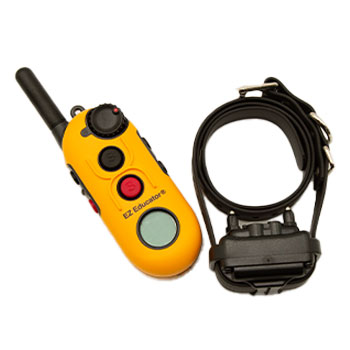
The Leerburg Electric Collar Training DVD is not brand specific.
These training methods work for every brand of electric collar.

Customer Reviews of this Remote Collar DVD

Leerburg's DVD
Remote Collar Training for Pet Owners
Remote Collar Training for Pet Owners DVD
$40.00+s&h

Save $20 on our Remote Collar DVD when you purchase any remote collar from Leerburg.

Save $20 on this DVD
Box specials that include our
Remote Collar Training for the Pet Owner
s
Click Here

*The $20 discount for purchasing a remote collar will not be reflected in the shopping cart. The discount will be manually taken out before the order is processed. We will send an email with your new total that reflects the discount.

Remote Collar DVD Content

There are only 4 kinds of training collars:

1- Flat Collars

2- Prong Collars

3- Dominant Dog Collars

4- Remote Collars or Electric Collar

In my opinion the remote collar is the most effective dog training tool that has been developed in the past 100 years.

Without a doubt our low level stimulation training is 100 times more humane and more effective than using "CHOKE COLLAR or PRONG COLLAR." In fact our remote collar training program eliminates the need for these other training tools.

In our home we start our 16 to 20 week old puppies on our remote collar program. The levels of stimulation used in our training program are often times not even felt by many humans.

With all this said, unfortunately the electric collars are the most misused, abused and misunderstood dog training tool every developed. Methods used by many hunting dog trainers are archaic at best.

What our Remote Collar DVD will teach you:

This DVD is 2 hours 45 minutes and teaches pet owners how to safely and effectively train their dogs with low level stimulation from a remote trainer.

The video is not brand specific. In other words, it does not matter what brand or model of electric collar you own. I will show you how to determine the level of stimulation fits your dogs temperament with the collar that you have chosen to train with.

Until now there has never been a training DVD that makes sense which teaches pet owners the concepts of remote collar training. The electric collar DVDs that manufacturer ship with their remote collars videos are useless. These manufacturers DVDs are based on old school training techniques that use "escape training methods."

Our DVD fills the void that has existed in the electric collar training business.

When used properly, remote collars are one of the most humane training tools available to dog trainers. I call it training with an invisible leash.

There is a myth that stimulation from an electric collar always involves pain. This is simply not true. We will show how to train using very very low levels of stimulation (using the nick button) found on almost all remote collars. I compare these levels of stimulation to lightly patting your dog on the shoulder with your hand. These levels are so low that the average person may not even feel if the collar was placed on their arm.

25 years ago, trainers were told to put a collar on a dog and make it wear the collar for two weeks before using it. The theory was that the dog would become conditioned to the collar by wearing it all the time. This theory has since proven to be the wrong approach.

Our DVD explains in detail how to condition your dog to a collar so that the act of putting the remote collar on the dogs neck does not become the trigger for the dog to think "OK the remote collar is on so NOW I MUST MIND." Our goal is to teach our dogs to follow a voice command all time and not just when it has it's remote collar on. Proper conditioning and introducing the remote collar the correct way goes a long way towards accomplishing this.

There is a segment in the video on the training equipment you will need for this work. In this segment I go over the various features different collar companies offer. I don't accept sponsors for my training DVDs so the information in my videos is based on experience and not any loyalty to a company paying for commercials.

There are a number of different theories of how to train with an electric collar. I explain the different methods various trainers use and then tell you why the methods I am offering are the best I have seen in almost 30 years of remote collar training.

The goal of all dog training is to teach a dog to follow a voice command. The training methods in this DVD teach a dog that the stimulation from an remote collar comes from the owner. Back in the day (so to speak) trainers took a different approach. They would bush the button on the electric collar and stimulate a dog while giving a command. They then teach the dog how to turn off the stimulation by following the command. This is called "ESCAPE TRAINING."

In my opinion this is backward training and does nothing to improve the bond between handler and dog. I compare this to spanking a child and teaching them that you will stop spanking when they do what's told. I always thought that was just stupid dog training.

Remote Collar Training for the Pet Owner DVD

The training sections in our REMOTE COLLAR DVD:

1- Conditioning the dog to the electric collar.

The simple fact that the collar is put on cannot be a trigger for the dog to mind. When you learn how to condition or desensitize the dog to the collar you are a long way down the road to success.

2- Determining the level of stimulation to use on your dog.

No two dogs are alike - just like no two people are alike. There are hard dogs and soft dogs. A hard dog gets a correction and looks at you like "IS THAT THE BEST YOU CAN DO?" A soft dog gets a correction and acts like you just killed it. They tuck their tail and drop to the floor and roll on their side.

To be an effective trainer you have to figure out the correct level of stimulation to use on your dog. We need a level that gets the dog's attention without dampening his spirit. Anyone can brow beat or force a dog to do what they want - that's easy. It takes knowledge to figure out how to give the right level of correction while maintaining the dog's spirit and temperament. We will show you how to do this.

The vast majority of my work with remote collars is done with the "NICK BUTTON" (VS the continuous stimulation button). There are only 2 places in this DVD where I use the "CONTINUOUS BUTTON." While there are extreme cases where the highest level of stimulation is warranted, I never use the "high" setting to stimulate the dog in this DVD. 99% of the time it's simply not needed.

3- Training the COME command with a remote collar.

Nothing is more frustrating than a dog that wants to play keep away. Dogs often go through obedience classes and be 100% leash trained yet the instant the leash comes off and they see something of interest they blow off the handler when he calls. Our training will stop this behavior.

Dogs live in a very black and white world. We need to make our training very easy for our dogs to understand. The training in this section is 100% clear to the dog. I go through the step by step protocol on how to teach a dog to come when called even in the face of distractions.

Dog's must some when called every single time, no matter what's going on around them. This training can save a dogs life.

4- Training the Leave-it or OUT with the electric collar.

There are two things that can get dogs into serious trouble. Not coming when called and not leaving something alone when told to.

In this section I chose a strong dominant adult male dog that has had been protection trained. This dog could be a dangerous dog if it were not handled properly. He was protective of his toys and prey items. I show how to handle this kind of dog safely and effectively by using a remote collar.

By the end of the first training session he was consistently releasing the toys when told to do so and doing it in a manner that did not produce a conflict with the handler.

While very few people have dogs that are this dominant, everyone can learn something from the correct way to train them.

5- Training the dog to walk on a leash without pulling with a remote collar.

Small people often have real problems with big dogs that pull on the leash - even if the dog wears a prong collar. Learning to use a remote collar to teach a dog not to pull is not difficult. New handlers can pick this up very quickly.

This section will teach you how to use the electric collar to do this. It's an easy effective and humane way to train a dog to relax and be calm while taking a walk. The beauty of this work is that it's all done in a very humane manner.

6- Training the dog to ignore other dogs while on a walk.

Not many things are more annoying to pet owners out for a walk than having their dog acting like a "butt head" and barking like crazy when they see other dogs. Sometimes this can be cured with prong collar corrections. All too often the prong collar correction over stimulates the dog which results in their dog becoming more aggressive not less aggressive. Sometimes this redirected aggression is directed towards the handler.

This problem can be fixed with electric collar training that is covered in this DVD.

7- Training the dog not to jump up.

I have never had a visitor in my home that thought it was cute when one of my adult dogs jumped up to say "HI."

There are a number of ways to stop a dog from jumping up: pinching the dogs toes, stepping on the back feet, a knee to the dogs chest, a loud scream etc, etc, etc. I have used them all.

None of these work as well as "low level stimulation with a remote collar" Jumping up is cured on day one when done properly.

A point to mention here is that if a novice trainer uses does not have the correct training this work can make a dog aggressive.

8- How to deal with dog or animal aggression with the electric collar.

I explain the safety concerns in how to approach dog aggression and how this training is different from normal obedience training. Using a remote trainer at the wrong time or in the wrong scenario on a dog aggressive dog is dangerous. Rather than make the dog less aggressive incorrect use of the remote collar can trigger a dog fight.

If you have a dog aggressive dog there is a protocol to follow to insure your safety and the safety of others when working with a electric collar. I discuss this in the DVD.

9- Problem solving.

Everyone that trains with a remote collar is going to run into problems at some point in their training.

My father used to say "the sign of a good carpenter was one who knew how to fix this mistakes." The same saying applies to dog trainers.

I have a section in the DVD that teaches you how to approach a problem and then form a game plan on solving that problem.

10- Where to go from here with your training?

This DVD is 2 hours and 45 minutes long. My DVDs are not movies meant to be watched once and then set on the book shelf. They are meant to be watched again and again. Every time you watch them you will notice subtle things in the work.

Remote collars are often used as a last resort to correct problems that come up in conventional obedience training. It's my opinion they should become a normal part of every dog training program. I will never own a dog again without training it with remote collars. We start puppies as young as 16 to 20 weeks of age with low level training and this work never stops.

Leerburg's Box Specials
Dealing with Dominant & Aggressive Dogs Remote Collar Training for the Pet Owner Save $9 when you buy both
Dealing with Dominant &
Aggressive Dogs DVD

and
Remote Collar Training for
Pet Owners DVD

Both DVDs for


$80.00+s&h

Product #4002

Basic Dog Obedience DVD Establishing Pack Structure with the Family Pet Remote Collar Training for the Pet Owner
Purchase the
Basic Dog Obedience DVD
along with the
Remote Collar Training for the Pet Owner DVD
and the
Establishing Pack Structure with the Family Pet DVD
and save 10%!

All 3 DVDs for


$110.00+s&h

Save $10.00!
Product #4005

Basic Dog Obedience DVDRemote Collar Training for the Pet Owner Dealing with Dominant & Aggressive Dogs
Purchase the
Basic Dog Obedience DVD
along with the
Remote Collar Training for the Pet Owner DVD
and the
Dealing with Dominant & Aggressive Dogs DVD
and save $19!
All 3 DVDs for

$110.00+s&h

Save $19.00!
Product #4011
Remote Collar Training for the Pet Owner

Save $20

Purchase any remote collar and save
$20 on our
Electric Collar Training for Pet Owners DVD

Dotra Electric Collar
*The $20 discount for purchasing a remote collar will not be reflected in the shopping cart. The discount will be manually taken out before the order is processed. We will send an email with your new total that reflects the discount.
Cinch It

These are the best collars we have ever seen for use with a remote collar!

Check out the streaming video of how to use the Cinch-it collar with the remote receiver!


The THREE MOST IMPORTANT DVDs your can buy:

When I talk to new dog owners I try and impress on them that dogs are pack animals and 98% of the behavioral problems that new trainers allow to develop are a result a lack of PACK STRUCTURE IN THEIR HOMES. I always recommend these DVDs:

1- Establish Pack Structure with the Family Dog

2- Basic Dog Obedience

3- Remote Collar Training For the Pet Owner

If every dog owner was required to know the information in these three DVDs there would be no need for humane societies. We have a bundled package where customers can save money by purchasing all three DVDs at one time. (CLICK HER FOR DETAILS)


Establishing Pack Structure with the Family Pet

$40.00+s&h
Establishing Pack Structure with the Family Pet DVD


Testimonials on
"Remote Collar Training for the Pet Owner" DVD

Review 1 on "Remote Collar Training for the Pet Owner" DVD

July 12, 2009

Mr. Leerburg,

I have to be frank, the first time I looked at your site I passed it over quickly, I grew up with people who attack trained their dogs and I saw nothing of value there.

However after my male basenji, moved from annoying play biting to play nipping and other out of control behaviors, I realized that I had no choice other than to nip it as quickly as possible - especially after he killed two squirrels and ate them on his 6 month birthday.

After following your instructions in this video exactly, my dog is completely under control. I even take him too a pond park near our house and let him off leash with no fear. He has more freedom and responds to my commands quickly now.

I have ordered your DVD on establishing pack order from amazon-hopefully this will get at the root of his nipping problems with my 7 year old daughter before she gets back from her grandmothers. You certainly know what you are talking about!

Thanks heaps!
Greg
Port Saint Lucie, Fl

Review 1 on "Remote Collar Training for the Pet Owner" DVD

July 2, 2009

I purchased the e-collar video at an earlier time when I was trying to decide on using an E-collar. I have sent my GSD to boot camp, and during her time there, they felt it best that the E-collar becomes my back-up collar. It also helped her to relax and learn how to behave. Thank you for your recommendation on which collar to use - I think now, as we continue to work together, she will be easier to train at higher levels. Thank you also, for sharing your knowledge - its amazing how many people think they know what they're doing!

Linda

Review 2 on "Remote Collar Training for the Pet Owner" DVD

May 7, 2009

Cindy,

Thank you so much for your recommendation. I bought the Dogtra you recommended and the training video. This is amazing!! 

I watched the video for a few days, going over what I needed to do.  In the meantime I put the collar on "Sparky" and he would wear it for various times during the days. I never leave it on at night. 

I worked with "Sparky" on a 20' cotton lead, going back over sit, stay, down-stay, come etc. "Sparky" loves to play ball and so I would bounce the ball with the lead on. That is a key, I had control of "Sparky." I would throw the ball with sit-stay, down-stay.  (I could do this most of the time and he would obey). I'd nick him when he would bolt to get the ball, having him on the cotton lead.  I bet I've only had to nick him less than a dozen times.  The first time with a dog, I had to hit the continuous.  He came back immediately. (I use real chicken as a treat, less expensive than store bought treats. I use Costco's frozen chicken tenders, and cook them and cut them up into small pieces. Healthy, and less expensive and he loves food.)

I started walking down the street short visits, we'd go by a dog. Amazing, the first few times I "nicked" him, he came right to me.  

Now......my husband and I can ride our bikes, or walk without leash, (although we bring one with us)  he runs with us, and loves it. Dogs on the same side of the street, he ignores. Dogs on the other side of the street he ignores. Wow... this is wonderful. I leave the collar on when we get back and take if off at various times of the day.  We run or bike  sometimes 2 or 3x per day. I just loosen it a bit, when I'm not actually using it.  

Talk about giving "him" freedom. I love this Dogtra, it is the most effective teaching tool. My husband was against me getting one of these when he was a pup, and wished now I had used one. I work almost every day (except weekends) reviewing different things with "Sparky."

Thanks so much, this is so much more enjoyable!!   

Karen

Review 3 on "Remote Collar Training for the Pet Owner" DVD

February 3, 2009

Cindy,
 
Several months ago I wrote to Ed about which electric collar would be best for my GSD. The issues I was having dealt with bite work, outing the sleeve, and recall. Ed said the Dogtra 1900 model would be a good fit and it was.  He also gave advice on how to retrain the out. I followed the email Ed sent and it has worked wonderfully. He will now consistently out on the first command 95% of the time without stimulation. If I have to use the electric collar it is on a very low setting instead of a medium or high setting and he will then come off the sleeve, toy or whatever usually without a second command. He mainly gets stubborn when he thinks it's time to stop playing and I'm going to put his toy up. I watched your electric collar video and found the advice in there very helpful as well. I have referred several people to your website for their dog problems and I hope they have found you and Ed's knowledge as helpful as I have.

Thanks again,
Neil

Review 4 on "Remote Collar Training for the Pet Owner" DVD

April 8, 2008

Mr. Frawley,

I have ordered equipment from your company before and I am always pleased with the equipment and the customer service. I got my most recent order this morning. Your remote collar video is great. I watched it once before I took the collar out of the box. Now I am watching it again. It is well laid out and very informative. Keep up the great work.

Janelle

Review 5 on "Remote Collar Training for the Pet Owner" DVD

December 24, 2007

My problem was (in capital letters 'was') the heavy prey drive in my dog.

In drive, off lead voice just did not matter. I'm no neophyte with dogs, but this one has confounded me on this issue since she was about 6 or 7 months old, she now almost 2 years. I'd tried every trick and ploy I've learned over the years and decades with dogs, pored over books to see if I'd missed anything and rehashed it all again. The only thing I never reverted to was the yank and crank garbage I was taught as a child, but I was getting close to it.

About 3 or 4 weeks ago I ordered and reviewed Ed's video on the use of remote collars. Watched again. And refreshed my memory before going out today. This is a testament from a first time user of remote collars........Magic.

Thank you Ed and Cindy,
Randy

Review 6 on "Remote Collar Training for the Pet Owner" DVD

Dear Mr. Frawley,

First of all, let me say that I normally do not write these kinds of letters. However, the change in our dog over the last month has been so dramatic, I felt that I really needed to thank you.

Our dog, Wilson, is a 16 month old Golden Retriever. He wasn't a bad dog, just head-strong. We've been through several training classes and even passed his CGC. The problem was, he was perfect in class, but at home, he could be a not-so-little monster. He would obey if he felt like it, and his jumping was getting way out of hand. I'm sure he would have outgrown much of this in another year, but meanwhile, I was the only one in the family who still liked him! To make matters worse, he has an orthopedic condition known as Osgood-Schlatter Disease, which means we can't exercise him enough to get his energy out.

About a month ago, I found your website. I started implementing some of your methods immediately and ordered your basic obedience dvd. I also purchased a Dogtra 1900 and your dvd on using an electric collar. Wilson is a hard dog. Although the prong collar worked on him, I really had to yank to get a response. Plus, he'd gotten collar wise. After 2 weeks of conditioning him to the electric collar, we gave it a try. We got the desired response at only 36! Within 2 days, he was no longer jumping on people. 2 days later, he was off leash in the yard, with 100% recall. I've had to "stem" him maybe 15 times total. Amazing.

To make a long story short, we don't have the same dog that we had a month ago. Everyone in the family is grateful for the change. Yesterday, my elderly parents came for a visit, and we were able to leave Wilson out of his crate and off leash. He's finally able to be the part of the family that I've always dreamed of. Thank you so much for sharing your wisdom. It has made such a difference to us. I only wish we'd found you a year ago.

Sincerely,
Brenda

PS Your "two-ball" game was right on. He's now unbelievably reliable in his retrieve...and drops the ball at our feet!

Review 7 on "Remote Collar Training for the Pet Owner" DVD

Ed,

The Dogtra electric collar and the video represent the best investment I have ever made on training items. The collar and video worked amazingly well on my 11 mo old 115 lb Shepard.  The Come command is absolutely automatic even with distraction after only 2 sessions.  Now working on  stay" with distractions. This is an amazing tool and He loves to please...no negatives that I can see on this method!

Thanks,
Bob and Fonzie (GSD)

Review 8 on "Remote Collar Training for the Pet Owner" DVD

Howdy Ed,

First let me commend you on your recent video pertaining to electronic collar training. It provides a concept that I hope all new electric collar trainers will follow.

I have been using the Tri-Tonics S60 for a year now and initially was led down the trail to use the "escape" training method. I found as you did that this was not an effective way to maintain my bond with my dog and at the same time have him understand commands as related to stimulation. I changed my method after one month of use and found delight in seeing in your video that we are on the same wave length. At last someone who really gets it. Thanks!

I initiated the local Citizens Police Academy Alumni Association here in Coppell, Texas. I also volunteer to rid puppy mills of selling Kerry Blue Terriers. The Foundation web site www.kerryblues.info is also an excellent source of information to those may need general pet information.

I have two Kerry Blue Terriers, one of my Kerries works periodically with the local PD during events to promote safety to our community.

I have sent many dog owner to your web site to read the various excellent training articles. Some Kerries do have an aggressive tendency and your articles have helped many. Thanks again!


Keep up the good work

Regards,
Tom

Review 9 on "Remote Collar Training for the Pet Owner" DVD

Hi Ed and Cindy,

I can't tell you how much your new DVD on electric collar training has helped me!!! I would not have sent Winnie for training if I had seen this a year ago. Your training techniques are so logical and fair to the dogs. After seeing this video I feel much more confident that I have done way more things right than wrong. Just needed to step things up a notch by going to the electric collar, yet had no idea how to even start. Through your education of owners there will be happier dogs! This has got to make your hard work and effort very gratifying. Good job!!

Thanks so much and best regards to you both,
Debbie

Review 10 on "Remote Collar Training for the Pet Owner" DVD

Mr Frawley,

I got your video on the electric collar training today and I must say it was worth every penny plus much more. EXCELLENT! I can't tell you how much I "get it" now.

I will have to watch it several more time and plan to watch each segment just prior to going out and actually doing the training so everything is fresh in my mind.

I was debating whether to buy your basic obedience video as well because I felt that I had accomplished this already with the help of a pro trainer, but like you have mentioned before I feel that my trainer may have rushed many things especially on teaching the basic commands. Just to make sure I can accomplish this training to the fullest I think I should get your obedience dvd and do a refresher with both my dogs so I can not feel guilty of correcting them for not doing things they have not been taught.

Review 11 on "Remote Collar Training for the Pet Owner" DVD

Mr. Frawley:

A little over a month ago I wrote you about our German Shepherd who was dominant with my husband and me. I just wanted to write and thank you for recommending the shock collar to us. We purchased your Electric Collar Training video along with the Dogtra 1900 collar from you and we have seen amazing results with Kazan.

We really couldn't have done it without you. Your video was packed with so much useful information. I know if I had not watched it prior to the start of training Kazan with the electric collar I would have made a lot of mistakes.

Although I love my dog dearly, after dealing with his behavioral issues for the last 2 months I was getting to a point where I wasn't sure if we'd be able to keep Kazan because he didn't seem to be responding to us but again thanks to your help we can live happily with our dog.

Thank you thank you thank you so much!!!! Attached is a picture of my husband and our dog.

Sincerely,
Gina

Review 12 on "Remote Collar Training for the Pet Owner" DVD

Hello,

I have just received you DVD on the use of electric collars. Order came very quickly & with minimum of customs fuss, very appreciated.

Very good DVD and looking forward to implementing the training techniques. In the DVD you say that you can advise which electric collar you use and find to be the best if emailed. If you could advise, I would appreciate that.

Your comments on the differing collars and stance of not endorsing a particular brand in your DVD does you credit. Too many times in the past I have seen 'trainers' demonstrating a technique which seems to have more to so with the particular (endorsed) brand of equipment that they are using, rather than the best method of training the dog.

Many thanks
Chris

Review 13 on "Remote Collar Training for the Pet Owner" DVD

Hello Ed,

Well, it has been about 4 days since I first began training with the electric collar on my dog Teddy. I had watched your DVD and followed exactly what you recommended as guidelines for training. It has been amazing! My dog is responding consistently to the command "Teddy Come" even with distractions.the biggest ones being ...visitors. I have not had to nick him since the first day. It has made a difference to my three boys as well, having a better trained dog.

The genuine care and concern you have for these dogs was very apparent. I am so excited to continue with my training and i just wanted to say a giant Thank YOU!

Sincerely,
Kristen

Review 14 on "Remote Collar Training for the Pet Owner" DVD

Hi Ed,

I learned so much from watching your electric training video this weekend.  I truly believe that everyone who is thinking of remote training should watch your instructions.  During the video, you mentioned that we could email you for your recommendation on a remote collar.  Do you have a particular make/model that you prefer?  I have a 3-year-old female german shepherd that I believe would benefit from remote training. 

Thank you for your outstanding video. 

Kind Regards,
Cindy

Review 15 on "Remote Collar Training for the Pet Owner" DVD

Ed,

This is Bill from Las Vegas. We spoke before the holidays via EMAIL about "Sit Means Sit," Avoidance training and so on.

I did get your electric collar training DVD. In the email you had asked me what I thought about it.

Well, this was one of the Best DVDs I have ever seen on Electric Training. I have a few.

Besides the instruction you offer, one thing stands out in your DVDs. It really shows that you CARE about the dogs you train. For me, that is the most important thing's any trainer can do!

I will be buying a few more DVDs soon!

Thanks again,

WSV

A Comment from Ed:

I have to say - emails like this make my day.

Review 16 on "Remote Collar Training for the Pet Owner" DVD

Dear Ed:

I’ve just added Leerburg’s, "Dealing with Dominant & Aggressive Dogs" and "Electric Collar Training for Pet Owners," to my library. The quality and clarity of Leerburg dog training Videos and DVDs is the best I’ve seen. I own, Cave Canum Catahoula Kennel’s in Baton Rouge, Louisiana. I train almost, every day and now after thirty-years I know what works and don’t. Leerburg training works and if I consistently apply the methods, my dogs become 100% better, fast. Leerburg is a mountain of dog behavioral instruction and equipment. When I buy from them, it’s not a cost, it’s an investment. Ed Frawley and the other trainers, don’t bite their tongues about dog training. The truth comes, flat out simple and direct, exactly what I expect, exactly what I want and exactly what I need.

Thanks again for your fine work,

Sid

Review 17 on "Remote Collar Training for the Pet Owner" DVD

Dear Mr. Frawley,

I'm not a professional dog trainer, nor do I participate in precision obedience competition, but I do teach my own pets basic commands so they can be good dogs & we can all live happily together. I currently own an eight year old male Borzoi & a 12 month old Akita spay who already knew "Sit, Stay, Down, Come, Heel, Place, Kennel, Leave It & No" and would obey dependably while in the house & out walking on lead...

I recently bought them electric collars, because I wanted a better & faster method of perfecting their reliability on the off lead recall, since both of them are leash-wise on a 30-foot long line. I purchased a set of fairly decent Innotek collars with a dual-frequency transmitter (it has 9 stim levels, a tone-only mode, instant boost button & a 1000 yard range) but I disagreed with their training video where they taught "continual stim until exercise complete". Instead, I did the following:

One at a time, in our fenced yard, on lead, wearing an electric collar, I ran through all their known obedience exercises, PLUS, each time I gave a command, I would also activate the tone-only button on the electric collar (it sounds right in the collar itself) so they would associate that noise with a voice command. Both dogs performed well, knowing I could give a leash correction if they refused to obey...

So then I removed the long line & ran through their commands again, with variable results of some slow response, "selective hearing impairment" and one refusal by my young Akita (so I lured her to me with bait, replaced the line, repeated the exercise, ending that session with compliance on her part). Then I went off lead again, but this time when she refused a recall, I gave her one nick on the lowest stim setting (no response until level 3, out of 9 settings) but once she could feel the correction, PRESTO, instant obedience without any loss of attitude! My veteran Borzoi doesn't refuse commands, but sometimes would give passive resistance by obeying as slow as molasses in January, and his initial response to an electric collar correction on the lowest level was going into Klingon mode & becoming Velcro Dog, but he got over it...

Stunning success with both dogs in just ONE training session of only a few minutes duration!

Shortly after this, I heard about your electric collar pet training DVD & I ordered one immediately. It is really excellent, with the background information, the history of e-training, and all the real-time training sessions with different dogs & various problem solving scenarios — it's a goldmine of instruction & helpful tips, so I'm recommending it to all my dog-owning friends.

I'm now on a mission to educate the doggie public about how electric collars work WITHOUT any electric shocking at all (or maybe once in a blue moon if the dog is being extremely tempted by an irresistible distraction enough to cause "momentary deafness" so it needs one remote correction). People cannot imagine that my dogs became voice command reliable off lead in only ONE e-training session & have worked dependably without ANY e-stim ever since then. After all, these were never obedience trial "poster dogs" prior to wearing their electric collars, but seeing is believing & folks are amazed at the overnight transformation in their performance.

So I'm telling anyone interested to buy a high quality remote training system, throw away the video that comes with it, and get your electric collar pet training DVD instead — Thank you !!!

Candi

A Comment from Ed:

Thanks for the kind words. One reason this worked so well for your dogs is the amount of basic obedience they had before the collar training started. This makes a big difference.

I also like to see people take time introducing the collar. It is not a matter of getting a dog used to wearing the collar until he ignores having it on his neck, the goal (as explained in my DVD) is to desensitize the dog having the collar put on and taken off. The act of the collar going ON THE DOG is not a trigger we want for the dog to mind. We want our dog to ignore the collar and learn to mind every voice command. A small point but an extremely important fact of training.

Review 18 on "Remote Collar Training for the Pet Owner" DVD

Ed,

Great videos on Basic training and E collars. Got a lot out of them. I learned never test your 1/2 second nick when holding on to the E collar. That was funny, when you gave yourself the jolt. I'm still laughing. But on the serious side, I've learned more from your videos in the last couple days, then I've learned working with other trainers in months. I wish I would have bought these particular videos sooner.

Thanks again,
Michael

Review 19 on "Remote Collar Training for the Pet Owner" DVD

I did receive the DVD today via UPS – yeah!  I am half-way through it, taking a break, and am extremely, extremely pleased!  We have several new dogs on our SAR team that have some very bad habits of not recalling immediately (and they DO understand the command), and also engage in some crittering while free area searching.  They are receiving *reward system and marker training,* and additionally, this DVD will be a great team training tool, and a easily understood visual medium for instruction to reinforce the marker training with a remote trainer for these dogs (we do not harness the philosophy of using the remote trainer for stimulating the dog to give a behavior, or as Ed calls it avoidance training – great definition!), that have learned that when I’m 100 yds. away, my human can’t reinforce the *NO.*  

Thank you! . . .  and an FYI . . . Dillon (Argus vom Leerburg) is working hard and doing great!

Best Regards,
Wendy

Review 20 on "Remote Collar Training for the Pet Owner" DVD

Hello Ed,

I've reviewed your DVD on electric collar training and I was very impressed. The delivery of your methods is very clear and understandable, as is the case with videos I've ordered in the past.. Hmm, speaking of the electric collar DVD and videos of the past, I've noticed, uh, well I've noticed what was no longer there. That would be your hair!! he, he. And I especially enjoyed the part where you discovered what a high level jolt is!! It was amusing, and it also spoke of the depth of your honesty and spontaneity by leaving that section in the DVD...and replaying it! I had the same experience, only mine was on my leg. At first I did not get any stimulation and I kept cranking up the transmitter. Then I turned the damn receiver on, did not reduce the stim and got one hell of a surprise!

You have an excellent manner of Teaching" these complicated methods, Mr. Frawley. You have a knack for presenting lessons in a clear and concise way, one that is easy to follow. And this is very, very important because most authors do not know how to make issues clear and teachable. Thank you.

I have a book by Konrad Most. I did not like it. It is not easily understood and the techniques are hard to grasp. His methods require a professional to work with, which makes the book useless. Besides, the motivational inducements now being used are far better than the traditional methods.

Again, thank you for a very concise and easy to learn from DVD. It was well-worth the money.

Sincerely yours,
Tom

Review 21 on "Remote Collar Training for the Pet Owner" DVD

Ed

Training with Tiny has been going great, we keep it really short, 2-3 min. a few times a day, and we both have allot of fun.  Also been taking on/off all his collars (flat, prong, and E).  He used to fight me, now he comes running to put them on because he knows he will get a yes and treats! Quick question, he likes to chomp on my other dog's leg/neck too hard in play, chases the cats if they run too fast, barks when he sees people walking down the street, eats poop (they all do this, it makes me want to strangle them!) when I'm not looking, and rushes our fence when the neighbor's dog comes out.  All these above things drive us crazy, are these considered pack behaviors and can I administer a hard correction for doing them?  Also when he is conditioned to the E collar in another week or so, can I strap it on and correct him with it when he chases the cats/does all the above things even though I have not officially started training him with it?  It would seem easier than stopping what I'm doing to jerk on his long line with a prong collar on.  I have not done this yet, wanted to make sure these things are pack behaviors first.

Today I put the collar on Tiny, and determined his level is #78.  It took a long time getting there, but now it's just enough to make his head jerk up a little.  When he went after my cats, (I have 4) I said no, and pushed the button.  He went after 2 different cats.  I just had to push the button TWICE!  The third time I just said Tiny, no and he turned right around to go lie down.  To test it, I  put his leash on and walked him over to my cat, he turned right around without me saying anything, it's amazing.  I am a fan of electric collars for life!  And I was one of the ones so misinformed about them thinking they were the cruelest things on the planet. 

Thanks!!!
Iris

Tiny the Cat Chaser Tiny

Tiny the Cat Chaser cured with Ed's DVD


Remote Collar


Leerburg Questions & Answers
on "Remote Collar Training for the Pet Owner" DVD

Customer Question:

Ed,

I have a female St. Bernard whom we adopted after she was abandoned at our door. She was about 4-5 months old, and now is a little over a year old. I worked with her using your training video - she is very submissive, was very easy to house train, sits, stays, heels, all in all a wonderful dog, very obedient to our commands. She heels well, until yesterday. I took her on our normal walk route, and we found a pair of dogs had moved in behind a short picket fence. They barked like crazy, she lunged at them and I lost my balance and bashed my face on the fence. Our dog immediately dropped down and stayed until I got up, but I don't want a repeat. She currently weighs about 100+ pounds. She is very well mannered around other dogs, usually just sits at my side if I talk to their owners. I have never had to do more than say no to her (firmly, but not loudly). I also am now leery of letting my 6 year old handle her outside on lead. Am I overreacting?

Thanks,
Jeanne

PS. I'm sold on your training methods, never having trained any dog before- till this one happened I was a total cat person (she gets along well with our house cats).

Jeanne

Ed's Answer:

Hi Jeanne

Thanks for the kind words.

I would most defiantly not allow a 6 year old to walk this dog.

I just finished a DVD titled Dealing with Dominant & Aggressive Dogs. There is a big section in this DVD on exactly what you are talking about with dogs fence fighting.

With this said that DVD shows how to correct this problem with prong and dominant dog collars. Some people are physically not strong enough to handle a dog – even with these collars. Those people need a remote trainer. I demonstrate this with one of our dogs. My secretary (Caya) gets dragged to the ground while I can handle the dog without a problem. Caya would need a remote trainer where I would not.

Last fall I finished a training DVD electric collar Training for the Pet Owner. I am not trying to push products – but my guess is you need both of these DVD’s and a remote collar. By the way – just because your dog is submissive does not mean it would not need a remote collar for this dog aggression issue.

I recommend that you visit my web site and read a training article I recently wrote titled The Theory of Corrections in Dog Training.

The reason I wrote this article was to help people understand how to motivate their dogs in training. Most people either use the wrong kind of correction or over correct dogs in training. I am not a fan of “force training” (although I most definitely believe that every dog needs to go through a correction phase). By exploring corrections in training you will become a better dog trainer.

I hope this answers your questions.

Ed


- - - - - - - - - - - - - - - - - - - - - - - - - - - - - - - - - - - - - - - - - -

Customer Question:

Thank you, you did explain the collars in the video and after another review it was clear.

We did not have the proper dominant dog collar that you sell at Leerburg prior to the video. The other collar did exactly what you said it would do, after Max was being lightly corrected, he started to attack, I lifted the front feet off the ground, Max is as tall as I am on his hind feet and he still continued his attack, my husband grabbed the leash to pull Max higher and the collar broke. My husband and I were both bit, not seriously but enough for us to get our act together.

Al & I are committed to being Pack Leaders and I was so frustrated when we had to submit, and Max went directly to his crate. I gave him about 15 minutes then started to work with him again. He was perfect, no pausing his actions were deliberate.

We called this morning to order all the proper equipment, and we watched the video again to make sure we are both focused on our aggressive dog and that we stay safe.

We did go to a professional trainer who had done the obedience training and she gave us two options. The first option, when Max growled grab his muzzle, squeeze it shut until Max submits. She said Max needed to be dominated, she did it and he went right to the ground. Max did as predicted, bit the hell out of me. The next advise was to put the dog down he was too aggressive. I didn't believe we couldn't control Max and we found your web site.

We do not let Max run loose in the house, sleep on the furniture or in our bedroom. Max has his own crate in the living room. What I noticed in your video was that your dog crates are out of the living space and in the basement. In the winter Max's crate is in the house, we stopped leaving the door open.

My question is, should we move the crate from our living space and put it in the garage?


Thank you in advance,

Ruth

Ed's Answer:

I do make it clear how important proper equipment is in training dominant and aggressive dogs. Not only having good equipment but making sure you inspect it every time it's used. Equipment wears out and the handler must be aware of it or they could get hurt.

With this said dog your trainer is an example of someone who needs additional training herself. THAT WAS STUPID - DROP DEAD STUPID ADVICE (to grab the dog's muzzle and hold it) But then you found that out. It is DANGEROUS to do this.

Bottom line is there is not a lot of room for error with these dogs. If this were my dog I would be training with a muzzle and I would also be using a remote trainer.

Good luck and be careful.

- - - - - - - - - - - - - - - - - - - - - - - - - - - - - - - - - - - - - - - - - -

My question is, “What collar do you use with your own dogs?”

We’ve been using a Dogtra 1800 which we got at a seminar with “No Limitations.” I’ve noticed this weekend the unit (2 years old) has just quit sending the stem to the collar for some reason. Since our GSD is a pet (yet still a very high drive fun 3 year old bitch from Kraftwerk) we primarily need the collar to reinforce basic obedience at home and in our small (1/2 acre) yard. I think Dogtra 200 would work OK but am interested in knowing what you use. Currently we have only one dog but we are considering a second GSD in the next year. I’d like the opportunity to train a male as with kids I imagine no two dogs will be exactly the same and I feel ready to expand our pack.

Just a note that while I really respect the “No Limitations” program, I do agree that using the stem per your video approach as a correction is over the long term for a simple pet owner more practical than using it as a motivator. I would note that this is really a subtle difference when you get down to it but I think its more clear to me and my GSD to follow the approach in your video. When you combine with the fact that my wife also must follow the same practices with the stem and the dog is expected to obey my pre-teens (who never have the benefit of the electric collar reinforcement) your approach is clearly the correct method.

Of course we often trade off with prong collar and positive reinforcement.

Anyway thanks for the video (we own several of your series) and thanks for any feedback.

Dave

Ed's Answer:

Currently I use the Dogtra 1900NCP because it has all the features (Nick, Constant, and Pager) and also the LCD screen.

- - - - - - - - - - - - - - - - - - - - - - - - - - - - - - - - - - - - - - - - - -

Customer Question:

Mr. Frawley:

I have a 5 year old Search and Rescue dog, that is still in training but has passed his Certification and is classified as an "A" dog and deployable.

This past weekend at training, instead of finding the human he ran a Wild Boar. Obviously, my "reliable Recall" did not work. It took 20 minutes to locate him and he was quite a distance away. He does have a tendency to critter but I can call him off the small game fairly easily and quickly. We are a wilderness team so meeting up with another Boar is inevitable, I do not want to create a habit.

I want to break him of his crittering, and prevent this from happening again. I read the question and answer section on a similar problem with a deer.

My problem is I have intermittently used and E- type collar for excessive barking. Will I be able to reeducate him to not think the collar is the control mechanism? Your information on how to train sounds like it would work otherwise.

Sincerely,
Janet

Ed's Answer:

Janet,

Learn to use the remote collar. Last fall I finished producing a training dvd on this – it’s titled Remote Collar Training for the Pet Owner It’s 2 3/4 hours long and will give you the information you need.

The key is how to properly introduce the collar to the dog – almost EVERYONE screws this up. The second is to understand the dogs working level of stimulation under varying levels of distractions.

In the end you should NEVER deploy this dog without a collar on. Not ever. When I worked as a K9 handler my dog never went on a call with me (or worked training) without a collar on. I seldom had to use it but the option was ALWAYS there and the dog knew it. This eliminated conflict.

Don’t listen to the uneducated handlers that POO POO doing this. They only show their lack of experience with that attitude.

- - - - - - - - - - - - - - - - - - - - - - - - - - - - - - - - - - - - - - - - - -

Question on when to train with a remote collar:

Hi Ed-

I just finished watching your Remote Collar training video. My husband and I really found it to be very helpful.

I have a 4 year old bouvier that is largely great. The brain development that occurs in this breed from 3 on is miraculous. I will say that I think this type of dog requires training for the rest of his life. He has taught me a great deal about life and learning.

In any case, we are working through a cat aggression issue that we noticed when we dropped him off at the kennel for boarding recently. I know your video mentioned that you should set the ecollar setting higher when treating dog or cat aggression, but I was wondering if you could help me visualize how much higher I might need to go. I can take him to this kennel and practice, I know the owner and she is really a good trainer as well. Any tips on setting this up would be great.

There are many other occasions that I think warrant the use of the collar, e.g. blow off situations at the front door. When someone comes to the door, he will bark like crazy but we have worked very hard to try to desensitize him to doorbell, knocks, etc. Sometimes, when someone takes him by surprise, he still barks like a mad man and won't listen to our command to stay down in his bed (ie he'll break his down to run to the door). He knows the command down in bed, so it is just that his brain has flipped the switch and he is blowing us off. I don't want to use the collar and then have him think the bed bit him if he breaks his down in bed to come roaring towards the front door. The bed is really a key place that I send him to, to get him out from underneath our feet, cool down, practice self control, etc.

That's probably too many questions to begin with, but I would be happy to arrange a telephone consult with you if you prefer. This dog is very special to us and we want to make sure we don't screw him up with the wrong training approach.

Thank you.

Regards,
Michelle

Ed's Answer about level of corrections to use:

First thanks for your business.

With this said I think the issue is a need to better understand corrections and distractions rather than understand the collar.

Please study the article I wrote on the Theory of Corrections in Dog Training. Spend some time thinking about what I say about elevating corrections.

Your problem is an owner problem and not a dog problem. Your dog does not respect you. If it did it would NEVER consider leaving his bed when someone came to the door. This respect comes from the proper handling of corrections and consistency.

I would like to be able to train you through emails but I can't. I am not there to watch you.

I strongly recommend that you join my web board and not only read the archives but also post questions there. I have some excellent trainers on our board and there are over 97,000 posts.

Good luck,
Ed

- - - - - - - - - - - - - - - - - - - - - - - - - - - - - - - - - - - - - - - - - -

A Question on when to train with a remote collar:

Hi Ed,

I have a 1 year old German Shepherd, female. She's pure-bred from excellent west Germany line. She's good with obedience and easy to learn new tricks. I bought your DVD for puppy, Your Puppy 8 weeks to 8 Months, it very helpful. But there is only one thing bothering me, she's barking to other dogs if the dog get in 15 feet around her, always. I tried to stop her by saying "NO" firmly and loudly, also, tried prong collar as the way in your DVD. When I ask her to sit, she sits but is still barking. Should I try an electric collar now? Which model do you suggest? I want one not only to control her barking problem, but also for her future professional training such as Schutzhund.

I really appreciate your help!

Meg


Ed's Answer:

Meg,

You are out of the loop in training here. You need to be training with a prong collar and you need to be doing the work in my 4 hour BASIC DOG OBDEINCE DVD

I would say that you should do this before you worry about adding a remote collar to the work.

With this said I will never train a dog again without using a remote collar and LOW LEVEL stimulation.

If you want to learn how to do this work correctly get the DVD I made titled Remote Collar Training for the Pet Owner

The fact is you have more to learn than your dog. I do not mean this in a mean spirited way it’s a simple fact. So get these DVD's and STUDY them – they are meant to be watched many many times. I tell people that they should do their homework before they need to go out and train. This means don't wait until the week before you want to do collar training to start to study it. I compare that to a teacher preparing a lesson plan the night before they have to teach - that's a hard way to go.

I also recommend that you visit my web site and read a training article I recently wrote titled THE THEORY OF CORRECTIONS IN DOG TRAINING

The reason I wrote this article was to help people understand how to motivate their dogs in training. Most people either use the wrong kind of correction or over correct dogs in training. I am not a fan of “force training” (although I most definitely believe that every dog needs to go through a correction phase). By exploring corrections in training you will become a better dog trainer.

Good luck with your dog and thanks for your business.

- - - - - - - - - - - - - - - - - - - - - - - - - - - - - - - - - - - - - - - - - -

An Email From Someone Who Needs an Electric Collar:

Ed

I have a 110-lb Rottie/Siberian mix. WONDERFUL dog, definite alpha male. Has done extremely well with obedience training. No longer makes obvious efforts to challenge me as pack leader .....except for walking nicely on a leash. Have tried EVERYTHING! Have used a Gentle Leader collar ...pulls so hard on it that (even though properly fitted) nose loop tightens and cuts mouth/jowls,a nd STILL he continues to pull. Choke/slip collars.....has broken two of those...and today, he snapped his first prong collar. I know his ability...and need...to pull has a lot to do with his breed types, but this is unreal. I grew up with large dogs as my father trained them for the K-9 unit and personal protection and I have NEVER seen a dog that absolutely would not or could not learn to walk properly on a leash. I'm sure Jesse could learn to do this, IF I just knew proper steps to help him. I've tried everything I know and have consulted other trainers who have simply referred me back to the Gentle Leader head collar(they say prong and choke collars are barbaric and inhumane ...although the Gentle Leader is actually cutting through his lip?), which is completely useless on this dog. Jesse has to master this skill, not only for my sake, but so he can get his CGC and join therapy dog program in our area. He's already working in an "unofficial capacity" and is wonderful with the groups he visits, but walking him to their location is another story.

Any help would be GREATLY appreciated!!!!!

Shannon

Ed's Answer:

I do have to smile at these instructors that recommend “Gentle Leaders” – they are clueless. You and your dog are the PERFECT EXAMPLE! These people do not understand pack structure.

Your dog may love you but he certainly does not respect you. You ARE NOT HIS PACK LEADER.

If your prong collar popped off you were using the wrong prong collar. It should have been the extra heavy prong and it should have been put on correctly. I have an article on my web site )that explains how to size these – when they pop off they are almost always too loose. Fact is I recommend people back up the prong by having the dog also wear a dominant dog collar along with the prong and have the leash clipped to both the prong collar and dom dog collar at the same time.

Fact is if this were my dog it would be trained with a remote collar.

Last year I produced a training DVD titled Electric Collar Training for the Pet Owner This DVD will teach you how to train with low level stimulation – I demonstrate how to deal with dogs that try and pull people down the street and how to deal with dogs that are aggressive to other dogs.

- - - - - - - - - - - - - - - - - - - - - - - - - - - - - - - - - - - - - - - - - -

Our dog jumps up and it's becoming a problem...

Hello Ed,

I just found this site and am hoping you will be able to help me. I was raised with English Mastiffs growing up and now am the owner of an 8 month old male. From the moment we brought him home, he has been a biter. At around 4-5 months the constant, constant biting slowed down(he never wanted his toys, just to chew on us and was to the point of obsessive about it) after having to spend months (sad, the entire cute phase of his puppy hood) keeping my children safe from him. However, the biting slowed and the jumping up started soon after. I have spoken to several trainers and breeders and used their techniques consistently until realizing that they weren't going to work. At the same time the dog has been getting bigger and bigger. This has manifested into me staying outside with him less and less and putting him on a run so that he can get exercise while I am able to stay out of his line of attack. I just stand out of his range and wait for him to tire out and then have to creep up on him to attach his leash and bring him inside. As you probably can gather on your own, the dog cannot be free around anyone outside because he is well over 100 pounds and jumps very hard and fast and if he can connect he attaches himself with his teeth. He has dead on perfect fast aim with his mouth. I must include that when he gets it in his head that he is going to jump me, he doesn't let up. I just back up and ignore him and tell him NO. Then if I throw a toy immediately he ignores it and comes back wanting to jump me still. Also, when he is in the house and allowed to roam around ( I have to supervise every minute) he will sit down next to one of the children(11, 8, 6, and 4 yrs.) and decide all of a sudden after a few minutes of being calm with them (nothing exciting has happened, they were just sitting calmly with the fear of God in them because they KNOW to keep calm around him or he might get wild) to jump on the closest child's head or arm and start biting and pawing. I have never seen a dog that uses his paws so much in my life. When I was home with my father last weekend he said "you have to watch out for him(i already knew this!) this dog jumps up and he uses his paws allot, our dogs never did that" he actually jumps up on my husband and paws at his face when he catches him?? All in all I would like to know how to STOP this once and for all. I am at a complete loss with this boy and I don't want to put him down. I just can't be a prisoner to him forever and have life stop because he jumps.

Thanks for your time,
Andrea

Ed's Answer:

If this were my dog I would be training with a remote collar.

If you decide to do this get my DVD Electric Collar Training for Pet Owners.

I show how to stop jumping in this DVD – your problem will be over on the first day.

I would also recommend that you train this dog.

I recommend that you get the 4 ½ hour DVD I did on my Basic Obedience program.

You will probably find that you have not had the full picture on the training steps for training your dog. A dog must go through training steps before it can be considered fully trained.

When you read the description of the DVD on my web site you will find out why I am not a fan of taking an untrained dog to obedience classes. No professional dog trainer would ever take his dog to an obedience class with 15 or 20 untrained dogs and try and train it there. Dogs cannot learn when faced with this kind of distraction.

If you read the testimonials on my DVD you will see that my customers feel the same way.

I also recommend that you read the article I recently wrote titled THE THEORY OF CORRECTIONS IN DOG TRAINING

While obedience training is not the solution to all behavioral issue it most definitely is part of the solution for every single behavioral problem.

- - - - - - - - - - - - - - - - - - - - - - - - - - - - - - - - - - - - - - - - - -

I have a Dog-Aggressive dog. Should I use a remote Collar?

Hi Ed,

I'll try to be quick. I checked the sections on electronic collars and aggression on your site and didn't see an answer to my question. I have a dog aggressive dog and I've been trying to train her using a prong collar to correct any displays of aggression. Using all my strength to correct her seems to hardly give much of a correction, as she seems very pain-tolerant and perhaps also I am not strong enough to give her an effective correction. My question is 1) Do you recommend using shock collars to train/correct dog aggression? If so, could you tell me how to correctly train using a shock collar for dog aggression? Most of the discussions I've seen regarding shock collars is in how to use them for obedience, and I imagine its a bit different when trying to deal with dog aggression. If you don't recommend a shock collar for aggression, what other suggestions might you have for me to deliver a more effective correction?

Thank you,
Lauren

Ed's Answer:

I would be using a electric collar with the dog. I explain and demonstrate how to deal with dogs like this in the Leerburg DVD "Remote Collar Training for Pet Owners."

I have a DVD on Dealing with Dominant & Aggressive Dogs - but for people like yourself (where the dog is stronger than you) I recommend the remote collar.

I hope this helps.

- - - - - - - - - - - - - - - - - - - - - - - - - - - - - - - - - - - - - - - - - -

Customer Question:

Dear Ed,

I recently came across your web site and found many interesting and good articles for both my dogs. I have a 7 month old Daschund mix and the other a 8 year old Boxer mix.

My boxer who is mixed with Rottweiler and Stafford shire Terrier is a very strong dog and since she has been bitten twice by little dogs she has a tendency to lunge and pull when walking in public if she sees any dog off leash and charging towards her. Currently I use a prong collar and have for the last two years to keep her from the lunging. I am not thrilled about using the prong, is there any other collar that will work or any type of training I can get to help calm this type of behavior?

Regards,
Giulia

Ed's Answer:

Thanks for the kind words. If this were my dog I would be using a remote collar. Last year I did a training DVD on this titled "Remote Collar Training for the Pet Owner". This is all low level stimulation work. (not escape training which is old school training) Read the description of this.

On my personal dog I use a Dogtra 1900NCP.

This will stop this behavior right now – it has a great effect on dogs when they understand the collar. They relax because the option of aggression is removed. Its also much easier to train with this.

- - - - - - - - - - - - - - - - - - - - - - - - - - - - - - - - - - - - - - - - - -

Customer Question:

Dear Mr. Frawley,

I visited your web site and was reading the various questions and answers about aggressive dogs as well as fear biters. Of course since no two situations are identical, I wanted to get some feedback on our specific situation. I am not sure if this is a problem of an overly aggressive dog, a fear biter, or something else.

My husband and I have two dogs – a black lab mix (4 yrs approximately) and a boxer (9 mo). The problem is with the lab mix. He has a history before us. He had been left at a local shelter after closing hours tied up to a fence so the shelter had absolutely no information about him. My sister-in-law got him from the shelter and soon began to see some signs of aggression. The first time was when a woman approached the back of the car in which the dog was sitting and he snapped at her. He had also bitten two people when they entered the family’s fenced yard without a family member being present. All of those instances seemed to have a reasonable explanation. But my sister-in-law runs a daycare out of the home and was concerned so we offered to take the dog as we did not as much traffic in and out of the house which seemed to make the dog very protective.

Over the past three years we have seen a pattern of behavior from the dog. He tends to be the more submissive dog in a group. He also exhibits severe fear (cowering all the way down to the ground) when you approach him quickly and use a sharp voice. He hates the sound of delivery trucks and goes crazy when they drive past the house. He used to stand on guard when in a fenced area or tied out. He absolutely adores children until they hit puberty. When he sees teenagers (especially boys on bikes or skateboards) he goes nuts. Strangers absolutely cannot approach him when he is tied outside or from outside a fenced area. When taking a walk he ignores other walkers unless they specifically try to approach him.

We tell everyone not to approach the dog until he first approaches them to be petted. But a few times he has bitten at people that don’t heed the warning or even at people just standing too close to him. I became more concerned when the dog snapped at my daughter when she tried to take a particularly tasty bone from him. It had never happened before. He had never exhibited signs of food aggression to anyone and hasn’t again now that that specific item was discarded. And in the latest incidence a friend came over with two relatives – one man and his wife. I forgot to say anything about the dog and since he went under the table to stay out of the way I wasn't’t paying much attention to him. The man however squatted down to eye level with the dog to “say hi” and the dog bit his forehead.

My husband and I are quite willing to work with the dog and get additional training for him if it will help. Which behaviors can we train away or are they too dangerous to try to modify? Any and all feedback is appreciated.

Erin

Ed's Answer:

Erin,

I recommend that you go to my web site and read the article I wrote on My Philosophy of Dog Training. I think you will get some good ideas there.

This dog needs three things:

1- You need to control the environment you allow this dog to live in. It should NEVER come in contact with anyone other than you and your husband., To allow this dog near other people would be irresponsible on your part. It sounds like the dog is a fear biter but with that said it does not matter why a dog bites – a dog bite is a dog bite.

So use a dog crate and/or dog kennel and keep the dog away from people.

2- I would run this dog through the training in my DVD titled "Basic Dog Obedience" and also my DVD titled "Dealing with Dominant & Aggressive Dogs".

3- If this were my dog it would have his training finished with a remote collar training. Bottom line is a dog like this is no different than a police service dog. It bites people and needs to be under your control 110% of the time. This means there can never be an excuse for a problem. A remote collar is part of an insurance program to make sure this never happens. I did a training DVD that teaches people how to train with a electric collar http://leerburg.com/318.htm .

I recommend that you visit my web site and read a training article I recently wrote titled The Theory of Corrections in Dog Training.

The reason I wrote this article was to help people understand how to motivate their dogs in training. Most people either use the wrong kind of correction or over correct dogs in training. I am not a fan of “force training” (although I definitely believe that every dog needs to go through a correction phase). By exploring corrections in training you will become a better dog trainer.

- - - - - - - - - - - - - - - - - - - - - - - - - - - - - - - - - - - - - - - - - -

Customer Question:

Hi Ed,

I work with a rescue group, and I fostered a Boxer who apparently has turned out to be occasionally dog aggressive, and the new owner is returning her. Occasionally, of course, is once to many, but the new owner does not know how to administer corrections and isn't willing to try.

My problem is that since I adopted that dog out (she was alone) I have since adopted two dogs - a Papillon and a GSD female. The boxer does not like the Papillon. We're going on vacation and have a vet tech for a house sitter, which was fine with the two dogs. This third, probably aggressive dog changes things considerably.

I would like to go on vacation and find all three dogs intact, at home. Would it be a good idea to muzzle the aggressive dog and keep her segregated during the day? Kenneling her would be very expensive, and she needs to learn to get along. I cannot do anything about that until I return from vacation to Europe after two weeks. (The "vacation" is more like visiting a dying relative and cannot be put off.)

What is your recommendation? I may have this problem again as I take in foster dogs.

Thanks,
Paula

Ed's Answer:

Paula

If these were my dogs I would have three dog crates in the home. Read the article I wrote on how to introduce a new dog into a home with other dogs. You can find the list of 300 or so training article I have written at http://leerburg.com/articles.htm

You can easily train a dog like this to not be aggressive in front of you - you will NEVER train it to not be aggressive when you are not there. If I cant do it you cant do it.

You need to work with a remote collar on this dog.

- - - - - - - - - - - - - - - - - - - - - - - - - - - - - - - - - - - - - - - - - -

Customer Question:

Ed

I'd like to start by saying thank you for your dedication and informative web site on training dogs. I have a quick question. I live by my prong collar. I have a Staffordshire Terrier that pulls like a freight train when he is on his flat leather collar. When we walk using the prong collar he is the most best behaved dog I have ever had the pleasure of walking. Once in awhile he pulls suddenly when he sees another dog. That is an issue that I'm working hard with(if you have a video that pertains to this issue I'd love to purchase one). After this happens the prongs on his collar leaves 2 red dots and a little redness on his neck. Is this normal or is he getting hurt? I have fitted his collar properly and it only slips down his neck once in awhile. If I go one more prong less it is really tight and there is no room for even a pinky finger to fit in between. Is it normal for the collar to leave a mark and am I hurting my dog.

Thank you for your time and consideration.

Eric

Ed's Answer:

Thanks for the kind words. I would be using a remote collar on this dog (along with the prong collar).

I would not eliminate the leash and prong – use it as a back-up. The problem is solved.

- - - - - - - - - - - - - - - - - - - - - - - - - - - - - - - - - - - - - - - - - -

Customer complaint regarding NOT using an electric collar:

Having read some of the literature regarding electric collars, I remain as disgusted as ever. The use of this device is abhorrent, surely with all the experience you have to hand you don't need cruelty to succeed.

As a long time trainer of pet dogs and Competitive Obedience dogs using only motivational methods I can assure you that they WORK if used and applied correctly.

Thank goodness that the United Kingdom Kennel Club is working hard to get them banned, along with the support of many dog training clubs including the working GSD clubs, I hope that the legislation soon successfully BAN's the use of such CRUEL monstrosities for ever.

I would be ashamed to declare to the world that the only way I am able to train an animal is by inflicting pain and fear.

A motivational dog trainer - and proud of it!

Audrey

Ed's Answer:

Audrey,

It is blatantly obvious that you are being critical about something you know very little about.

Maybe 20 years ago you would have a leg to stand on but not with the training methods and collars of today.

Before your foot gets too far down your throat you may want to educate yourself a little bit about what you are talking about. I am 59 years old and my guess is I have about 1000 times more experience than you. The one thing that has differentiated myself from people like you is that I have an open mind. Twenty years ago I did not agree with this kind of collar training. Twenty years ago I thought clicker training was stupid. I was wrong on both points.

So give it a break and get off your stump.


QUESTION on Dog that Needs an Electric Collar:

Mr. Frawley,

I just discovered the Leerburg website yesterday and spent the entire afternoon and evening reading your essays and question and answer sections, particularly about dominant and aggressive dogs.

I probably belong in your “Dumb and Dumber” category, but as briefly as I can state it, here is the background to my problem, and my dilemma.

I am a 63-year-old widow. I have never been without a dog for more than a few months since my first dog was given to me on my fifth birthday. That has only actually been 4 very successful and trouble free love affairs (always with mixed breeds) over 57 years plus a 5th dog, the object of my current concern.

This is really a stupid story, and it came about because in September of 2004 I was recovering from chemotherapy for lymphoma when my Samoyed mix died of old age. I decided it wouldn’t be fair to a new dog to get another puppy (because of the cancer), and I would just live out the rest of my life without a companion. I was utterly miserable, though. My nearest relative is 1,200 miles away; and I was beyond lonely.

I started telephoning people who ran “…Free to a Good Home, 6 year old…” ads in the newspaper, but I wasn’t successful in finding a suitable dog. Nine months ago, through a friend’s beautician, I heard about a lady who was trying to place a 3 year old “boxer mix”. Her husband had been transferred to the west coast, and because of housing prices out there the family was going to have to rent rather than buy a home. They had 3 dogs, and were trying to get rid of 2 of them. I gave my friend permission to have the beautician’s customer call me.

The woman told me the dog, a male, had been neutered and obedience trained, and was the constant companion of her 10-year-old son. I’d never known anyone who owned a boxer; I’d never personally been acquainted with a boxer. I told her I’d like to meet the dog, and the lady offered to bring him over and show him to me.

She showed up at my door that night with her husband, the dog, and a 20-pound bag of dog food.

The dog was so skinny his ribs showed – they said he had a nervous stomach and was subject to bloat. I’d never heard of bloat before. He was a beautiful autumn brown color with a white chest and amber eyes, long legs, and a graceful, athletic gait. He seemed alert and responsive. He toured the living room, dining room and kitchen with his nose to the ground while I questioned his masters about his background, then he came over and jumped up on the couch next to me to introduce himself. Since neither the lady nor her husband corrected him, I made him get off the couch. They mentioned that he was accustomed to sleeping with the 10 year old and had his own leather chair in their den. They stayed for a respectable amount of time – well, they wore me out – and when they left the dog stayed with me.

He would not eat, and had certainly not been successfully obedience trained. I looked up boxers and bloat on the Internet and when the already skinny dog had refused food for an entire week I decided to take him to the vet. I couldn’t reach the people I’d gotten the dog from, and had forgotten to find out which vet he’d been to in the past, so took the dog to the doctor who had cared for my Samoyed. The first thing the vet did was laugh at me for trying to pass a “red nose pit bull” off as a boxer mix

I’d never actually seen or met a “pit bull” either – I thought they were short, stocky, and white with spots, but I knew they had a terrible reputation, and I didn’t want anything to do with one. I set about trying to return the dog, but of course the people had disappeared and I couldn’t find them, even through the beautician. The beautician did know, however, that the people had “rescued” the dog before it’s eyes were opened and raised it in their home with their 6 year old female Staffordshire terrier and antique Chihuahua. She also claimed the Chihuahua was registered with the county as a “vicious dog”.

I couldn’t just dump the dog at the pound, he was only three and had not actually done anything to offend me, so I decided to take him to obedience school. I used the same “train you to train your dog” school I’d used when my Samoyed mix was a puppy. The “classes” are small, 4 or 5 dogs only, and held in a lovely 2 acre pecan grove. We attended 3 classes a week through the months of June, July, August, September and most of October. I use a pinch collar. The dog is very smart, loves to work, and usually tries to please, but in every class (basic, intermediate, “advanced” and “rally”) there would be one intact male dog my dog would take a dislike to. He attacked a Shar-Pei twice and a Great Dane once. I am not strong enough to “jerk him over backwards” but I did my utmost to let him know he was in deep do-do every time he showed aggression.

He has never shown the slightest aggression to human beings, and doesn’t seem to be at all territorial with people, he’s not a watch-dog. He has, however, shown some mild dominance behaviors with me. I never heard about using crates in training until I read your web site, so Hershey has had the run of the house. He got sick and threw up on an oriental carpet one night. He wasn’t disciplined for it, and the next thing I knew he was urinating on that rug. I’m pretty sure we have that licked now, but another thing was an attempt to turn me into his private doorman. (Get up and pay attention to me or I’ll get the rug again?), followed by nosing my office chair out of the way so he could get under the kneehole of the desk, then licking my legs while I’m trying to work. Once he tried to get into bed with me, and once I came home and found him on the couch. I always correct him about the furniture, but when he pesters me when I’m working I’ll usually stop and scratch his ears for a minute. I’m not a patient doorman, out he can go but getting back in the house can be a problem if he’s acting out. The yard is secure and has shade and water.

A week after Thanksgiving we went for a 4-mile ramble on a levy road alongside the river. He was not at heel, was on a 15’ leash walking ahead of me, and flushed a bevy of quail. The next thing I knew I was air-born, then flat on my face. I hung onto the leash, so wound up with a sprained wrist and dislocated knee on a deserted levy road miles from my car. (Did I mention my age?) That was unacceptable, so as soon as I’d had the knee drained and the swelling went down in my wrist we started the obedience routine again at a nearby park. He seemed to be letter perfect.

Four days ago we were back at the levy road, (it’s out in the “country”), except this time Hershey was at heel, when we were accosted by a “blue heeler”, one of 3 dogs walking off leash with a man and woman. Seconds after that heeler spotted us he rushed at us from about 150 feet away and I found myself in the middle of a dogfight with the heeler’s reinforcements wading in right alongside his owner (who was belatedly trying to get some control). Somehow, neither Hershey nor I were hurt and the couple and all three of their dogs were behind us. I really don’t have a clue how that happened. I was shaken to the core, but my dog was ready to continue his walk as if nothing had happened! The thing is – it happened really fast, but I think the heeler hesitated when I yelled NO at him and his owner called his name. I didn’t have the courage to hang onto my dog’s collar, although I did hang onto his leash, and the heeler’s other two dogs were barking furiously. Could I have stopped this?

I can get pepper spray and start carrying a walking stick, and I’m aware that we need more obedience work. This dog is still not sure who is in charge, I’ll admit. Things happen awfully fast with this dog, maybe I’m just plain too slow to keep up with him.

My question to you is, how far back do I need to go? He has a “place” in my bedroom and a “place” in the breakfast room. Do I get a crate instead or is it too late for that part of your conditioning program? As for the Alpha issue, he seems to be willing to please and he seems to be sensitive to criticism, but then #@%* happens that’s dangerous for an old woman. He only weighs 53 pounds, but he’s got traction and I can’t pull him off balance with the prong collar – I doubt if I can “hang” him with a dominant dog collar. Do I need more patience and practice or a shock collar? Do you think this is going to work, or was it too late when I got him or has he just got me buffaloed?

I know you must be sick to death of people writing to you about their problem dogs and then telling you how wonderful the dogs are and how much they love them. But – well – can this partnership be saved? I’d appreciate your comments.

Thanks,
Pen

ANSWER:

I recommend that you go to my web site and read the article I wrote on my philosophy of dog training. I think you will get some good ideas there.

If this were my dog and I were you, I would get a dog crate and use it. The dog would ONLY sleep in the crate. It would NEVER be in my bedroom.

I would learn to use a remote trainer (electric collar) – use the training DVD I did last summer Remote Collar Training for the Pet Owner. I use a Dogtra 1900 on my own dog.

Low level stimulation from these remote collars levels out the playing field for small women and large dogs. Read what I have said about this.

I recommend that you visit my web site and read a training article I recently wrote titled THE THEORY OF CORRECTIONS IN DOG TRAINING.

The reason I wrote this article was to help people understand how to motivate their dogs in training. Most people either use the wrong kind of correction or over correct dogs in training. I am not a fan of “force training” (although I most definitely believe that every dog needs to go through a correction phase). By exploring corrections in training you will become a better dog trainer.

And finally I don’t know what level of obedience you use – I recommend my Basic Dog Obedience DVD to you.

I hope this helps.

- - - - - - - - - - - - - - - - - - - - - - - - - - - - - - - - - - - - - - - - - -

QUESTION:

Ed,I am green and this is my first dog he is 3.and a Ger. Shep.I live on 5 ac,which is fenced with a five foot fence.My dog charged a deer and would not stop until i put my dogtra dial on 60,which knocked him down, causing him to screamed, then he had no choice, he stopped and returned to me. I am a sensitive woman ,so I felt terrible in fact sick to my stomach.Now I catch him the minute he( thinks ))about it but i was new and inexperienced and he got away from me before i knew what happen. I knew if i did not stop him he would go over the fence and i would loose him all together! Do you think i was wrong ?or would you say live and learn and them try and forget it.

ANSWER:

You did EXACTLY the right thing. Not even a question about that.

If you want to learn to use this collar correctly, I recommend my DVD on REMOTE COLLAR TRAINING FOR THE PET OWNER.

You have a very good collar

- - - - - - - - - - - - - - - - - - - - - - - - - - - - - - - - - - - - - - - - - -

QUESTION:

I’ve never used an electric collar for any training, but after reading your articles and Q&A I purchased your video to learn more about it. My question is: What age should you begin using the electric collar? My pup is 6 months and I have not used any corrections for his basic obedience yet, but we I will soon start using my prong collar. Should I start typical leash work with the prong first or start immediately with the electric collar or both?

Thanks for the help and I look forward to watching your video.

Lincoln

ANSWER:

First I want to thank you for your confidence in purchasing my DVD.

Your ask a good question.

When we raise a pup we ease them into the training by introducing them to marker training. Here is an article I wrote - read Training with Markers. This training is covered in my training video Basic Dog Obedience.

I ease our pups into electric collar training. I don’t get in a hurry but with this said I get my young dogs accustomed to wearing the collar and determining what level of training to use. The biggest thing you need to worry about is the URG to hit the STEM button. Don’t rush into this. Use your common sense. You will find that this is not rocket science. When you have a question – sit down in your living room and think about it. Have a glass of wine when the TV is not on and see how you can break the problem down into training steps.

I hope this helps.

- - - - - - - - - - - - - - - - - - - - - - - - - - - - - - - - - - - - - - - - - -

QUESTION:

I have a 2 1/2 year old Welsh Terrier bitch. She has been to three obedience classes and she does the basic sit, stay, and down consistently, obeys the heel command as long as I have the prong collar on. She has only been trained with the prong collar for walking, and the collar was never properly fit according to your description on the website. She has been crate trained and sleeps there every night. She is gated unless we are with her in the house during the day.If I take her out to pee and only use her standard collar and a retractable leash so she can get more exercise, she doesn't heel well at all. She is a very affectionate, energetic, and playful dog. She loves all people and children of all ages. She goes to dog parks where dogs are off leash, loves all dogs and has never been in a serious confrontation with another dog.

However, when on leash, she becomes very aggressive towards other dogs. When in the car and in our home, she goes absolutely ballistic when she sees anyone near our property, especially dogs being walked. If I try to grab her collar, she snaps and tries to bite my hand. She jumps up and down against the windows or screens as if trying to get at them, and runs from room to room as they pass by the house, constantly barking and growling. I usually end up forcing her into her gated area (kitchen) or her crate with a treat or by throwing a towel over her to distract her and then grabbing her collar and putting her in her crate. In the car, she travels very well, in or out of her crate, but if anyone approaches the car, she goes nuts. She also goes nuts when a loud truck passes while walking or riding, and attacks the television whenever any animal appears or action scenes are shown ...barking, growling, scratching the cabinet trying to attack the television. She barks whenever anyone comes to the door, and after they enter the house until she realizes we accept them. Then she is fine.

I need to stop her barking rages, television attacks, and apparent territorial aggression and on-leash dog aggression or she is going to live somewhere else. I am ordering your basic obedience video, and I think I need the shock collar also, but wanted your advice first.Can you help?

Bob

ANSWER:

If this were my dog I would be training the dog with an electric collar.

I just finished a training DVD on this called Remote Collar Training for the Pet Owner.

If you do this correctly your problem will be fixed in a day or two. Good luck.

- - - - - - - - - - - - - - - - - - - - - - - - - - - - - - - - - - - - - - - - - -

Question:

I have adopted to English bull terriers, rescued from a home where they were kept in crates in basement and in small yard. I have had them for almost two years, neutered male is now 4, spayed female now 3 ½ years. Worked with a trainer for 6 months at the beginning who would not allow prong collar. I walk them together on a coupler and they both pull terribly especially if we are off our property and they encounter other dogs. Both are dog aggressive. That trainer won’t board them for me any more because they attacked a dog that one of her employees brought to work and let into their exercise pen.

I’d like to try the prong.

If I train them to walk on a prong collar separately using a quick release prong (I have tennis elbow, it’s too hard for me to squeeze links together) and a dominant dog collar can I then use the prong and dominant dog collars on both dog to walk both dogs together on a coupler? The spring clip on the stainless steel looks harder to accidentally release, am I right?

Have owned bullies before, but never two at once, never a male.

Please advise.

Sincerely,
Susan

Answer:

Susan,

Your problem is far more complicated than a prong collar. This is a pack structure issue or lack there of.  Dogs with correct pack structure don’t do these things. In the eyes of your dogs you are not a leader they respect.

These are tough little dogs – as young know. If you want to solve this problem it will require you educating yourself and then applying the knowledge in a manner that works for you.

The problem with local trainers – like the one you had – is the vast majority don’t understand pack structure or dog aggression. So with this said there is no loss in being away from this individual. He or she just lacked experience.

I wrote a free ebook on pack structure. This ebook is a small part of a dvd I recently finished titled ESTABLISHING PACK STRUCTURE WITH THE FAMILY PET. This is the place to start. Its not going to solve all these problems but without it your not going to solve them either.

Then comes the issue of obedience work. If you want to use a prong that’s fine – I would be using remote collars. In my opinion you need to first understand the correct principles of dog training. I don’t know from you email if you do. If this person was the one training you – well you probably don’t. Here is a 4 hour dvd on the correct way - http://leerburg.com/302.htm. I always recommend people like yourself read my philosophy on dog training so you know exactly how I think and train.

If you choose to use a remote collar – which is the great equalizer for size – then get the training DVD I did on how to do this. Train the collar going on with MARKERS – so there is no fight with having to put a collar on. The dog like it going on when you train this way.  

I use a DOGTRA 1900 with my personal dogs. Its quality is the best and I like the digital readout.

When dog aggression is an issue this needs to be trained ONE DOG AT A TIME – not two. The dog needs to get the highest level of stimulation the instant it LOOKS AT ANOTHER DOG – not when its going crazy. If handler aggression is an issue the dog needs to wear a muzzle.

So these problem you have can be solved. I believe your looking at this a little simplistically. These issues involved your education and changing the way you relate to the dogs. If you do this correctly you end up with calm submissive dogs  - if you do it wrong you get hurt in a dog fight or you get drug to the ground and hurt.

I hope this helps.

- - - - - - - - - - - - - - - - - - - - - - - - - - - - - - - - - - - - - - - - - -


When purchasing any product from Leerburg Enterprises, Inc. it is understood that any and all products sold by Leerburg Enterprises, Inc. are sold in Dunn County Wisconsin, USA. Any and all legal action taken against Leerburg Enterprises, Inc. concerning the purchase or use of these products must take place in Dunn County, Wisconsin. If customers do not agree with this policy they should not purchase Leerburg Ent. Inc. products.

Dog Training is never without risk of injury. Do not use any of the products sold by Leerburg Enterprises, Inc. without consulting a local professional. The training methods shown in the Leerburg Ent. Inc. DVD’s are meant to be used with a local instructor or trainer. Leerburg Enterprises, Inc. cannot be held responsible for accidents or injuries to humans and/or animals.

Copyright 2009 Leerburg® Enterprises, Inc. All rights reserved. US Copyright Link. By accessing any information within Leerburg.com, you agree to abide by the Leerburg.com Privacy Policy and Terms of Use.