


Choose how you want to learn!


*To receive instant streaming access, you must be logged in with your Leerburg account during checkout.


Key Features
- 3 Hours, 17 Minutes long
- 127 minutes; released Fall 2011
- Instructor: Michael Ellis
- Also available as a self-study online course! CLICK HERE to sign up!
Product Description
This training video that follows Michael’s curriculum for his course on Motivation and Play at his school for dog trainers in California: michaelellisschool.com
The work in this DVD teaches trainers of all breeds (large and small) and trainers from every dog sport (agility, obedience, and protection sports) the advanced concepts of how to motivate their dogs.
The goal of this training is to teach dog trainers how to turn a reward into an event for their dog. When trainers can learn these skills they are going to be able to manipulate the motivation and drive of their dogs.
The chapters for this training video are:
- Learning Moving Skills Without a Dog
- Rewards Are An “Interactive”
- Techniques for Increasing Motivation
- Borrowing Techniques From the World of Protection Sports – Not All biting is Protection
- How to Manage Your Dog’s Genetics
- Establishing Rules
What's the difference between this course, the DVD, and the stream?
DVD: 3 hours, 17 minutes (physical copy)
Stream: 3 hours, 17 minutes, lifetime access, stream from anywhere
Online Course: 62 videos (185 minutes), additional text content, discussion board, lifetime access, stream from anywhere


Have you used this product?
Your review helps others choose the right products for their dogs. Let them know what you think!
Write a Review

Today was the first day we trained since I watched the DVD. He used to run off and and not pay attention, but that all changed today. Today he was concentrated on me the entire time, and was highly motivated. We started Michael's first video "The Power of Training Dogs with Food" nine days ago. He made slow but steady progress (yesterday we were at the halfway point in the video). Between Michael's amazing videos and my dog's high intelligence, we completed the entire video today ("The Power of Training Dogs with Food")! He did everything correctly, but I will still spend a few days to make sure he has everything down perfectly, before moving on to the next video.
It is amazing at how quickly a dog will learn when they are fully concentrated and highly motivated. Even if your dog seems like he doesn't need this video, I would still recommend it, just so you can get everything your dog has to offer. I am not one to review ANY product, so for me to basically write a book as a review, that says something. I am highly impressed with my dogs performance after this video and I would recommend everyone do watch this video.
Initially, I was disappointed with the presentation, specifically the time spent practicing without the dog, but I’ve been around sports enough to appreciate the significant benefits of drills. Knowing that Michael knows a whole lot more than me, I kept an open mind and embraced the video lessons. I soon realized how remarkable the lessons are.
My dog is one that engages well, but gets bored easily. He is obedient, and learned competition style positions (I like the look) like a champ, thanks to the techniques I learned in the ?Building Drive and Focus Series.
The continued wealth of information in this DVD amazed me. I felt as if I was attending one of Michael’s courses. I now have the tools to take training to the next level, most importantly, in a way that will be satisfying for both my dog and me.
Thank you Michael, Cindy and Ed for the abundant knowledge you continue to share.
P. S. Thank you Santa Leerburg for the Holiday discounts; they make a difference.

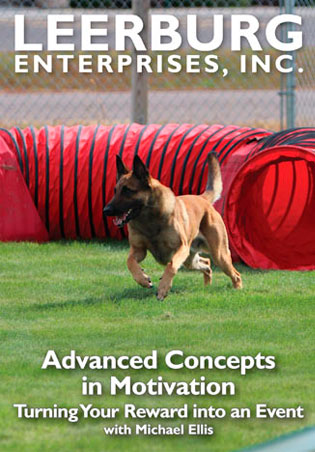
Advanced Concepts in Motivation w/ Michael Ellis


New Online Courses