

Key Features
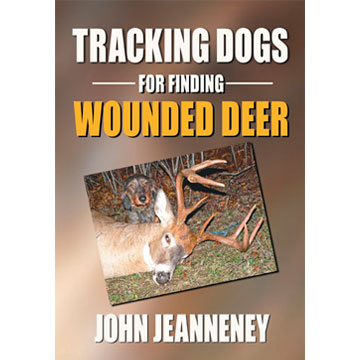
- By John Jeanneney
- Paperback
- 360 pages
Product Description
Take your dog along with you on hunting trips and teach them track wounded deer with this book.
Table of Contents
Chapter 1
- General Tracking Techniques 31
- Collars, Harnesses and Leashes 31
- Your First Deer Call 34
- Dead Spots 36
- Marking Tape 36
- Crossing a Field 37
- Cold Tracking 38
- Hills 39
- Fresh, Bright Blood on the Trail 39
- Distractions of Wildlife 40
- Night Work 41
- Putting Down Live Wounded Deer 43
- Reward 45
- Summary 46
Chapter 2
- The Tracking Dog and Scent 47
- What is Scent? 47
- Scent and the Direction of Track 48
- Tracking Conditions 49
- Scents and Surfaces 50
- Water Hazards 51
- Roads 51
- Water Tactics 52
- Swamps 53
- Checks 53
- Working the Wind 54
- Blood Tracking Without Blood 55
- Summary 57
Chapter 3
- Selecting a Tracking Dog Prospect 59
- Guidelines for All Breeds 59
- Breeds and Individual Dogs 61
- Show, Pet and Hunting Stock 61
- The Role of Genetics 63
- Nose and Intelligence 65
- Stability and Courage 67
- Puppy Tests 68
- Working Style 71
- The Process of Selecting a Puppy 72
- Evaluating an Older Dog 74
- Conclusion 75
- Points to Remember When You Pick Your Puppy 75
Chapter 4
- Dog Breeds I: The Scent Hounds 77
- Dachshunds 77
- Beagles 85
- Bassets 88
- Coonhounds 88
- Bloodhounds 90
- Hanover Mountain Bloodhound 93
- Bavarian Mountain Bloodhound 94
- Summary 96
Chapter 5
- Dog Breeds II: Spaniels, Pointing Dogs, and Retrievers 97
- Spaniels 97
- Versatile Hunting Dog Breeds from Europe 98
- Labrador Retrievers 100
- Golden Retrievers 103
- Chesapeakes and Flat Coats 104
- Summary 104
Chapter 6
- Dog Breeds III: Curdogs and Cowdogs 105
- Summary 112
Chapter 7
- Dog Breeds IV: Old Breeds with a New Mission 113
- Terriers 113
- German Jagdterriers 113
- Norwegian Elkhounds 115
- German Shepherds 116
- Belgian Sheepdogs 117
- Summary 118
Chapter 8
- Basic Training for Blood Tracking 119
- First Principles 119
- Motivating a Dog to Track and Find 120
- The Desire to Please 123
- Training Variations 124
- Artificially Laid Lines 125
- Marking the Line 128
- How Old Should the Training Line Be? 130
- Patterns for Laying Training Lines 132
- Tracking Leashes 133
- Tracking Accuracy 134
- Frequency of Training Sessions 134
- Finding the Time 135
- Psychological Foundations 135
- Summary 137
Chapter 9
- Advanced Training for Blood Tracking 139
- Blind Lines as a Reality Check 140
- Hot Lines 141
- Working Speed 142
- Wind, Rain and Darkness 142
- Working Several Dogs on the Same Training Line 143
- Orders of Priority in Training Versatile Hunting Dogs 143
- Adolescence 145
- Training Older Dogs 145
- Physical and Psychological Conditioning 146
- Turning on the Prey Drive 148
- From Training to Live Tracking and Back Again 149
- Gun-Shyness 150
- American Perspectives on European Training Methods 151
- Fährtenschuh 152
- European Off Lead Methods 154
- Summary 156
Chapter 10
- Special Tracking Situations I: Wounds in the Body Cavity 159
- Chest Wounds: Archery 160
- Overview 160
- Signs of Chest Wounds 161
- Physical Characteristics of Chest Wounds in Bowhunting 162
- Head-on Shots into the Front of the Chest 163
- Finding Chest-shot Deer 164
- Chest Wounds Made by Firearms 169
- Overview 169
- Signs of Chest Wounds 170
- Physical Characteristics of Chest Wounds 171
- Finding Chest-Shot Deer: Firearms 171
- Gut Shots: Stomach, Liver, Kidney and Intestines Overview 171
- Signs of a Gut Shot: Archery and Firearms 172
- Physical Characteristics of Gut Shots 172
- Finding Gut-shot Deer 175
- Summary 178
Chapter 11
- Special Tracking Situations II: Wounds Outside the Body Cavity 179
- Leg Wounds: Archery and Firearms 179
- Overview 179
- Signs of Leg Wounds 179
- Physical Characteristics of Leg Wounds 180
- Tactics for Recovering Deer with Broken Legs 180
- High Back Wounds 182
- Overview 182
- Signs of a High Back Hit 183
- Physical Characteristics of High Back Hits 183
- Tactics for Dealing with High Back Shots 185
- Head Shots, Jaw Shots: Firearms 186
- Overview 186
- Signs of a Jaw Injury 187
- Methods of Tracking and Taking a Jaw-shot Deer 187
- Neck Shots 187
- Overview 187
- Signs of a Neck Hit 187
- Physical Characteristics of Neck Wounds 188
- Tactics for Doing the Best You Can on Neck Shots 188
- Muscle Wounds: Archery and Firearms 189
- Overview 189
- Muscle Wounds and Blood Sign 189
- Tactics for Dealing with Muscle Wounds 189
- What Does the Amount of Blood on the Ground Tell Us? 190
- What Does the Hair at the Hit Site Tell Us? 191
- Summary 193
Chapter 12
- Tracking Wounded Bears 195
- Breeds of Dogs for Finding Wounded Bear 198
- Summary 200
Chapter 13
- Putting Down Live Wounded Deer 201
- Ethics, Administration and Politics 201
- Handler Safety 203
- Alternatives to Firearms 205
- The Argument for Permitting the Use of Firearms 206
- Summary 207
Chapter 14
- Equipment for Tracking 209
- Collars and Leashes 209
- Lights 211
- Electronic Tracking Collars 215
- Marking Tape 217
- Compasses and GPS Navigators 218
- Eye and Ear Protection 218
- Outer Clothing 219
- Footwear 220
- Clothing Beneath the Outer Shell 220
- Organizing Your Gear 221
- Equipment for Hunter Support 222
- Communications 222
- Handguns and Long Guns 223
Chapter 15
- Handlers and Hunters 229
- Handlers and Their Motivations 229
- The Spouse of the Tracker 233
- Communicating with Hunters 234
- Cash 236
- The Telephone Interview 238
- Questions for Bowhunters 239
- Questions for Rifle and Gun Hunters 241
- Summary 245
Chapter 16
- The Tracking Dog in the Family 247
- Working Dog Temperament 247
- Teaching a Strong-Willed Dog His Place 248
- Behavior in the House 249
- Teaching Your Dog to “Come” from a Distance 249
- Exercise 250
- Livestock 251
- Avoid Spaying and Neutering 251
- Dog Fights 252
- Yards and Fences 253
- Summary 253
Chapter 17
- The Tracking Dog for Guides and Outfitters 255
- Tracking Dogs Are Good Business 255
- Select a Dog Suitable for Your Hunting Situation 255
- Care and Management of the Dog 258
- Care and Management of the Hunter 259
- Summary 261
Chapter 18
- Tracking Tests 263
- Reasons for Testing 263
- Field Tests Versus Field Trials 263
- Blood Tracking Tests in America 264
- General Description 264
- Challenges 265
- An Experience with the JGV Blood Tracking Test 265
- Judges 269
- Deer Search Judge’s Score Sheet 270
- Tracking Accuracy 271
- Beyond Call-backs 272
- The Handling Factor in Tests 275
- Preparing a Dog for the Blood Tracking Test 276
- The Day of the Test 277
- The Dog and Handler as a Team 279
- Tracking Tests for Young Dogs 280
- Tracking Tests with Fährtenschuh 281
- Natural Tests 282
- Blood Tracking Titles on European Pedigrees 282
- Summary 283
Chapter 19
- Questions and Answers 285
Chapter 20
- Regional Tracking Traditions 299
- The Southern Tradition 299
- The Texas Cowdog Tradition 302
- Regions Where Blood Tracking Never Caught On 305
- The Tracking Tradition of the Northeast and the Upper Midwest 307
- Use of Tracking Leash 310
- Tracking at Night 310
- Examination and License 310
- Notification of Conservation Officer 310
- Carrying Firearms and Bows While Tracking with Dog 311
- Uniqueness of the Northern Tradition 311
- Summary 312
- Recommendations to Deer Managers and Legislators 313
Chapter 21: Conclusion 315
Appendix A: ist of Equipment Suppliers 321
Appendix B: Deer Search Inc. Artificial Blood Tracking Test 325
Appendix C: NYS Leashed Tracking Dog License Regulations 331
Appendix D: The Schutzhund Approach to Training for Tracking 335
Appendix E: Training with an Electronic Collar; an Overview 339
Appendix F: Directory of North American Tracking Organizations and Sources of Support 343
Glossary 345
Recommended Reading 349
A note from the author
Four completely new chapters have been added. Chapter 13, "Putting Down Wounded Deer", was inspired by a risky experience of my own, which made me realize that I had slighted a complex subject in the first edition.
Chapter 16, "The Tracking Dog in the Family", was the outcome of many conversations that we had with buyers of the book or of our puppies. "Tracking Dogs for Guides and Outfitters", Chapter 17, grew out of conversations with many guides who were looking for appropriate dogs as leashed tracking was legalized in more new states, most notably Illinois and Alaska.
The handlers/guides of Tara Plantation, a 27,000 acre hunting preserve on the Mississippi near Vicksburg, contributed very significantly to my education. Tara already had established its reputation as the pioneer hunting preserve in the United States to use tracking dogs as a means of enhancing the hunting experience of their hunters, and wisely using the whitetail resources of the plantation.
That same southern trip that took me to Tara also allowed me to meet a number of trackers in Georgia. I had an opportunity to experience the terrain, the dense underbrush, and to test "Yankee" tracking leads which worked better than anyone had expected. My travels in Georgia made me realize what a diversity of dogs have been finding wounded deer there long before this book was ever written.
We have added a new Chapter 19 "Answers to Problems" based upon our telephone conversations and e-mails.
It was gratifying to review the changing state legislation and regulations for the chapter entitled "Regional Traditions". Clearly, the movement to legalize the use of tracking dogs has expanded dramatically since the first edition. There is no way that we will ever keep this chapter completely up to date because there are positive changes every year.
I hope that the readers of this second edition will communicate with me and suggest how the book can be further enriched in the future.
About the Author
Wearing many hats, John Jeanneney is a hunter, tracker, dog trainer, breeder of hunting wirehaired dachshund, author of many articles on blood tracking, speaker at numerous workshops and seminars, educator and Ph.D. scholar. He began tracking wounded deer with dogs in 1976 after he has been granted a research license from New York States's Department of Environmental Conservation to investigate the feasibility of using leashed tracking dogs. John has kept careful records on over 750 deer calls, which he has taken himself. His understanding of the art of tracking was enriched by the experience of other tracker around the country and bove all by his fellow trackers in Deer Search, an organization that he co-founded.
As an American hunter who has read much of the European literature of blood tracking, he believes that we need our own book, written in our own language, to deal with tracking problems that are unique to America. This is what compelled him to write this book.
John has retired from his University position as a history professor and now he resides with his wife Jolanta and a dozen of wirehaired dachshunds in Berne, located in the Helderberg Mountains of New York State.


Have you used this product?
Your review helps others choose the right products for their dogs. Let them know what you think!
Write a Review

Tracking Dogs for Finding Wounded Deer

New Online Courses