

Key Features
- NO REFUNDS & NON-TRANSFERABLE
- Saturday, July 11, 2026 to Sunday, July 12, 2026
- Hosted by Leerburg in Menomonie, WI. Get hotel and lodging information here.
- Led by Pete Stevens
Product Description
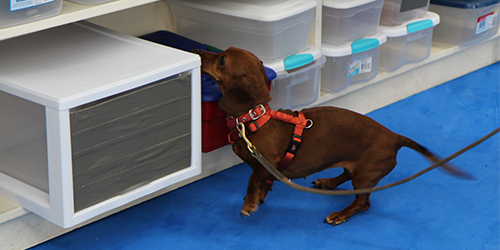
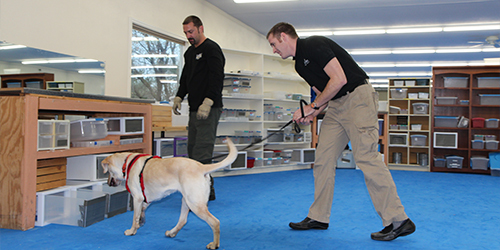
Join us at Leerburg for Pete Stevens's Seminar on Increasing Speed and Accuracy: A Sport Handler's Guide to Foundations in Nose Work. The seminar will occur from Saturday, July 11, 2026 to Sunday, July 12, 2026 in Menomonie, WI. Trainers of all levels are invited!
Working spots are available! Please select "Working Spot" when purchasing. After checkout, we'll send you an email to confirm more details.
View hotel and lodging information in Menomonie, WI.
Increasing Speed and Accuracy: A Sport Handlers Guide to Foundations in Nosework
Before any sporting event—athletes warm up by practicing the fundamentals. Even at the highest professional levels, success depends on repeated execution of basic skills. These movements may appear routine, even automatic, because they have been practiced to the point of fluency, requiring little conscious effort under pressure.
After more than 25 years of handling and training dogs, I can say with certainty that proficiency is built the same way. Early in my career, my handling was awkward and inconsistent. Over time, through countless repetitions in both training and real-world scenarios, foundational skills such as reading my dogs changes in behavior and leash handling became second nature. This is also when the true partnership between dog and handler begins to develop—through consistent work together. There is no substitute for time and repetition.
A common mistake among experienced handlers is believing they have progressed beyond the basics. Statements like “we’ve already done that” or “that’s not challenging enough” often signal a weak foundation rather than advanced skill. Completing an exercise is not the same as mastering it. Teams that struggle at higher levels frequently do so because foundational skills were never fully developed. In these cases, handlers may accept a mediocre Trained Final Response (TFR) in exchange for perceived speed. While time may matter in competition strategy, training should demand the highest level of precision the team can achieve. Simple searches with high criteria reinforce efficient behavior chains, leading to faster and more accurate responses through a higher rate of reinforcement. You will see how this speed and accuracy carries over into the higher levels if you keep reinforcing the foundations as part of your training.
Some teams focus exclusively on blind or unknown searches. While blind searches are essential, they should not replace structured training that allows handlers to recognize their dog’s proximity alerts—those subtle behavioral changes that occur as the dog enters the odor plume.
Responsibility for solid foundations does not rest solely with the team; it also lies with the trainer. Trainers must evaluate whether they are truly developing skills or inadvertently creating habits that limit performance. Repeatedly placing single hides deep within a search area, for example, can condition dogs to delay odor engagement rather than search efficiently from the start.
Effective training addresses all three components of the K9 team: the dog, the handler, and their work together. Odor reinforcement builds value for the target scent, obstacle-based searches refine handler mechanics such as leash handling, and double-blind searches challenge the entire team—including the trainer.
One quote I’ve encountered repeatedly over the years states, “We don’t rise to the level of our expectations; we fall to the level of our training,” a statement commonly attributed to Archilochus. It reflects the reality that under pressure, performance is governed by habit, not intention.
Beginners want to skip to intermediate work, intermediate teams want advanced exercises, and advanced teams aim for mastery. Master-level teams, however, consistently return to foundations—because they understand their importance.
Regardless of title or experience, no team is ever too advanced for foundational training. They are the solid foundation for the highest levels of competition. Without a solid foundation and consistent reinforcement of the foundation, it could all come crashing down as teams advance into more challenging levels. Train like you trail- Trial like you train!
About Pete
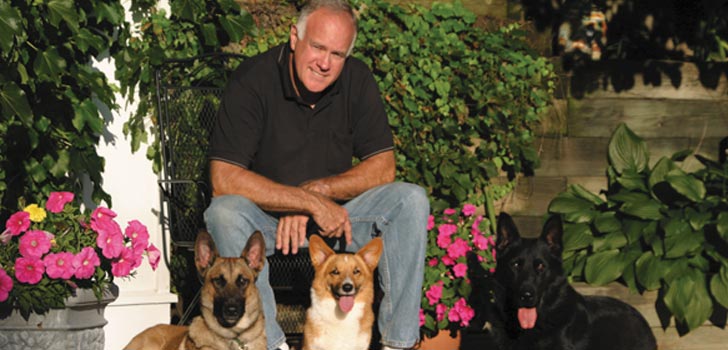
Pete Stevens is President and Lead Trainer at The Scentsable K9, which he founded in 2018 to deliver expert coaching to K9 teams. He retired from the Chula Vista Police Department after 24.5 years, having handled four Police Service Dogs across patrol and narcotics roles. Recognized as an authority in K9 training, Pete Stevens serves as a CA POST evaluator, Certifying Official for the International Police Canine Association, and NACSW trial judge. He has led over 200 detection workshops and seminars, and is known for his effective problem-solving. Pete Stevens holds credentials from Ford K9 school, including Canine Cognition Instructor and Detection Trainers courses. He currently conducts detection training in San Diego for professional and sport K9 teams, providing challenging sessions with insightful, constructive feedback.
Important Note
Seminars are non-refundable and non-transferable. Please view our Return Policy for more information.


Have you used this product?
Your review helps others choose the right products for their dogs. Let them know what you think!
Write a Review
Increasing Speed and Accuracy: A Sport Handler's Guide to Foundations in Nose Work with Pete Stevens

Related Courses


New Online Courses