


Choose how you want to learn!


*To receive instant streaming access, you must be logged in with your Leerburg account during checkout.


Key Features
- 1 hour, 46 minutes long
- Released 2002
- Instructor: Ed Frawley
- Also available as a self-study online course! CLICK HERE to sign up!
Product Description
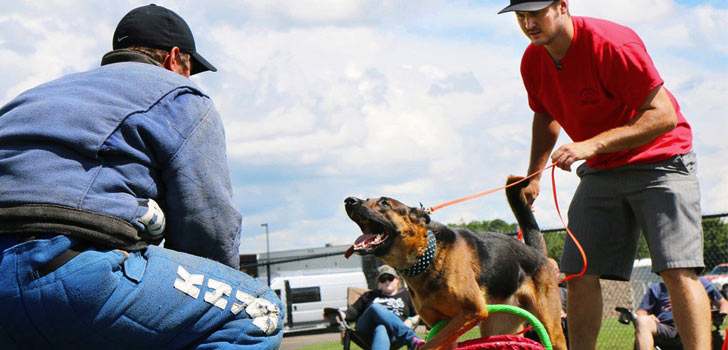
Defensive dog training is the most misunderstood area of protection training. This is evident by going to any Schutzhund trial or looking at half of the Police Service dogs in this country.
This training video is intended to help new (and old) trainers alike. Many experienced trainers get caught up in traditional sport dog training, which is weak in the defensive areas of training. This video will help all trainers recognize and get a dog started in the training of its defensive drive. The goal of the training is to bring a young dog further along in its fight drive development.
I constantly hear people say that "I have taken my dog through bite development and it bites like heck but it will not even bark when a stranger comes to our door or walks on the property." They want to know what's wrong. The problem is that their dog understands biting but it does not understand aggression and fighting. There in is the core problem to a great many dogs.
In bite development, the dogs learn to bite equipment. We teach them that the tug, the sleeve and/or the bite suit are all prey items. The focus of the work is to teach the dog to bite its' prey with confidence. When a dog is mature enough to begin defensive training we will teach the dog that the helper is not just the motor behind the prey but rather a fighting partner. In fact, the helper is someone that can hurt the dog and it should forever approach protection work in a different light.
The goal of defense is to teach the dog to handle stress. We teach the dog that "it can make things happen if it switches gears and raises the INTENSITY and forward movement in its' bite work" The dog learns that real aggression has the ability to make things happen. When this starts to happen we see self confidence go way up in the dog. With this comes a noticeable difference in the intensity and power of the dog. The tape goes into detail on how to maintain that power later in grip development.
Defensive work is intended to be stressful on young dogs, prey work is not. Trainers need to have a clear cut understanding of how to train in prey and how to recognize all of the subtle signs of avoidance before they attempt defensive work. I do not recommend this training be attempted until the handler and helper understand all of the work in my tape title The First Steps of Bite Training.
There is a lot of information packed into this 2 hour training video. In fact there is so much information that it's going to be impossible to get everything out of the video by only viewing it once or twice. I am sure that people will be going back to it again and again.
Topics Covered
- This tape is going to go into a great deal of detail on exactly what defense is - and is not. It has a section on recognizing defense, avoidance and fight drive in a dog.
- The Definitions for Terms Used in Training Defense. Part of this list can also be read on my web site.
- There is a section describing exactly where a dog must be in his bite development before he can be started in defensive training
- There is a section describing what kind of dogs can be trained in defense and what type of dog should not be trained. Some dogs are better left in prey drive training and some can not be trained at all.
- There is a section explaining what will happen if trainers screws this work up. The problem solving sections helps them recover from errors but the video goes into detail explaining the inherent dangers of defensive training.
- There is a section describing how to figure out when a particular dog is mature enough to start defensive training.
- There is an extensive section teaching aggression through civil agitation
- We go into detail on where to do the training, who should do the training and what to do before the training takes place to make sure that the trainer has a dog that is safe to be around.
- There is a section on how to produce stress during the work and how to relieve the stress.
- We explain the training steps to maintain intensity and forward movement in grip development for both sport dogs and police service dogs (the training is a little different for both).
What's the difference between this course, the DVD, and the stream?
DVD: 1 hours 55 minutes (physical copy)
Stream: 1 hours 55 minutes, lifetime access, stream from anywhere
Online Course: 60 videos (104 minutes), additional text content, discussion board, lifetime access, stream from anywhere


Have you used this product?
Your review helps others choose the right products for their dogs. Let them know what you think!
Write a Review
Each part of the overall concept is very well explained, with examples that shows concretely exactly what you are teaching. Then you put all the parts together, again with clear examples, demonstrating even to the novice, like myself, the defense concept with a training plan. I never knew until this training tape just how important the defense part of the work is, and not to get ahead of myself with a young developing dog.
In conclusion, you have again succeeded in training me how to train my dog more intelligently and effectively in very critical and misunderstood area. The example you used were perfectly integrated into the training material.
This is better than attending a class, because in 2 or 3 weeks I'll have forgotten most of the class instruction; with your tapes, I can go back over parts I am having trouble with and go out for more effective overall training.

The First Steps of Defense




Related Courses



New Online Courses