



Diarrhea in Puppies: What Causes It and What To Do With It


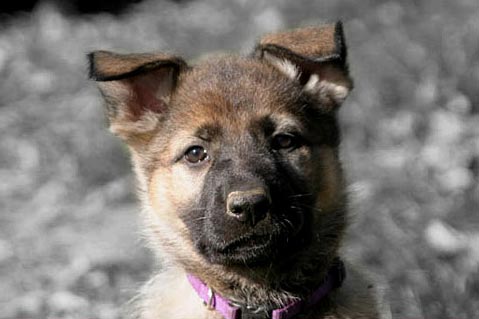
I have bred dogs since 1978 with over 340 litters of German Shepherds. This translates into raising a lot of puppies and a fair bit of experience with puppy diarrhea.
Over the years I have seen my share of sick dogs and puppies. One of the most common problems we see with puppies is diarrhea.
This article is intended to help people come to terms with puppy diarrhea. It is not intended to diagnose all causes of diarrhea or even to tell the reader how to cure the problem under every circumstance. It is simply intended to pass on some of the knowledge I have gained over the years when my puppies get sick.
I will explain the different kinds of diarrhea and pass on some of the options that I have learned that can be used by pet owners to control the problem of puppy diarrhea.
There Are Four Kinds of Stool
- Normal Logs
- Pudding Diarrhea- soft stools that will mound up
- Brown Water Diarrhea
- Brown Water Diarrhea with blood
We all strive for our dogs to have normal stool. If my dogs have a normal temperature (101 to 102 in dogs) and if they are laying logs, I know that these are two important indications that the dogs are healthy. There are always exceptions to this rule (i.e., a dog with cancer) but in general, this is a pretty accurate statement.
Parasites and Diarrhea
If a dog gets diarrhea as a result of parasites, the most common causes are Coccidia or Giardia. Both will cause diarrhea but each requires very different medication.
All dogs have some level of Coccidia in their gut. When a dog is stressed (i.e. being shipped, moving into a new environment, etc.) the stress can cause the Coccidia to bloom and flair up, therefore causing diarrhea. The solution is to give the dog ALBON. How much and how it is administered is a question for your vet.
Humans get Giardia when they drink water that has fecal matter in it. When you go camping and drink water from a stream, you can get Giardia. When dogs get Giardia, they need to be treated with METRONIDAZOLE. It is difficult for a vet to diagnose Giardia from a stool sample. It is best if the dog is at the vet who gets the stool sample right from the rectum of the dog. By doing this, the sample is fresh and it's easier to inspect the Giardia.
Both Coccidia and Giardia need to be diagnosed by a vet and the medication needs to be dispensed by a vet.
Pudding Diarrhea
When a dog has pudding diarrhea, I know that there is something going on with the dog. Pudding sends up a small red flag and my kennel staff knows they need to tell me when we see it. That dog needs to be monitored until it is back to laying logs.
Pudding diarrhea can be caused from:
- changing the food our dogs eat
- overfeeding the dog
- eating garbage
- stress
- exercise or excitement
When I see pudding diarrhea, I start to ask myself why it's happening.
When I see pudding diarrhea, I have my kennel staff add a little canned pumpkin to their daily food ration. Canned pumpkin not only helps firm up stools on dogs but it also helps when they are constipated (a strange thing that helps in both ways).
If you feed a natural diet, it is a simple thing to add pumpkin. The dogs will easily accept it. If you feed a kibble diet, they may not want to eat it. In this case, you may have to think about medication if the pudding gets too loose.
Some of the options are Kaopectate, Imodium AD (a full human dose either in liquid or pill).
You could also try a product called DiaBac. This is a homeopathic remedy that works for bacterial diarrhea symptoms. This can be used against e-coil, salmonella, diet, water changes, environment change, stress, or food allergies.
Brown Water Diarrhea
Brown water diarrhea is a serious situation. It's a sign of a sick puppy.
Brown water diarrhea cannot be ignored. When a puppy has water diarrhea, you need to be very careful that the pup does not get too dehydrated. If you cannot stop the diarrhea within 24 hours, you need to get it to a vet.
What I recommend new puppy owners do when they get their dog is to become familiar with what a healthy puppy feels like. By that, I mean learn how loose his skin is. A healthy well-hydrated pup has loose skin on his back. You can grab it and it will pull up and away from the muscle structure of the dog. When a pup begins to get dehydrated the skin feels tight. It is more difficult to pull it away from the body mass.
When this happens, you need to re-hydrate this pup as quickly as possible. Start by making sure he has plenty of water to drink. You can also give the pup Pedialyte. Go to the baby section of Walmart and buy unflavored Pediatric Electrolyte. If the pup will not drink this by itself, then try adding a little chicken broth.
When a dog has diarrhea, it is a good idea to take the dog off solid food for a day. This allows the gut to rest. Dogs and pups can easily go for a day without food. They cannot go without water. So a dog that is drinking plenty of water is not as serious as a dog that will not drink.
If a pup will not drink, then it needs to go to your vet. The pup needs to go on IV fluids and receive the appropriate medical treatment.
Brown Water Diarrhea with Blood
If you see brown water diarrhea with blood in it, you have a medical emergency. You need to get this puppy to the vet right now. If you wait for a day or two you very possibly could have a dead puppy.
Pups can dehydrate and die within 24 to 48 hours unless they have medical treatment. It is beyond the scope of pet owners to deal with blood in diarrhea.
General Comments
One thing I would recommend is to be sure that you don't allow your vet to give any vaccinations while your dog has any kind of issues with loose stools. You would also not want to give vaccinations while your dog is taking antibiotics. This can lead to long-term health problems.
If your pup continues to have long-term soft stools, you may want to take a look at what you are feeding the dog. Some dogs can be sensitive to certain dog foods. To determine if this is the problem, you should try and isolate the source of the problem. If you are feeding a natural diet, stop feeding grains and veggies. Just feed meat for a while. If you feed kibble, feed something like California Natural or Sensible Choice. These foods do not have a lot of ingredients.
If you are a new puppy owner, I recommend that you get the DVD I produced titled Your Puppy 8 Weeks to 8 Months. It addresses the topic of puppy diarrhea and much more. There are sections on housetraining your puppy and the DVD goes into detail on the amount of puppy training that legitimately can be expected from a young puppy.


Most Popular Articles
-
01
-
02
-
03
-
04
-
05
Related Products
-
 $65.00
 -
 $16.99
 -
$219.99 - $349.99
$199.99 - $309.99 -

$65.00$19.99

Ask Leerburg.