



Treating a Sick Newborn Puppy


Note: Leerburg formerly bred working bloodline German Shepherds until deciding to shift its focus towards producing dog training videos and courses alongside providing quality dog training equipment. This article was written when our breeding program was still active. While Leerburg no longer breeds working GSDs, we believe this article may still provide valuable information for those interested in starting their own breeding program.
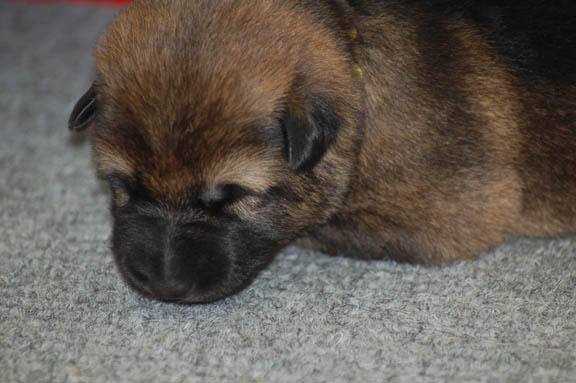
I have been breeding dogs for over 25 years and I still never get used to a puppy that gets sick and starts to die. This article deals with what I have learned about trying to save very young pups (under 2 weeks of age) when they get sick. As I write this article, I have a 2-week-old puppy in a box at my feet. Three days ago, he weighed 264 grams. This evening, he weighs 485 grams and is on his way back from the dead. This article is about what I did to save this pup. Maybe my experience will help you save some of your puppies in the future.
Before I begin, I have to make the point that healthy puppies begin with prevention. I have written an article titled Save a Puppy's Life which deals with a lot of things a breeder can do to keep dogs healthy. This article will talk about what to do when things go bad and a puppy starts to go downhill.
I also want to say that this program is not going to work on all pups. There are so many things that can make a puppy sick. I could never begin to cover the entire scope of problems that come up. But I have proven, through this protocol, that some of these sick puppies can be saved with a little luck and attention to detail.
The first issue a breeder needs to deal with is to determine when a puppy is in distress and getting sick. To do so, use a gram scale and weigh the pups. With just weight alone, you will be alerted to the first sign of a developing problem.
Here at my kennel, if a pup is born small (around 300 grams) we automatically start a weight gain chart. The puppy is weighed at least once a day and if there is any question about its energy and sucking ability, it will be weighed twice a day. I begin a weight chart before I even begin to treat a pup.
Simply picking puppies up and handling them will also help point out a pup in distress. Puppies will normally scream when they are picked up, but sick puppies have a different tone. Their scream is often louder and more forlorn. In addition, they will often begin to dehydrate. By becoming familiar with the feel of the skin of a healthy pup, you will develop a feel for recognizing a dehydrated pup. You can easily feel the ribs and their skin feels like cardboard. It loses its elasticity and becomes stiff.
Dehydration kills pups in a hurry. They can do downhill and die in 24 hours. Dehydration is often caused by loose stools. If the mother is cleaning her pups, this can be hard to spot. What I look for is a puppy whose back end looks wet (or slick) even though it may be dry. The hair will look slicked down and stuck together to give a wet look. If you see this, you need to step in and help this pup.
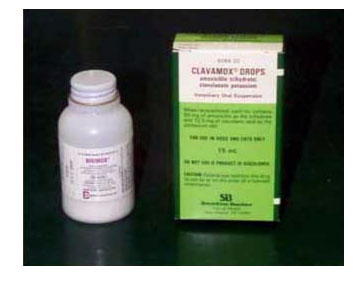
The first thing to do is to begin to tube feed the pup. I use our bottle feeding formula. Never use plain cow's milk. Cow's milk will give puppies diarrhea and make matters worse. I may add a couple of "cc's" liquid Imodium AD. We need to settle the puppy's stomach and bowels before dehydration takes its toll. The Imodium seems to do this most of the time. Depending on the circumstances, I may administer an antibiotic. This is something to discuss with your vet. Amoxicillin or Clavomox are two very popular antibiotics that can be stored for a long time and easily administered with a normal tubing. These little bottles of antibiotics are cheap and they have a long shelf life because they come as a powder and are not active until water is added. Once water is added, they must be kept in the fridge and are only good for 14 days.
Determining how often to tube and how much to tube needs to be properly calculated. Refer to the feeding chart on the bottle feeding page. It should be noted that once a pup is taken from the mother and tubed for a day or so, they seem to lose the sucking instinct. This means you are in it for the long haul. It will have to be tube-fed until it's old enough to lap from a bowl (about 3 1/2 weeks of age).
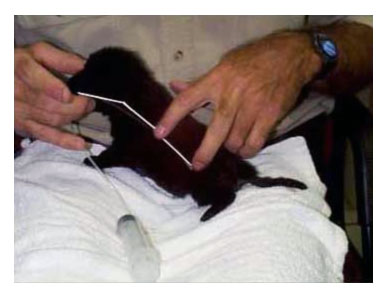
Tubing is done with a catheter and a 30 cc syringe tube (no needle). You determine how far to insert the tube by holding the catheter next to the puppy's side. Feel for the back of the rib cage to the tip of the nose. This is the length to insert the tube. Less than that will not get the liquid into the stomach, more than that may damage the stomach wall. You will often feel a slight resistance when the tube enters the stomach—this comes with practice. When you open the pup's mouth, insert the tube on top of the middle of the tongue. People ask about getting it into the lungs. If there is any question, pull the tube out and reinsert it. But if you have marked your catheter length at the rib cage with a marker and inserted it all the way (without force) it cannot be in the lungs; they are much closer to the dog's nose than his stomach.
I feel that when the puppy is really dehydrated and sick, one needs to be careful not to feed it too much. When an adult dog has diarrhea, your vet will often tell you to not feed them anything other than water for 24 hours. With pups, I think we need to be careful. If it's really not feeling good, it needs nutrition but we should not constantly pump food down its throat every 4 hours. I make a judgment call and will tube 10 to 15 cc of Lactated Ringers 2 to 3 hours after a formula feeding, especially if I feel I still have a dehydration problem. I think this helps flush the system. Water (or Lactated Ringers) will move through the pup much quicker than milk replacer. It will not cause the pup to back up with food. On the contrary, I think that it helps the digestion process. If any vets read this and disagree, I certainly have an open mind on this issue. Maybe there is something better to use that has more electrolytes than Ringers.
While on the subject of medical attention from a vet, in regard to these very young puppies, my experience is that most vets are not going to be able to say, "This is what's wrong." Pups that are sucking mother's milk and begin to fade are often a mystery to everyone involved. I spend between $500 and $800 a month on normal vet bills in my kennel and respect the heck out of my local vets. But when it comes to these small pups, I no longer get a vet involved. I follow the protocol in this article. It works as many times as it fails and I am of the opinion that when it fails, my vet could not have saved the pup, either.
If you get behind the 8-ball and a pup really gets dehydrated, you are going to have to deal with this. Simply tubing is oftentimes not enough to bring the pup around. Fluids injected under the skin do more to improve hydration than simply giving oral fluids (that's why people get IV's when they are dehydrated).
Go to your vet and get a bag of Lactated Ringers. (They are cheap only about $5.00). You will also need to get a 30 cc syringe. A small pup (300 grams) will need to have 10 to 15cc's of Lactated Ringers injected under the skin (not in the muscle), twice a day, usually for a couple of days. Sticking small puppies with big needles is not easy. It's in the same category as sky diving or bungee jumping. Some people can simply not do it. They will have to go to the vet to get it done.
I have found that when a pup is really dehydrated, this is a "do or die" situation. Under these circumstances, I will do it but I don't like it. I accomplish this unpleasant task by picking the pup up with 2 fingers by the skin at the shoulders. This creates a pocket of skin. I insert the needle just below my fingers, making sure I don't hit a muscle and being careful not to push it all the way through both folds of skin. If you push it through both folds, you have created a broken balloon effect. Pulling the needle back through the second fold of skin has created a hole and that area will not hold fluid. You will now have to try a different spot (which makes it even harder on your mind).
I only do this a few times until I see an improvement in the hydration. If he improves, you will see an increase in the elasticity of the skin.
During this entire process, I take the pup away from the mother and keep it in a small 24-inch by 24-inch cardboard box. I find it easier to monitor the health when it's in this box rather than when it's left in with the litter. I lug the box around with me. I will keep it in my office or my secretary's office. I take it home at night and keep it next to the bed. That way, I can get up in the middle of the night and give it a light tubing of the homemade bottle feeding formula that I detail in my article titled "Bottle Feeding Puppies" or Ringers (whichever I feel is more appropriate). When it comes to night feedings, I usually let the puppy tell me when it is hungry. It will cry just like a baby. So rather than wake up every 4 or 4 1/2 hours and tube the pup at night, I let it tell me what it needs.
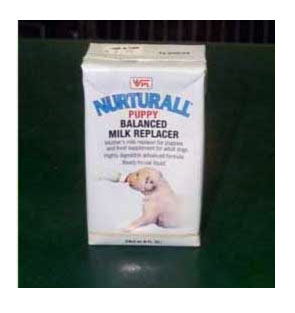
I cannot stress enough how bad the milk replacer is that vets sell. It's not just bad, it's horrible. Any Vets that sell this crap lack experience in whelping and saving puppies. I just shake my head when I get emails from breeders who have pups that have dead pups because of it. They lose pups and then go on the internet and search on bottle-feeding and come to my article on how to make a bottle-feeding formula.
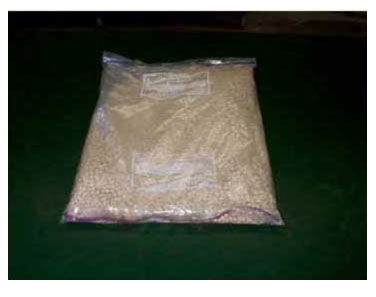
It's important to keep the pup warm without overheating it. Too warm only adds to your problems. Take an outside wall thermometer and lay it on the box to monitor the temperature. Some people use hot water bottles but I have found that a combination of a heating pad (set to LOW) under a 2-gallon zip lock bag filled with dry uncooked rice and beans works better. I make sure the box is big enough that the pup can get away from the heat source if it gets too warm. If it is healthy enough, it will crawl off. If it is too sick, you will need to watch for them panting (or laying with their mouth open) and move it off.
There have been times when I have come into the kennel in the morning and found a pup moved off to the side of the litter. It's cold, flattened out, and almost gasping for breath. This is a pup that is very close to dying. The first thing I try to do is warm the pup up. I do this by filling the sink with warm water and immersing the pup up to its neck in the water. I hold it in my hands until I feel that it is getting warm. This has worked for me in the past, but when a pup is that far gone, it usually is going to die.
For normal heating, bags of rice are much better than hot water bottles. Uncooked rice and beans hold the heat longer than water. You can put the bag, with a couple of pounds of rice and beans, in a microwave for 3 minutes. Shake the bag around to redistribute the heat and you have a very nice heat source for the pup. These bags also work wonders for your own stiff neck and shoulders (those cloth bags that are heated with microwaves that wrap around your neck are just bags of rice).
There are 2 important things that need to be done with sick puppies:
- You need to constantly turn the pup over from one side to the other, kind of like a bird that is constantly turning the eggs in its nest. If you have ever seen a really sick pup in a whelping box (just before it dies), it flattens out. Turning and moving the pup will stop it from flattening out. I don't know that this is so important, but it does make a difference.
- I also feel an important thing in the recovery of a sick puppy is to handle it a lot. Pet it, stroke it, move it around. This helps the natural body functions of the puppy. I also think it helps its spirit. I believe that puppies need to have their spirit treated in addition to their health. Taking it away from its mother makes this process all the more important. Don't underestimate how important this aspect of the healing is. Hold it and cuddle it as much as possible. As I type this, my puppy was crying. He had just been fed so it was not a hunger issue. Petting him did not stop the crying, but the very instant I picked him up and laid him on my chest he got quiet and went to sleep. Things like this never cease to amaze me.
Bringing a puppy back from the edge is a great feeling. Unfortunately, a great deal of work sometimes does not work and the pup dies. It's hard to lose one of these little guys after days of close contact. We often think that the pup was just a little weak and needed our help to jump-start it, but this is not always the case. When a pup dies, I look at it like there was something seriously wrong that I didn't know about. When pups start to fail, you never know if there is an internal abnormality or an unknown injury that has caused it to fail. I have learned to look at it as "I did my best but it was not in the cards for the pup to make it. Luck was not on its side." That's the hard part about being a dog breeder.
One final point on this issue is that there is always the possibility that after days of treatment (which includes getting up a couple of times per night), the pup lives but ends up having some type of abnormality that forces you as a responsible breeder to make the difficult decision about its future. I have had this happen twice.
I am open to other ideas from both vets and breeders on this issue. If you have an opinion let me know. I will post the good ones at the end of this article.
With luck and the proper care and treatment, a pup has a chance of making it.


Most Popular Articles
-
01
-
02
-
03
-
04
-
05
Related Products
-
 $40.00

Ask Leerburg.