



Easter Fun for Dogs: Teach Your Dog to Find Easter Eggs & Keep Them Safe



Teach Your Dog to Find Easter Eggs
Nose Work Basics — A Perfect Holiday Introduction
Dogs experience the world almost entirely through scent. The number of olfactory receptors in a dog's nose dwarfs our own — they detect odors at concentrations we can't begin to perceive. That extraordinary ability is the engine behind search-and-rescue work, drug detection, and competitive scent sports like AKC Scent Work and NACSW.
You don't need a working dog to tap into it. Easter morning is a perfect excuse to introduce your dog to one of the most natural, mentally tiring, and rewarding activities they can do: finding hidden things by scent.
This is a real-world application of nose work — a discipline built around letting dogs use their nose to locate hidden targets. The mechanics are simple. The mental engagement is deep. A 20-minute Easter egg hunt can tire a dog more thoroughly than an hour-long walk, because scent work requires sustained focus and problem-solving, not just physical exertion.
What You'll Need
Gather a handful of hard plastic Easter eggs — the kind that snap open — and fill them with your dog's favorite treats or a small portion of their daily kibble. Set aside a few higher-value rewards to pay out on successful finds. Keep the dog's hunt eggs clearly separated from any candy-filled eggs that belong to the kids.
Before you start: Use only eggs filled with dog-safe treats — plain kibble, freeze-dried meat, or commercial training treats. Never reuse eggs that have held chocolate, xylitol gum, or candy. Even trace residue can be harmful. Keep a dedicated set of eggs for the dog's hunt and label them clearly so there's no mix-up on the day.
Step-by-Step: The Easter Egg Hunt Game
From First Introduction to Backyard Hunt
-
Build the "find it" foundation Before hiding anything, teach your dog what the cue means. Hold a treat in your closed fist and let your dog sniff at it. The moment their nose touches your hand, open your fist and reward. Repeat five or six times. You're building the association between using their nose and getting paid.
-
Introduce the egg right in front of them Place a treat-filled egg on the floor while your dog watches. Say "find it" and let them investigate. As soon as they nose or paw the egg, praise and open it for them. Repeat with the egg just slightly out of reach, rewarding the moment they locate and indicate it.
-
Hide the egg while your dog waits Put your dog behind a closed door or have someone hold them. Hide one egg in an easy location — under the edge of a couch cushion, behind a chair leg, near a table base. Bring your dog in, say "find it," and follow them. Let them work. Resist the urge to point or guide — that's their job, not yours.
-
Build up to multiple eggs Once your dog reliably finds one egg, hide two. Then three. Keep the difficulty manageable — success and reward are what build drive. If your dog loses interest, the hides are probably too hard. Move the eggs to more obvious spots and let them win a few in a row before increasing the challenge again.
-
Take it outside The yard adds real complexity — wind, grass, competing smells. This is where nose work really shines. Hide eggs under leaves, behind flower pots, or along the base of the fence. Outdoor hides take longer and burn significantly more mental energy. A dog who successfully hunts six or eight eggs outside will likely be ready for a nap.
Training tip: Keep sessions short — five to ten minutes per round. End on a successful find so your dog finishes feeling like a winner. As they improve, try rubbing a treat on the outside of an empty egg so the scent is present even without food inside. This is exactly how formal nose work eventually transitions from food reward to odor detection work.
Nose work is one of the few sports where the dog leads and the handler follows. It builds confidence in shy dogs, provides an appropriate outlet for high-drive dogs, and deepens the partnership between dog and owner. A holiday egg hunt is a genuinely great starting point — low stakes, high reward, and built-in fun for the whole family.
If your dog takes to the game, explore the full library of scentwork and tracking courses at Leerburg University: Browse Scentwork & Tracking Courses »
What to Do If Your Dog Gets Into Chocolate or Candy
Know the Hazards Before the Holiday Starts
Easter baskets are among the most dangerous holiday hazards for dogs. Chocolate, sugar-free candies, raisins, and macadamia nuts are all common Easter treats — and all potentially toxic. Knowing what's dangerous and how to respond quickly can be the difference between a routine vet visit and a life-threatening emergency.
Common Easter Toxins at a Glance
| Substance | Why It's Dangerous | Severity |
|---|---|---|
| Dark & Baking Chocolate | Contains theobromine and caffeine; affects the heart, nervous system, and kidneys | High |
| Milk Chocolate | Lower theobromine concentration than dark, but still toxic — large amounts can be dangerous for small dogs | Moderate–High |
| White Chocolate | Very low theobromine, but high fat content can trigger pancreatitis | Low–Moderate |
| Xylitol (sugar-free gum & candy) | Triggers a dangerous insulin release; can cause hypoglycemia and liver failure even in small amounts | Very High |
| Grapes & Raisins | Mechanism not fully understood, but can cause acute kidney failure — even small amounts | High |
| Macadamia Nuts | Causes weakness, tremors, fever, and vomiting | Moderate |
Signs of Toxic Ingestion
Symptoms depend on the substance and the amount consumed. Common signs of chocolate or candy toxicity include vomiting, diarrhea, increased urination, restlessness, excessive thirst, muscle tremors, seizures, and rapid or irregular heartbeat. With xylitol, symptoms of hypoglycemia can appear within 30 minutes — weakness, staggering, and collapse.
Do not wait for symptoms before acting. By the time obvious signs emerge, the toxin has already been absorbed into the bloodstream. Early intervention is always more effective than waiting.
Watch: Expert Veterinary Guidance
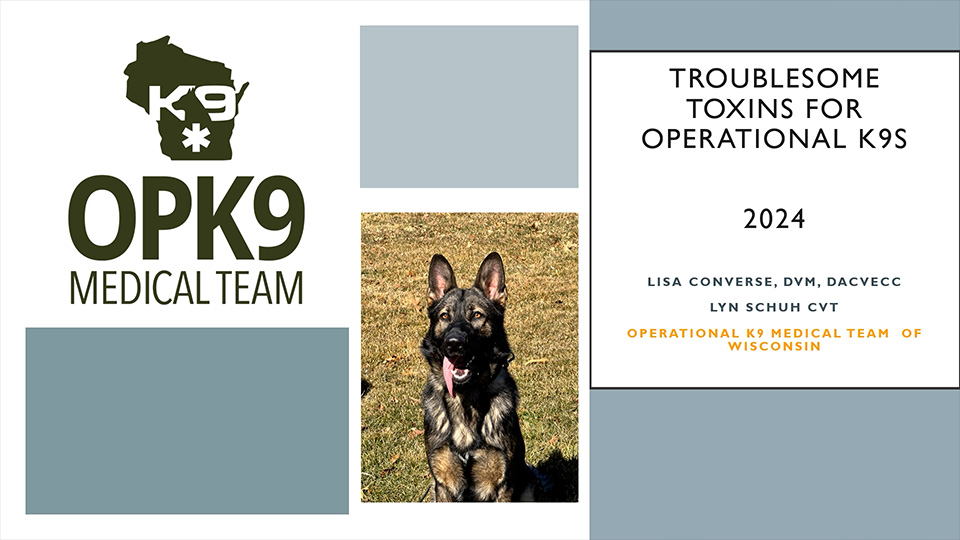
Presented by Dr. Lisa Converse and Lyn Schuh — a 12-minute deep dive into the most dangerous common household items for dogs, how each toxin works in the body, and what you should know before an emergency happens.
Dr. Converse is the president and medical director of the Operational K9 Medical Team of Wisconsin. This is one of the most practical and clearly explained overviews of canine toxicology available. We strongly recommend watching it before the holiday weekend.
Watch Free on Leerburg »What to Do in an Emergency
ASPCA Animal Poison Control Center
(888) 426-4435Available 24 hours a day, 7 days a week. Have the product name, approximate amount ingested, and your dog's weight ready when you call. A consultation fee may apply. Save this number in your phone now — before you need it.
- 1Stay calm and act immediately. Collect the packaging from whatever was eaten. You'll need the product name, ingredients list (look specifically for xylitol), and an estimate of how much was consumed.
- 2Call ASPCA Poison Control at (888) 426-4435 or your emergency veterinary clinic right away. Do not wait to see whether symptoms develop.
- 3Do not induce vomiting unless specifically directed by a veterinarian or poison control specialist. Inducing vomiting incorrectly — or with the wrong substance — can cause additional harm.
- 4Monitor and document. Note the time of ingestion, any symptoms you observe, and when they began. This timeline is critical information for the treating veterinarian.
- 5Transport to a vet if advised. If poison control recommends it, get to your nearest emergency animal hospital immediately. Bring the product packaging.
Prevention is always the best medicine. Keep Easter baskets, candy dishes, and chocolate completely out of your dog's reach — on high shelves or behind closed doors. Remind children not to share Easter candy with the dog, even when they're begging convincingly. The most food-motivated dogs are often the most at risk.
About Dr. Lisa Converse & the Operational K9 Medical Team of Wisconsin
Dr. Lisa Converse — President & Medical Director, OP K9 of Wisconsin
Dr. Lisa Converse is a founding member of the Operational K9 Medical Team of Wisconsin (OP K9). As the organization's president and medical director, she currently travels throughout Wisconsin educating K9 handlers and EMS personnel on point-of-injury care for wounded canines on duty.
The Operational K9 Medical Team of Wisconsin was founded in 2020 to provide education and support to law enforcement officers and other first responders assisting operational K9s wounded in the line of duty.
Learn more at opk9ofwi.com
Easter is a wonderful time to build something new with your dog. A nose work egg hunt is genuinely enriching — you're building confidence, exercising their brain, and laying the groundwork for a sport they can pursue for life. Taking a few minutes now to watch Dr. Converse's video and saving the poison control number in your phone means you'll be ready if anything goes wrong.
Have a great Easter with your dog. Hunt some eggs, keep the chocolate locked up, and enjoy the spring.
ASPCA Animal Poison Control Center
(888) 426-4435Available 24/7. Save it in your phone before you need it.


Most Popular Articles
-
01
-
02
-
03
-
04
-
05
Related Products
-
 $65.00
 -
$14.99 - $18.50
$14.99 -
$219.99 - $349.99
$199.99 - $309.99 -

$65.00$29.99


Ask Leerburg.