



Errorless Dog Training - What Is It?


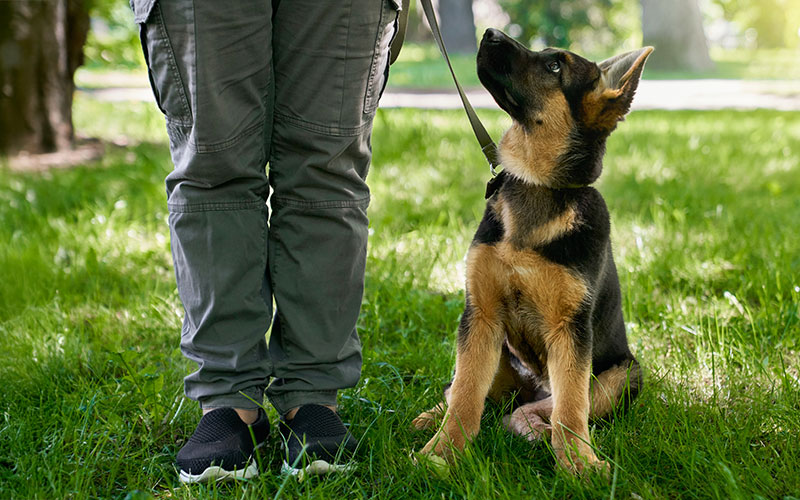
To simplify explaining errorless learning in dog training, you can summarize it as designing success. It means arranging the training environment so that the dog almost always makes the right choice, thereby learning quickly, confidently, and without developing bad habits.
Here are the core concepts in plain language:
Core Idea of Errorless Learning
Errorless learning means designing your training so the dog almost never practices the wrong behavior. Instead of letting the dog try, fail, and then correcting them, you set things up so the easy, obvious choice is the correct one.
This approach, borrowed from behavioral science, leads to animals learning faster, with less stress and fewer bad habits.
How You Design Success (The Method)
The process of errorless learning involves four main steps:
-
Start with Tiny, Easy Steps
You begin with tasks so easy the dog cannot really be wrong. You split behaviors into small slices.
For example, instead of teaching "heel," you teach the dog to stand calmly at your side, then take one step, then two steps, and so on, with each step being easy enough to master.
-
Control the Environment
You set things up so the dog is very likely to do the right behavior and very unlikely to do anything else. This involves using management tools like leashes, barriers, and strategic positioning of rewards to prevent the rehearsal of mistakes. If the dog never practices the wrong pattern, that wrong pattern never becomes strong.
-
Pay Heavily and Immediately
You use a high rate of reinforcement (lots of reward) for correct attempts, ensuring there is very little confusion about what behavior earned the reward. You should reinforce clean behavior heavily, paying generously for exactly the picture you want.
-
Increase Difficulty Gradually
You only raise criteria slowly and systematically. When the dog is getting it right 80-90% of the time, you increase the difficulty just slightly. If the dog starts making wrong choices, it means you've raised criteria too fast, and you must go back a step.
When mistakes happen, you view it as a training plan problem, not a "stubborn dog" problem, and you respond by changing the setup, not escalating pressure.
Example in Civilian Scent Training
In scent work, an errorless-style set-up is used to introduce a new odor (like birch) and build the indication behavior:
- You start with a tiny, simple training picture—maybe one box or a single object in an empty area where the odor is strong and obvious.
- There are no decoy boxes or competing objects at first, so the only interesting place for the dog's nose is the right spot.
- You use super short repetitions: the dog goes to the box, sniffs immediate reward.
This ensures the dog experiences many training short sessions of "go to odor get paid" reps, before a scenario where the dog is exposed to decoy boxes or small room searches.
Analogy: Errorless learning is like teaching someone to drive by starting them in an empty parking lot on a clear, sunny day, providing immediate positive feedback for every correct turn, and only moving them to a quiet residential street once they are 90% proficient. You are designing the environment to guarantee success before allowing them to face the chaos of heavy traffic (real-world deployment).


Most Popular Articles
-
01
-
02
-
03
-
04
-
05
Related Products
-
 $65.00
 -
 $16.99
 -
$219.99 - $349.99
$199.99 - $309.99 -

$65.00$19.99





Ask Leerburg.