



When the World Is Too Loud: Helping Your Noise-Sensitive Dog


Introduction
The Most Common Behavioral Problem in Pet Dogs — And What You Can Do About It
Noise fear is the single most common behavioral problem in pet dogs. Studies suggest that between a quarter and half of all pet dogs are affected to some degree — yet many owners don't recognize it, attribute it to temperament, or feel helpless to address it.
The good news: with the right approach, most dogs can improve significantly. Whether your dog startles at a passing bus, refuses to enter a loud building, or shakes through every thunderstorm, the path forward is the same — patient, science-backed work that rebuilds your dog's emotional relationship with sound, and deepens your relationship with each other in the process.
This article draws on peer-reviewed research and professional training principles to give you a comprehensive, practical guide to helping your noise-sensitive dog.
Why Dogs Fear Noise
Genetics, Environment, and What It Means for Your Dog
Noise sensitivity often appears early — the majority of affected dogs show signs within their first or second year of life. While there is a clear genetic component (heritability estimates consistently above 0.20 across breeds), environment plays a powerful role too.
Large-scale studies involving tens of thousands of dogs have found that the richness of a dog's socialization experiences during puppyhood is one of the strongest predictors of noise sensitivity later in life: more varied, positive experiences early on correspond to significantly lower fear scores as adults.
This matters because it reframes noise fear as something malleable — not a life sentence, but a pattern that formed under certain conditions and can be reshaped under new ones. If you have a noise-sensitive dog, you are not working against nature. You are working with it.
Research also shows that after age, socialization history is the factor most strongly associated with the extent of firework and thunder fear in pet dogs. That same principle — exposure paired with positive experiences — is what drives our training approach.
Important note: If an older dog suddenly develops noise fears without prior history, a veterinary check is warranted. Pain conditions, neurological changes, and endocrine disorders can all trigger or worsen noise sensitivity. Addressing underlying physical issues can be a critical component of treatment.
The Critical Window: Early Socialization
The Stage Most People Underestimate
Early socialization is, without question, the most powerful tool available for preventing noise fear — and it's the one most commonly shortchanged. New puppy owners are understandably consumed by the basics: housebreaking, crate training, not chewing the furniture. Socialization to novel sounds gets pushed to the back burner, or treated as something that will happen naturally.
It won't — not reliably, and not at the depth that actually protects a dog long-term. The socialization window in puppies is finite and biologically driven. Exposing a young puppy to the sounds of traffic, gunfire, crowds, thunderstorms, fireworks, and machinery — paired consistently with food, play, and calm handler energy — builds a foundation that is genuinely difficult to replicate later in life. The research bears this out clearly: puppies who receive rich, varied sound exposure during this window show significantly lower fear scores as adults.
If you have a puppy right now, make noise socialization a deliberate, scheduled part of every week. It deserves the same intentionality as housebreaking — because the consequences of getting it wrong are just as lasting.
Single-Event Learning: When One Bad Moment Changes Everything
Why Noise Fear Can Appear Suddenly in Adult Dogs
Not all noise fear develops gradually. Dogs are capable of what behaviorists call single-event learning — a fear response so intense that it is encoded permanently after just one experience. This is not a training failure. It is a survival mechanism, and it can happen to any dog regardless of their prior history or temperament.
A lightning strike. A car backfiring at close range. A firework explosion. A traumatic experience paired with a specific sound — and the association can be immediate and lasting. A dog who was perfectly comfortable around thunderstorms for years can become storm-phobic overnight following a single frightening event, even if the dog was not directly harmed.
Understanding this matters for two reasons. First, it removes blame — from the dog and from the owner. Second, it informs treatment: a fear that formed in a single moment is not going to dissolve in a single session. It requires the same patient, systematic counterconditioning and desensitization work as any other noise fear, applied consistently over time.
Important note: If an older dog suddenly develops noise fears without prior history, a veterinary check is still warranted. Pain conditions, neurological changes, and endocrine disorders can all trigger or worsen noise sensitivity — and ruling these out is an important first step before beginning behavioral work.
The First Priority: Keep Your Dog Under Threshold
Management, Safety, and the Role of Your Own Reaction
Before any long-term training begins, the most important job is protecting your dog's welfare right now — preventing fear experiences from compounding and becoming worse. Every time a dog is pushed into full panic, the fear can deepen. The goal of day-to-day management is to keep your dog as far below his stress threshold as possible.
Creating a Safe Space
Provide a comfortable, covered retreat — a crate, a quiet corner, a covered bed — that your dog associates with calm and safety before any noise events occur. This space should always be accessible voluntarily. It should be an invitation, never a confinement. Ideally, build the positive association with this space during calm, everyday moments long before a scary event happens.
Your Reaction Matters More Than You Think
Dogs are extraordinarily attuned to human emotional signals. Research on social referencing in dogs shows they actively look to their owners to interpret ambiguous situations. When a truck rumbles past and you tense up, check on your dog anxiously, or coo in an overly soothing tone that signals concern — your dog reads all of it.
Practice staying calm, neutral, and even cheerful around triggering sounds. Your composure communicates: this is not a threat. Your reaction to the noise is just as important as your dog's reaction — possibly more so.
On Comforting a Fearful Dog
An old piece of advice — "don't comfort a fearful dog, you'll reinforce the fear" — has been thoroughly revisited by modern research. Fear is an emotion, not an operant behavior. You cannot reinforce an emotion the same way you reinforce a sit. Evidence from multiple studies shows that calm stroking and gentle interaction from a trusted owner reduces behavioral and physiological stress markers in dogs.
If your dog seeks contact during a scary moment, you can absolutely provide it. Just follow their lead — unsolicited restraint or forced closeness can increase stress rather than reduce it.
The Power of Food & Play During Noise Exposure
Counterconditioning in Everyday Life
One of the most robustly supported findings in the research literature is this: feeding and playing with your dog during noise events is associated with meaningful, measurable improvement in fear scores over time. In a study of over 1,200 dog owners, the "feed/play" approach was the only management strategy significantly linked to fear improvement — outperforming pheromones, herbal remedies, and environmental management approaches.
This works through counterconditioning: pairing the scary noise with something the dog loves creates a new emotional association. Loud sound = good things happen. Over enough repetitions, the noise itself begins to predict pleasure rather than threat.
But food and play are not interchangeable tools. Food calms. Toys amp. High-arousal play — tug, chase, fetch — raises drive and energy. In a dog that is already anxious or on edge, introducing high-arousal play around a noise trigger can inadvertently intensify the emotional state rather than lower it. Food, by contrast, engages the parasympathetic nervous system. Eating and sniffing are naturally calming behaviors, which is exactly what you want when working around a fear stimulus.
This distinction matters especially for firearms and range work. Food rewards are the right tool on the range — they bring arousal down and build a calm, positive association with gunfire. Save the tug and the high-drive play for after the session, in a neutral environment, as a reward for the work itself.
Using Food Creatively — Even for Dogs Who "Aren't Food Motivated"
Many dogs who seem indifferent to treats are actually reacting to their arousal state. When anxiety is high, appetite shuts down — this is a reliable indicator of stress. But food can be a wonderful tool in low-arousal contexts, and there are creative ways to deploy it:
- Hand-feed meals throughout the day. Rather than feeding from a bowl, use your dog's daily food to build engagement and give yourself a reward source you can use anywhere — on walks, in the car, at the training facility.
- Use food on walks near triggers. When a bus passes or a truck rumbles by, engage your dog with food rewards or scatter treats on the ground. Eating and sniffing naturally lowers arousal and redirects attention away from the trigger.
- Scatter food in intimidating environments. Tossing kibble around the agility building floor gives your dog a job (using their nose) and transforms a space they find threatening into one that rewards calm exploration. Sniff work engages the brain in a focused, naturally calming way.
- Reserve high-value treats exclusively for triggers. Special food that only appears around scary sounds becomes a reliable predictor of something wonderful — and over time, the sound itself takes on that positive association.
When Play Is the Right Reward
For dogs with high play drive, structured play can be a powerful reward — but it belongs in the right context. Use tug and high-energy play to build engagement and handler focus in neutral environments, or as an end-of-session reward after successful exposure work. A dog who plays tug with focus and purpose has learned to look to their handler as the source of good things — which is exactly the relationship you need when navigating scary environments together.
Course: Power of Playing Tug with Your Dog »Important note:The distinction matters: food lowers arousal and engages the parasympathetic nervous system, while toys — tug especially — raise drive and intensity.
Long-Term Training: Desensitization & Counterconditioning
Changing How Your Dog Feels About Noise — For Good
Management and in-the-moment counterconditioning protect your dog today. But the longer-term goal is to actually change how your dog feels about noise — and that requires a more systematic approach combining desensitization and counterconditioning.
Desensitization
Gradual, progressive exposure to the fear-eliciting sound, starting at an intensity too low to trigger any anxiety. The dog learns, across many repetitions, that the stimulus predicts nothing bad. Volume or proximity is increased only once the dog is visibly relaxed and comfortable at the current level. This can be done with sound recordings at home or by carefully managing real-life exposure distances.
Counterconditioning
Pairing each presentation of the noise with something the dog loves — food, play, praise — so the sound becomes a reliable predictor of good things. The two approaches are most powerful in combination, and research supports counterconditioning as one of the highest-success interventions available, with over 70% of owners in one large study reporting it effective.
Critical caution — avoid sensitization: Never push too hard or move too fast. If your dog is over threshold — panting, refusing food, seeking escape, unable to focus — you have gone too far. Pushing a fearful dog past their limit does not build resilience. It causes sensitization, where the fear actually deepens and generalizes to new stimuli. Always end sessions before your dog becomes distressed. Slow, lasting progress is infinitely better than fast progress that breaks.
Using Sound Recordings
Playing recordings of triggering sounds — traffic, crowds, loud bangs — at low volume is a useful controlled-exposure tool. You can pair them with play or meals, practice in a relaxed home environment, and adjust volume gradually over many sessions. Bear in mind that recordings don't capture the full sensory experience of real-life noise, and some dogs react very differently to recordings than to the real thing. Treat recordings as a helpful supplement to real-world work, not a complete solution.
Redirection and Recall Drills
In addition to classical desensitization work, practice active engagement exercises around triggers. When your dog notices a scary noise, call them back to you and reward them generously for choosing to stay close. Repeat in different environments and at varying distances from the trigger. Over time, this builds a powerful trust: your dog learns that you are a source of safety when the world feels threatening, and that orienting toward you — rather than fleeing or freezing — is always the right choice.
Course: Engagement Skills with Forrest Micke » Course: Engagement — Micro Course with Michael Ellis »Relaxation Training
An Underrated and Highly Effective Tool
Relaxation training involves teaching your dog to enter a calm, relaxed physiological state on cue. It is a lesser-known approach but one of the most effective tools available for noise-sensitive dogs — and one that generalizes to every environment and situation your dog will ever encounter.
Methods range from classical conditioning — pairing a word, a specific blanket, a scent, or a piece of music with massage sessions until the cue alone can elicit relaxation — to operant approaches where relaxed body postures are specifically rewarded. Behaviors like resting the head, rocking a hip to one side, extending the hind legs, or lying fully on the side can all be captured and reinforced to build a dog's ability to self-regulate.
Research shows a 69% reported success rate for relaxation training in noise-fearful dogs — comparable to counterconditioning and significantly higher than audio-recording desensitization alone. A dog who has learned to down-regulate on cue has a skill that travels with them everywhere.
A Note for Sport Dogs
Turning the Training Environment Into a Safe, Rewarding Space
For dogs working in dog sports who are noise-sensitive, the sport itself can become a valuable rehabilitation tool — if approached with care.
The sport environment offers unique opportunities. Scatter feeding on and around the agility course before your dog enters helps build a positive association with the space and its sounds through calm, foraging-based exploration. Practicing known, easy behaviors your dog already loves inside the building — low-pressure, high-reward work well below their arousal threshold — rebuilds positive associations with the environment itself. Over time, the building becomes a place where good things happen, not a place to brace against.
On difficult days, don't force entry. Let your dog set the pace. Even sitting just outside the entrance, scattering treats, and turning to leave can be a productive and confidence-building session. Progress with noise-sensitive dogs is rarely linear — patience and consistency matter far more than speed.
Engagement skills are especially valuable here. A dog who is genuinely checked in to their handler — focused, connected, trusting — will be far less reactive to environmental noise than a dog whose attention is loose and scanning. Building that relationship through structured play and engagement drills is one of the most durable investments you can make.
Ear Protection for Dogs
A Practical Tool for Hunting, Sport, and Working Dogs
For dogs regularly exposed to loud impulse noises — gunfire at the range, hunting scenarios, competition shooting sports, or loud industrial environments — ear protection is worth serious consideration. Repeated exposure to high-decibel impulse noise can cause cumulative hearing damage in dogs just as it can in people, and hearing loss itself can increase anxiety and startle responses over time.
Canine ear protection (sometimes called "mutt muffs") is available and used by handlers in hunting, law enforcement, and military working dog contexts. They are not a substitute for behavioral training and desensitization, but they serve two practical purposes: protecting long-term hearing health, and reducing the intensity of the sound stimulus during early exposure work when you want to keep the dog well under threshold.
If you are introducing a dog to gunfire or working in consistently loud environments, consider starting sessions with hearing protection in place while pairing with food. As the dog's comfort and confidence builds, you can gradually reduce reliance on the protection — but for dogs in regular working or sporting contexts, continued use is a sensible long-term practice.
What About Supplements & Alternative Remedies?
An Honest Look at the Evidence
The market offers a wide array of calming products: pheromone diffusers, herbal blends, CBD, homeopathic remedies, essential oils, and various nutraceuticals. The honest summary from the research: the reported effectiveness of most of these products sits right at the level we would expect from a caregiver placebo effect — roughly 28–35%.
This doesn't mean they are useless for every individual dog, but it does mean they should not replace behavioral training, and it means approaching any reported improvement with appropriate skepticism. Products like DAP pheromones (Adaptil), L-theanine, and herbal remedies have inconsistent or low-quality evidence behind them. Homeopathic remedies showed no difference from placebo in controlled studies.
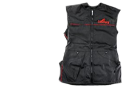
Pressure vests showed a somewhat higher reported success rate (44%) in large surveys, and some individual dogs do appear to benefit. They are worth trying — especially if habituated beforehand and used in calm contexts before being relied upon during a fear event.
For dogs with severe noise phobia, prescription anxiolytic medication — discussed with and prescribed by a veterinarian — has demonstrated meaningful, evidence-based effectiveness. Options like dexmedetomidine (Sileo®), imepitoin (Pexion®), gabapentin, and trazodone have all shown significant results in placebo-controlled studies, with reported success rates of 61–90% depending on the medication and severity. Medication is not a defeat; in serious cases, it protects welfare during unavoidable noise events and can actively support the learning that happens during behavioral training.
If you believe medication may be appropriate for your dog, consult a veterinarian or veterinary behaviorist for guidance tailored to your dog's history and health status.
Prevention: The Best Time Was Puppyhood — The Second Best Time Is Now
Why It's Never Too Late to Start
Research is clear that preventive training — creating positive associations with sudden noises before a dog shows any sign of fear — is highly effective. One large-scale study measured welfare impact scores on a 1–5 scale for noise events. Dogs trained as puppies showed a median score of just 1 out of 5. Dogs trained as adults showed a 2. Dogs with no preventive training showed a 4. The difference is striking.
Even in adult dogs who have already developed some sensitivity, the same principle applies. Ad hoc counterconditioning — every time a scary noise happens, something good follows immediately — is easy to implement in daily life and has demonstrated real, measurable effectiveness. You don't need a formal training session. You need consistency.
Because dogs respond to our emotions and look to us to interpret situations, showing calm or even positive reactions whenever a startling sound occurs is itself a form of preventive training. Your dog watches you. Make sure what they see is reassuring.
Further Reading
Riemer, S. (2023). Therapy and Prevention of Noise Fears in Dogs — A Review of the Current Evidence for Practitioners. Animals, 13, 3664. Open access peer-reviewed research covering the full range of behavioral and pharmacological interventions for noise fear in dogs. Read the full paper or Download PDF »


Most Popular Articles
-
01
-
02
-
03
-
04
-
05
Related Products
-
 $65.00
 -
 $16.99
 -
$219.99 - $349.99
$199.99 - $309.99 -

$65.00$19.99



Ask Leerburg.