Leerburg »
Articles »
Puppy Training »
How To Housebreak A Puppy or Older Dog
by Ed Frawley

Can You Relate to This Photo?
One of the most common themes in the many emails
I get every day concern problems people have with house training
their dogs. In March 2007 I wrote a 160 page eBook titled Common Sense Solution to House Training Problems. We sell it for
$12.00 - you can view the table of contents on the link to the
eBook.
There's no such thing as an almost housebroken
dog. Either he is or he isn't. Saying a dog is almost housebroke
is like saying your wife is almost pregnant. When a dog is housebroken
he never uses the house for his toilet.
Many people do not understand why their dog does
not know what to do when taken outside. Just turning a dog out in
the back yard by himself a few times a day is not the way to house
train a dog.
Merely taking him outside also does not mean
he knows what he's being taken outside for. The biggest problem
between
the dog and the owner is that the dog would love to please but
he doesn't know how to communicate with you.
Housebreaking in theory is very simple. It is
finding a means of preventing the puppy from doing his duties in
the house and only giving him the opportunity to do it outside.
It also means that the dog learns to communicate with you about
going when told to go and about letting you know when he has to
go outside. 
A dog is a creature of habit and because he learns
by association, if his training is consistent he will quickly learn
there is no other place to relieve himself other than outdoors.
We take advantage of a very natural instinct
of the dog - his desire to keep his sleeping quarters clean - i.e.
not to mess his bed. We offer a dog a den in the form of a dog
crate. This becomes his bed that he cannot get out of. If the dog
crate
is the right size he will not soil it. Puppies may not initially
like it (some will scream their heads off) but within a few days
they will accept it without a problem.
Dogs are and always have been den and pack animals.
Canines naturally and instinctively prefer the shelter of a den.
In the wild the young are raised in dens. They spend a great part
of their first year very close to their den. In homes, dogs often
choose their den. They will get under a desk, behind a couch, in
a closet, etc.
A dog crate is a perfect,
natural bed for the dog and a safe, natural spot to put the pet
whenever necessary for the dog's safety or the owner's peace of
mind.
If you are appalled by the idea of confining him
to a cage, let me dispel any idea of cruelty. You are actually catering
to a very natural desire on the part of the dog. In his wild state,
where does a dog bed down for the night? Does he lie down in the
middle of an open field where other animals can pounce on him? No!
He finds a cave or trunk of a tree where he has a feeling of security
- a sense of protection. The correct use of a crate merely satisfies
the dog's basic need to feel safe, protected, snug and secure.
Now with this said. Some puppies will scream their
living heads of - some for a couple of days when you put them in
the crate. The question you need to answer is "would I rather
get the dog used to the crate or would I rather clean up dog crap
on my rug"? An easy question to answer.
Pups do get over the fact that screaming gets
them no where - as long as you ignore it and DO NOT TAKE THEM OUT
OF THE CRATE WHEN THEY ARE SCREAMING. If if bother you - put the
crate in the basement or the garage or leave the house for a few
hours. Trust me - it will stop when it gets tired. Those who give
in create their own problems.
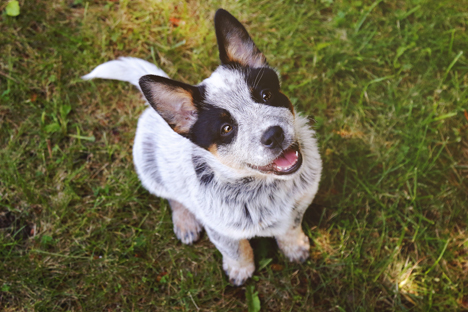
Small pups will naturally sleep 15 to 18 hours
a day. This is normal. They quickly learn that the crate means taking
a nap.
I keep a plastic bowl of all-natural dog treats
near my crate. The liver biscotti that
we sell are perfect. They don't smell and they don't get
moldy with age. Every time I put a pup in the crate I give a "CRATE"
command and toss 3 or 4 liver biscottis into the crate. It gives
the pup a nice reason to go in. You will be surprised how quickly
they expect to get a treat when they go into the crate. Going in
becomes a positive experience.
As a dog ages and learns I will give the "CRATE"
command before I toss the treats in. I will expect the dog to go
in on their own because I just told them to do it. This exercise
is the beginning of teaching your dog to go to his crate when people
come to the house. Dogs that bark and act stupid when they hear
the door bell need to be told to go to their crate. This is how
that training is started.
When thinking of the size of a crate needed for
your dog, think small. Think den not condo! The use of too large
a crate for a puppy will encourage the pet to use a small portion
of it for a bed and the remainder as a relief station!
The puppy should only be allowed to relieve itself
out doors. It is OK to place the crate in the bedroom of the person
who will be responsible for that early morning trip. This is a
temporary situation. I am not a fan of a dog sleeping in the bedroom.
It often
causes adult dog to develop issues of dominance. Once the pup
is old enough to sleep the night through without having to go outside
I recommend that the crate be moved into another room.
A crate is never meant to be used as a place of
punishment for the puppy, so a couple of safe toys would be welcome
for crate-time. A kong filled with peanut butter or cream cheese
goes a long way towards keeping a puppy quiet in a crate. Be careful
of the toys you choose to leave - soft squeaky toys with bells are
not healthy for pups. To often pups chew up these soft toys and
get parts of them stuck in their bowels which often kills them.
Start crate training while you remain in the same
room with the crated dog, frequently praising him and letting him
know clearly it is pleasing to you that he remains in the crate,
quietly. Frequent trips out of the room with quick returns with
a treat through the bars will condition the dog to your comings
and goings.
Gradually extend your absent periods, and in a
short time, you can be gone several hours. While in the crate, the
dog should not be scolded except for chewing on the wires. You can
make it clear that you are not pleased with screaming but often
that does not impress the pup. So ignore it.
Crate confinement works so well that most dogs
soon choose the crate for naps and, in general, consider it their
own private domain. They learn that they can go into their crate
and sleep and no one will step on them or jump on them. I feed all
my house dogs in their crate. I NEVER feed outside the crate.
At night take the puppy out and give him an opportunity
to do his duties. If you are in a protected area (a fenced back
yard) let him go free of the leash. Be sure to stay out there with
him. Lavishly praise him with GOOD OUTSIDE when he has completed
his duties. Take him inside at once and put him in his bed.
A puppy is NEVER ALLOWED TO HAVE FREE ACCESS TO
THE HOUSE unless you have your eyes on the pup. If he poops on the
floor because you turned your back for 45 seconds - well you screwed
up and made a mistake. Don't blame the pup for your mistake.
The only time pups are loose in my home is just
after they come in from going outside and then only for short
periods of time. All of my interaction with my pups is done outside.
I NEVER leave a dog unattended and loose in the house until it
is 18 to 24 months old and then only for short periods. 
Pups must go out first thing in the morning (and
I mean first thing) take the dog outside. He's been clean all night
- and holding it all night - he will do his duty in a hurry because
HE HAS TO GO. Now bring him in and give him freedom, but in the
kitchen only. A child's gate at the kitchen doorway is an excellent
barrier to the other rooms in the house. Give him his freedom while
breakfast is being prepared and while you are eating breakfast.
After your breakfast, and when you have time to take him out, feed
him his breakfast - and take him out immediately. Remember the
rule - outside after each meal. Dogs relieve themselves after SLEEPING-
EATING AND HAVING EXERCISE.
Now bring him in and put him in his crate and
go about your normal routine of the morning. He should stay in
the crate until about 11:00 to 11:30 A.M. Then out of the crate
and
outside. Bring him in, and while you are preparing and eating lunch
let him have the freedom of the kitchen but only when you have "eyes
on the dog."
At dinner time as soon as he has finished his
last mouthful - take him outside. After he has completed his duties,
bring him in and again give him the freedom of the kitchen while
you are preparing dinner and during the dinner hour. Give him another
trip outside about 8:00 P.M. - and again just before your bedtime.
Some pups need to be exercised more than others to get them to
relieve themselves. Exercise always increases the urge to pee or
poop.
The bottom line is you cannot take your dog outside
too much. If you take him out every hour then he learns that he
is going to have a chance to go outside to do his business. So when
someone tells you to wait for 4 hours - I would ask WHY if you can
take him out more often? Why wait that long if you are home. We
want to establish a pattern and what better way than to take the
dog out all the time. Also do not underestimate how important it
is to ask your pup if he WANTS TO GO OUTSIDE just before going out
and praising GOOD OUTSIDE WHEN HE DOES GO. I tell my adult dogs
GOOD OUTSIDE.
One last point on your dogs house breaking. A
commercial kibble diet takes 14 to 15 hours to go through the
dog.
An all-natural diet goes through the dog
in 5 to 6 hours. I strongly recommend that you consider doing
your
research on all-natural diets. Read about them on my web site and
on my
web discussion board.
A couple of points on how to house train your
dog:
1. Do not vary your dog's diet.
2. Treats should only be given as a reward for the puppy going
into the crate.
3. Bring him in as soon as he does his business.
4. Praise every time you see him pee or poop. Do this forever. Reinforcing
good behavior never hurt anything.
5. Dogs who go out and just dink around and then go in their crate
need more exercises when they go outside. A long walk will often
cure the problem. BE SURE TO PRAISE WITH GOOD OUTSIDE or whatever
you want - then when you have the dog in the house and say "DO
YOU WANT TO GO OUTSIDE" he will learn what you mean.
6. Older dogs are house trained exactly like young
pups.
Using An Odor Neutralizer And Indoor Spray Repellent
When a the handler makes a mistake and allows
the dog to pee in the house you have to get rid of the odor. Sometime
you need to get rid of the owner. This is accomplished with an odor
neutralizer, which is available in pet stores. (Do not use household
cleaners as they contain ammonia and will attract him back to the
same spot.) When used properly it will completely eliminate these
odors, discerned only by the dog, by neutralizing the scent. When
areas previously used by the dog have been neutralized the incentive
for using the same spot will be eliminated. Then spray the area
that has been soiled with an indoor pet spray repellent.
Proper Correction
Under no circumstances should the puppy be punished
for relieving himself in the house, unless you catch him in the
act. The punishment should be a verbal scolding not physical harm.
A puppy has no mental capacity to connect your wrath with whatever
he did wrong, even a few minutes earlier. If you cannot get to the
pup within 2 seconds of him doing his business then you have screwed
up. Pups simply cannot put two and two together to understand why
you would be mad about his peeing on the rug. It is confusing to
him and you only get a puzzled whimper. Catch him in the act or
scolding is no good.
The old adage of rubbing a dogs nose in it is
stupid. We don't do this to our kids and we should not do this
to our dogs. Anyone who recommends this needs a lot more experience
in dog training.
Run over and grab him by the scruff of the neck
and gently shake him. This is exactly what his mother did when he
did something wrong. This should be accompanied with a harsh NO.
Immediately take him outside to finish what he started. This is
the only way you can show him what you want. You are catching him
in the act, stopping him, taking him outside and then giving him
tremendous praise when he finishes.
Many people are mistakenly convinced that a dog
messes in the house for spite or revenge, usually for having been
left alone. This is incorrect. It is for reasons of anxiety, nervousness
or fear that he behaves this way...or simply that he is not properly
housebroken. Very often the owner comes home and find the dog behaving
in a fearful, shameful, or generally guilt-ridden manner. It is
because of this that the owner is convinced the dog has messed
in the house for spite. It's simply not true. The dog cringes when
you come home because he associates your arrival with punishment.
You have conditioned him by correcting too severely when you came
home in the past (and it only takes ONE TIME).
Some people question me about pups that are very
young wanting to go out every couple of hours. This can happen when
the pups are under 12 to 14 weeks. There are a couple of things
to keep in mind.:
- Are you picking the water up at 6:30?
- Are you giving the pup enough exercise to make
it tired before it goes to bed?
- Are you putting the pup in the crate all the
time and not just bedtime. The pup needs to learn that it must
go in the crate and calm down.
- If you are convinced the pup just wants to
come out and play after a few hours , then ignore it. If there
is a mess in the crate later on - then YOU MADE A MISTAKE - not
the dog. If the pup makes to much noise
- move the crate into the basement or garage with a radio or TV
on.
Paper Training
Let me say a few words about "paper breaking," or should
I say against it. As I said before, a dog learns by association
and if you allow him to do his duties in the house on paper you
are telling him in effect that it is all right to do it within
the four walls of the house - you are making this association in
his mind -so later when you expect him to do his duties outside,
he may think you are a little crazy and you can't blame him. Any
healthy pup 8 weeks of age or older, even in cold weather, can
go outside. Of course you don't leave him out long enough to get
chilled. You take him out just long enough to do his duties. These
potty pads that seem to be popular are just plain stupid. Anyone
who uses these is creating his or her own problems. Get a dog crate
and use it.
With all of this said there is always the occasional
pup who will pee and poop in the crate. No matter how often you
take him outside. This usually happens because of the living conditions
the dog has before you got it. If the litter was not kept clean
then the pup has learned to be a pig. All you can do is continue
on - its a pain to clean the crate and the dog. But eventually
they will catch on. Unfortunately most of these dogs never get
that chance
because they seal their fate by their unclean actions. I recently
had a friend who raised her own litter and the pups were kept impeccably
clean. One male she kept took 6 months before he would stop peeing
in the crate at night. She got up in the middle of the night for
months before the problem went away. So the moral of the story
is that you need to do EVERYTHING right and even then things can
go
wrong. We are dealing with animals and sometimes they defy our
good sense.
With a little effort on
your part and the use of this method the puppy can be housebroken
very quickly. But remember there is more than peeing and pooping
in the house that goes along with housebreaking. Allowing a dog
to be loose when you are gone is a little crazy unless you are 100%
sure the dog will not chew your walls, your shoes, your furniture
or anything else it takes a liking to. SO KEEP YOUR DOGS IN DOG
CRATES until they are 18 to 24 months old. I should post the some
of the story's I get through email of dogs eating couches. Couches
and chairs seem to be a delicacy.
If you are at the housebreaking stage with a puppy,
you need my video titled "Your Puppy 8 Weeks
to 8 Months." I give this tape to every person that buys
a puppy from my kennel. I NEVER get questions on raising a puppy
after sending my people this tape. It's much better than any book
published on the subject. I produced this video after breeding over
100 litters of German Shepherds and raising over 500 puppies. Very
few people in this country have the experience I do with breeding
or raising dogs. This could be the best spent
$30.00 you spend on your pet.
Dog Crates:
I recommend people use plastic airline crates
to house train dogs in. These plastic crates are easy to clean
and can be taken outside and sprayed out when need be. When we
house train puppies we keep our cleaning supplies right on top of
the crate.
I used to recommend Kennel Aire Wire
Dog crates. The problem with wire crates is they don't contain
dog hair and even with a pan that goes into the crate they don't
keep dirt inside the crate.
We don't put bedding in the crate. The only thing
we would do is put in a piece of rubber cow mat.
You will never hear your dog
get
up and
turn
around in the crate.
Read some question and answers on house breaking
Q. |
I have read some of your advice on housebreaking your puppy. We just purchased a 9 week-old chocolate lab from a breeder near our hometown. When we picked up the puppy she was covered in feces and it appeared that the area she had been kept in had not been cleaned regularly. As we have tried to train her, we have found that she has no problem with relieving herself in her sleeping area, which makes it difficult for us to train her. It seems as though she became accustomed to having to sleep in an area where she relieved herself and she continues to do so. As we have been training her, we have praised her for urinating in the appropriate spot, but she still continues to urinate in her sleeping area when we are not watching. We haven't been using a crate to train her because she will eventually be a full-time outside dog, once she is older and more prepared to handle the winter weather. What is strange is that she has a large area in our basement to wander in at night, but she still chooses to urinate on her sleeping area, rather than in another portion of the room.
Nikki |
| |
A. |
To begin with you are 100% correct. This dog has learned to be comfortable in it's own waste. It is going to take a long time to housebreak a dog who comes from this kind of background. My advice would have been to walk away from the breeder when you saw this. In my opinion there is no excuse for keeping dogs like that. The best way to house train is to use a dog crate. So I do not believe that keeping a dog in the basement without being in the crate is a good solution. You would probably find that if you put papers down the dog would pee or poop on the newspaper and not the rug that it sleeps on. But the bottom line is a crate is a better solution.
|
|
Q. |
My question revolves around the ''water pickup'' of our 13th week old German Shepherd pup. One of your articles indicates during housebreaking that you take the water up at around 8pm or so. This has done wonders and he is no longer eliminating in the crate. At what point can you leave the water out longer? We are slowing allowing him to drink up until 9pm. He typically goes to bed at 12:30 am. However he is ALWAYS looking for the water.
Thanks,
James
|
| |
A. |
This is a matter of experimenting. You will know when you should have picked it up.
If the dog is always thirsty - I would talk to the vet if he is overly thirsty. Have them tell you how much a dog should drink in a day (I have never measured it) and then see if its drinking way more than that (measure it out).
|
|
Q. |
We have been using your crate-training technique to house train our sheltie puppy. We got him at four months old, and we have had him for about 6 weeks. He is successful at not soiling his crate or the house as long as we take him outside often enough. The problem is he is showing no signs of attempting to let us know when he does need to go out. Are we giving him too much time out of his crate, even though he has been here for 6 weeks already? It seems cruel to keep him locked up all day except at play time and meal time since he is older and needs his exercise.
Do you have any suggestions? Or should we not be expecting him to tell us when he needs to go out yet? We always take him outside through the same door, and we constantly say "good outside" and everything else. I just wanted to know if there was something else we should be doing.
|
| |
A. |
You can not expect the dog to give you a sign that he wants to go outside unless you train him to do so, which you have not done.
You have trained or are training him to relieve himself outside. Telling you he has to go is a second exercise.
Train him to bark for a toy or a treat (not an easy thing to do).
Once that is done then add it at the door just before he goes outside. After about 100 trips he should get it through his head.
|
|
Q. |
I have been reading the testimonials of some of the people who have purchased your video on Basic Dog Obedience. I have a 9 month old male german shepherd who is very responsive to my commands and is very loyal. However , my main problem is that Rocky gets very depressed when he sees me and my Fiance are going to leave to go to work. We both work pretty much the same shift of 3 pm -12 midnight. During this time Rocky is pretty much on his own. He wants to get in the garbage and take out paper and tear it to shreds all over the house-or take clothes out of the bedroom and chew on them or even chew on anything he can get his mouth on. He always cowers when I come home because he knows he has done something wrong , or as you point out , he knows he is going to be punished but he doesn't know what for. I don't want my dog to cower when he sees me but I don't know what to do. He has a crate but he literally tries to kill himself to get out of it now. He has sores on his nose where he has apparently tried to get his snout out of the cage. So I leave him outside sometimes, but he always dumps his water over and by the time I get home he is dying of thirst. With both myself and my fiance working all day (there is no one else at home), I am concerned he is depressed because we are not spending enough time with him. But I care for the dog a great deal and don't want to give him up. Any suggestions on how I can make him behave in the house while we are gone? He is always well behaved while we are at home. I am at the end of my rope. Its either the dog behaves or he will have to go. I can't have my house torn up every time I come home.
Thanks,
Gary
|
| |
A. |
Like most problems in dog, you have created this problem with your dog by not properly crate training him. He has learned to go crazy in the crate because you have allowed this to happen. When a dog goes nuts in a crate he has to stay in the crate until he is calm. People screw up by getting tired (or concerned about the hectic dog) and let them out of the crate. This only teaches the dog that all he has to do is bark long enough or be crazy enough and he will get out of the crate.
So now you have to go back and correct this problem.
You can try giving the dog something to do (in the crate) when you are gone, like a big bone or a large toy with cream cheese packed inside. This takes his mind off of the crate. Also leave the TV on.
If the dog is still this hectic he should get a muzzle on before you leave. Use one of the plastic Jafco muzzles I sell. You need to condition the dog to wear this when you are home. He should wear it on walks, when you watch TV for a week or so before you leave him alone.
You should also feed the dog inside the crate. If he does not want to go in and eat - pick the food up until the next day. Sooner or later he will eat (do not leave food in it when you are gone). The same with the water dish - make him drink in the crate (but not when you are gone).
So the solution is common sense ideas. Now its up to you to solve them. Frankly you should be taking your dog through some serious obedience training. This DOES NOT involve obedience classes. Read what I have to say. Teaching the dog obedience give his life order - this helps calm dogs.
|
|
Q. |
The tape "Your Puppy 8 weeks to 8 months" arrived last Friday and we watched it Saturday morning. Thanks for all the good information. Much of it I already knew, but it is so helpful to see it demonstrated, rather than just reading about it. The one thing I had a question about is the problem of whining. We are using a dog crate (have used one with every pup) but the whining is a real pain. The pup is now 10 weeks old and we have had her for 9 days. After the first few nights, she quit whining at night and settles down to sleep almost immediately. However, during the day she often whines a lot when she wants out of the crate. If it is convenient, and I can watch her (obviously she is not yet housebroken) then I let her out to play. But sometimes this is not possible because I am busy and cannot deal with her. I want her to accept the crate and learn to stay in it quietly. Do I correct the whining or ignore it? I don't seem to recall seeing this addressed in your web site, although perhaps I missed it. Thanks for your help and for the great tape. I'll soon be ordering Basic Obedience as I intend to train this dog myself rather than sending her away as I did with my six year old.
Sincerely,
Sandy
|
| |
A. |
The solution to this is to totally ignore the whining and keep the dog in the crate more than you already are during the day. You may have to put it in the garage with a radio on. The crate needs to become a part of this dogs life. Correcting the dog may result in the dog whining just to get the attention of being corrected (some dogs look at negative attention better than no attention). So just let her go until she gives in and is quiet in the crate. It may take awhile but it will happen.
Feed her in the crate too. Give her a big raw hide to chew on. Keep the radio and or TV on. These things help divert her attention.
|
|
Q. |
We adopted a 6-9 month old Brittany and have had her for approximately 2 months. We have done a lot of work with her and she and our 3 cats can now coexist rather well. Our main concern is that she literally hates being crated when we leave the house. She is never left in her crate more than 7 hrs. while we are at work/school. She seems to find some way to escape and then ultimately chews something up before we get home at least two days out of the five. What can we do?? |
| |
A. |
If this were my dog I would drill some holes near the door of the crate (assuming you are using a plastic airline crate). Then run a wire through the holes and the door of the crate so the dog can not open it no matter how hard she tries. If its a metal crate then use 2 snaps on the ends of leashes to clip the crate.
|
|
Q. |
My 3 mo. old puppy was found left in a yard. She is really good with relieving outside, and has already learned some commands. The problem we are having is leaving her in the crate for any amount of time. If she can see you she is fine if not she screams, cries and pees. We have another crate in the bedroom at night and she is just fine. She stays for 6hrs with no accidents. Could this be separation anxiety?
Thank you,
Donna
|
| |
A. |
No this is normal. If you react to her when she screams you are encouraging that behavior. The solution is to continue to crate the dog all the time until it learns to be quiet in the crate. Every time you leave the dog should be in the crate - read the articles I have on my web site and the Q&A sections on this.
Best Regards
Ed Frawley
|
|
Q. |
I am following your tape on crate training my pup. Can she stay in the crate from 11 pm to 5 am with no problem? Also, should I close the crate door. Tonight is her first night with us and needless to say she still has accidents on the kitchen floor. How long does it take to housebreak a puppy? We are watching her constantly but with the stressful (5) hour trip to the Bay Area and strange surroundings, I guess she is doing as well as she can. Any advice in getting the job done will be helpful. We put some puppy training pads on the kitchen floor and also took her out numerous times on the dog run, but needless to say we had a few accidents. Should we stick to the outside only and forget about the pads? She had urinated twice on the pads and once outside, but had a bowel movement on the kitchen floor once. She must still be adjusting to our home and is homesick for her pack. |
| |
A. |
She needs to settle into a program - this can take a week or so. A lot depends on how the dog was raised to this point. We are very strict on hygiene at our kennel. It is always clear to the pup where it must go - this starts on papers then at 4 weeks they are outside so they have a dog house to sleep in and the ground to go one. Its not uncommon for our pups to only have 1 or 2 accidents and they are house trained., but if the breeder allowed them to pee and poop inside a lot then the process takes longer. A pup can not hold it all night until it is 12 to 14 weeks old. Follow the feeding and water instructions to a T and exercise the pup as much as you can - this helps move things along.
You should also consider the natural diet I talk about.
Ed
|
|
Q. |
I read your article on, “How to housebreak a puppy” and it is very interesting. I have a 12 week Male Teacup maltese, he currently weighs 1.5lbs. and I am having an EXTREMELY hard time house training him. I started using the puppy pads because I live in Canada and it is -6C weather and when I have tried to take him outside, he shivers and I am scared he might get sick but I would really like to house train him to go OUTSIDE.
He is peeing and pooping all over my home even though I will sit him on the puppy pads every 15 minutes and after he eats but he just won’t go on the puppy pads unless I close off the area. I am also finding that if we are playing with him, he will have tiny little pees every 5 to 10 minutes and it is very hard to catch him cause he is so tiny, it’s not like you see him lifting his leg or anything.
I have started crate training him and during the night he goes in without crying (he does not pee or poop in his crate) and he is also in his crate during the day from 8:30am to noon and then from 1:00 – 5:00pm (I come home for lunch) but when I get him home I take him out to go on his puppy pad and once he goes on there I will feed him and
And then put him back on the puppy pad until he goes but it is during when I play with him that he will drop little pees.
I am getting very frustrated because he won’t go on the puppy pad unless I close the area off and I would VERY much like to train him to go outside but I am scared he could get sick.
What do you suggest?
Thank you,
Katherine
|
| |
A. |
Whoever thought up the idea of pee pads did not have much experience training dogs. These are without a doubt the dumbest dog training product on the market.
These things do one thing, that's teach a dog to pee and poop in your house. It does not take long for the dog to disregard the the pads and find other places in the house to pee and poop.
There are no short cuts to house training a dog. In addition there are some dogs that for one reason or another are difficult to house train.
You need to use a dog crate, you need to take your dog out a lot (so it learns that if it holds it just a little longer you are going to come and let it outside.
Read the article I wrote on GROUNDWORK - this is how we house train puppies in our home.
Ed
|
|
Q. |
Hi,
I have read some of your training questions and answers and also some of your guidance on training. However, my question is I just got a mixed Pomeranian who was born on 10/15/05 and I need your help.
This is my first puppy and I have 2 kids in the home. I am really trying to get her on a schedule but it is really hard because I work a lot but this my children really wanted a pet. I wake up around 6am and come downstairs where the puppy is in the crate and take her out to try and get her to release, however, she will not she looks at me like I'm crazy.
In addition she is on her own schedule she does not want to eat when I need her nor does she want to release herself. I try to put her on this schedule because the children and I are leaving out the house for a period of time and I don't want her to have to hold it all day, but its very hard to get her used to this. Please help, now I read that you stated to take the crate and put in my bedroom until she gets accustomed. I need your help.
Now, my next question is can my puppy go outside and touch the ground without having her shots. She does not go for her 1st appointment until 1/7/06, so can she go outside.
Today I left her in the house unsupervised because I thought she would use the puppy pads but come to find out she overlooked that and went on the carpet, I am getting impatient and need some assistance again because this is my first puppy and the kids are very excited about her. I need to know what are the necessary steps I need to take to get her on the right track. Oh let it be known the crate she has is a little oversized but I have put other objects in there to try and make it smaller but she still did her duties in there.
Please assist as soon as possible it would be appreciated.
Thanks
|
| |
A. |
The answers to this can be found in my DVD Your Puppy 8 Weeks 8 Months
|
|
Q. |
I got my lab/chow mix puppy when he was 8 weeks old. He is now 14 weeks old and completely house trained and I used pee pads to train him. Through the course of training he had a grand total of 3 accidents in the house. I never used a crate. I put the pad down near the exit door in my kitchen and praised him for using it, quickly replacing the soiled pad with a clean one. After a few days I moved the pad outside onto the porch and a few days after that I moved it over to near the tree that I had chosen for his potty area. After a week, I got rid of the pad completely. He eats twice a day, at 4am, before I go to work and again at 5pm when I have my dinner. I let him outside to use the potty before I go to work, when I get home from work at 2:30pm, after dinner, and before I go to bed.
After dinner we go for a nice long walk and play in the yard, but he only relieves himself in his designated potty area.
I have never physically corrected him for anything, I simply give him a firm "NO!" when he behaves inappropriately and give him an appropriate toy or activity as a replacement.
According to what I have read on your site, I have done everything wrong, including giving him the full run of my home, yet I have a very well behaved, well mannered, social, happy puppy.
I thought you should know that confining a puppy or adult dog to a cramped and uncomfortable crate is not the only or always the best way to train.
I am not a professional trainer, just a single mom who wanted her son to have a puppy.
|
| |
A. |
Thanks for writing – you have been lucky so far but you just started. You are so far from being out of the woods that you don’t even know it yet. When the dog starts to pee and poop in the house – please remember this email.
About 35 years ago I lived in an apartment and I paper trained a pup. I followed your protocol only with news papers. I had to gradually move the paper out of the apartment. Then slowly move the paper down the hall and out into the yard. For weeks this pup would not pee on grass without a small piece of paper being put down. I ended out with a damn napkin and laying it down for the pup to pee on. It was a happy day when she went outside and beat me to the grass and went on her own.
With this all said I had to be VERY CAREFUL ABOUT READING NEWS PAPERS. I could never lay the paper on the floor next to my chair.
Trust me – you have not reinvented the wheel.
|
|
Q. |
Hello. I have an 8 week old Golden doodle puppy who I have been crate training. When I first got him he was perfectly happy going to the bathroom in his crate and then sleeping in it. I got him on a routine of going outside and he is doing better. I put a litter box in his crate for him to use during the night and during the day when I am at work. He does a great job using it, and not going on the floor of his crate. My question is, is this preventing him from learning to hold it? Is it ok for him to use the litter box in his crate during those times? I'm afraid if I take it out he will go back to just going on his crate floor.
Thank You!
|
| |
A. |
You are raising a dog not a cat. Dogs don't use litter boxes. At least not consistently. You are training your pet to pee and poop in the crate when you try this. The goal is to teach a dog to hold it and pee and poop outside - NOT FIND A WAY TO DO IT IN THE CRATE.
You are not thinking logically here. There is no substitute for good training.
|
|
Q. |
Very insightful and I really enjoyed your Iraq page.
Good luck to your son and God Bless.
Do you answer questions over email? I bought a horrible video (think it was a scam) on ACD’s on the internet. Four weeks later I still do not have my answer. Just curious which one of your videos is the best to handle an ACD/Rat Terrier Mix. (just moved to a new place and my previously housebroken canine refuses to pee outside…even if I let her out for an hour before coming in the house) – she had no problem learning in my apartment – and never peed inside after the 2nd day I brought her home from the shelter. Now new house, new boyfriend, new German Shepard playmate…maybe she forgets until she is inside???? Boyfriend stuck her nose in it last night which was very alarming to me since I never had to do that in my apartment. That ok?
No clue.
Thanks,
Erika
|
| |
A. |
The first thing to do is to tell the boyfriend that the NEXT TIME HE DOES THIS HIS NOSE IS EITHER GOING IN THE PEE OR YOU LEAVE!
Once you get that under control everything else can be fixed.
You are always going to be exposed to people (like your boyfriend) who offer advice on how to fix your dogs behavioral issues.
The problem is that most of these people don’t have the experience to offer sound advice. This results in a lot of bad information being passed out on how to deal with behavioral problems.
Pet owners like yourself need to figure out who has the experience to warrant being listened to.
I recommend that you go to my web site and read the article I wrote on my philosophy of dog training. I think you will get some good ideas there.
I also have a directory of information on my web site about house training.
Bottom line is you need to treat this dog exactly like a puppy. Get a crate and start from scratch. I have a very good article I wrote on this issue.
I also wrote an article on HOW TO INTRODUCE A NEW DOG INTO A HOME WITH OTHER DOGS. I suggest that you read that one as well.
I don’t know what your abbreviation is “ACD”?
If you want to learn how to obedience train this dog (which is part of the house training process) get my Basic Dog Obedience DVD – I assure you it's no scam. I have been doing dog training videos for 26 years, and my web site gets close to 8,000 hits per day with 72% of them coming from people who bookmark the site.
Good luck with the boyfriend – they can be hard to train.
|
R. |
You're awesome, thanks!
Good call on the nose and the pee thing, LOL. …it bothered me but I thought since she was peeing all over again that maybe I was doing something wrong. Good to know.
ACD = Australian Cattle Dog, thanks so much and I will order the video today. Mishka is super smart and has already been through basic manners courses and passed with best pupil honors and ran circles around the other dogs…which is why I don’t get this peeing in the house deal.
Anyways, thanks for your help, I really appreciate it.
I’ll work on the boyfriend…I know my dog knows better, he might not!

Erika and her adopted Australian Cattle Dog/ Rat Terrier Mishka.
|
|
Ask a question about this article.
|
ASK CINDY YOUR DOG TRAINING QUESTION