



The Danger of Using Kongs & Tennis Balls as Rewards in Detection Dog Training


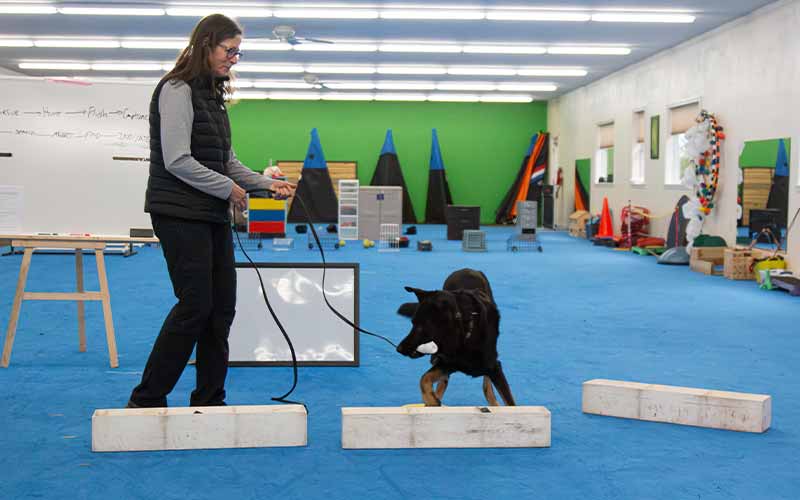
The choice of rewards in detection dog training—specifically using items like Kongs, tennis balls, or other toys versus using rolled cotton towels—is based and driven by considerations of safety, reliability, independence, potential for cross-contamination, and the dog’s individual drive level. The preference is using rolled cotton towels, and the reasons to avoid certain commercial toys (like Kongs) in the foundation stages of detection training, are primarily about minimizing unwanted associations, false indications and physical risks.
Reasons Not to Use Kongs, Tennis Balls, or Common Toys
Trainers have often been advised to use highly stimulating reward toys like Kongs and tennis balls, especially early in foundational detection work. There are several inherent disadvantages to this advice:
- Safety and Injury Risk: Kongs and tennis balls, particularly when used with high-drive dogs, pose risks of injury.
- Kongs: Kongs are erratic and unpredictable when bouncing. Dogs chasing Kongs have been known to cause serious accidents, such as running through plate glass windows or sustaining spiral fractures.
- Tennis Balls: Tennis balls with nylon or rough fibers can damage a dog’s teeth (wearing away enamel), especially with balls covered with grit or sand. Veterinarians can tell you how often they remove tennis balls from dogs’ throats and stomachs, a serious and costly surgery (often around $4,000).
- High Arousal: The unpredictability of these items when tossed as rewards makes them highly exciting to the dog, which, while motivating, increases the risk of accidents.
- Contamination and Proofing Difficulties: Toys made of certain materials can unintentionally teach the dog to falsely alert on the material itself, complicating proofing efforts.
- Kongs: : Kongs are specifically difficult to proof off.
- Tennis Balls: We know of a trainer whose dog alerted on a bushel of tennis balls in a rental car. This then required extensive proofing against these materials after the dog had already associated the ball with a reward.
- o If a dog finds contamination on training materials (e.g., civilians that use polyethylene Q-tip shafts or rubber bands used to secure rolled towels), they may be learning that the contamination—not the target odor—is the key.
- Conflict with Obedience: If the same toy (like a Kong, a tug or a ball) is used for both detection and obedience, it can easily confuse the dog.
- Focus Shift: Obedience training requires the dog to focus on the handler, whereas detection training (and tracking) requires the dog to search away from the handler and focus independently on odor.
- Compromised Search: A dog that associates a toy with obedience may smell the odor of the toy and run back to the handler, or perform obedience behaviors ( heeling, sit, or down) to get the toy, rather than continuing to search or indicate the source odor. This directly works against the goal of an independent search.
Advantages of Using Rolled Cotton Towels
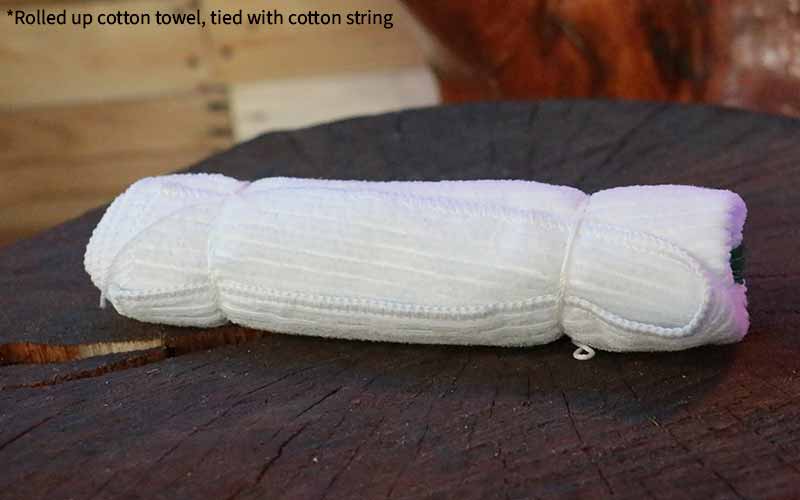
Rolled white cotton towels are preferred, especially in Primary Reward Systems (where the item is scented with the target odor). This results on maximizing reliability and minimizing conflict:
- Availability and Cost-Effectiveness: White cotton towels are inexpensive (for example, “$20.00 for 60 of them” from Costco). They can be treated as almost disposable, making them practical for single-session use.
- Reduced Contamination and Easy Proofing: Cotton is such a common material in our environment resulting in trainers having no problem proofing dogs off cotton towels. In addition, using cotton string to tie the rolled towel is preferred over synthetic materials like rubber bands, which dogs may learn to detect.
- Encouraging Natural Drives: When used as an artificial prey item in the Primary Reward System, the scented towel encourages the dog’s natural predatory responses: chasing, retrieving, and dissecting (within reason).
- Promoting Perseverance: Our white towel facilitates an independent and durable search. The dog believes the item itself (the “cocaine squirrel”) is the target, which builds strong searching at the find—something that is highly desirable.
- Simpler Handling: Items like tugs or towels, when thrown, hit the ground and immediately stop. Unlike the erratic behavior of Kongs that have been tossed. Towels are simply easier to handle and control during our reward phase of detector dog training.
Tailoring Reward Choice to the Dog
Ultimately, the choice of your reward should align with the dog’s individual drive and temperament, and the ultimate goals of your detection dog training. Not all detection disciplines are the same.
- High Prey Drive: Dogs with a strong prey drive are best suited for the Primary Reward System using scented items like towels, as this builds instinctual behaviors and reliability.
- Destructive or Low Prey Drive: If a dog has destructive prey drive, serious OUT issues or low prey drive it might temporarily or permanently switch to food (a Secondary Reward System) or objects that are less stimulating and easier to manage.
- Flexibility: A trainer should be willing to adjust his reward type based on the dog’s response. If a dog refuses to play with a cotton towel, the trainer must adjust and find another item (e.g., tugs, wood or PVC pipe) to avoid fighting with the dog.
Bottom line, choosing a rolled cotton towel over items like Kongs or tennis balls—especially in the early stages—is a deliberate strategy to ensure the reward system focuses the dog solely on the odor/prey object. This prevents teaching unwanted environmental contaminants and minimizes the risk of injury or confusion with obedience cues.
If you have an interest in a training system for narcotic detection dogs or civilian scent work competitions, check out Leerbug’s online courses that have been done with Kevin Sheldahl for these topics.

Most Popular Articles
-
01
-
02
-
03
-
04
-
05
Related Products
-
 $65.00
 -
 $16.99
 -
$219.99 - $349.99
$199.99 - $309.99 -

$65.00$19.99



Ask Leerburg.