



June 14, 2026
How do I handle an excited Malinois who redirects on the handler?
Full Question:
Malinois with detection training, fundamental obedience, and dog sledding.Goal: Outside of management and muzzling, I'd like to do fun activities with him that don't risk him redirecting onto me when his excitement is high.
Issue: He redirects onto me not letting go for upwards of 5-10 minutes when he is faced with frustration and the excitement of a fun activity. Yes, these redirections have resulted in wounds that required treatment. My management has been a basket muzzle, but this greatly limits which activities he can partake in and still have fun.
Are there training exercises or routines to incorporate to pull this dog away from wanting to redirect? He does tend to be overly excited when I am in the same yard as him. Would something as simple as spending more time with him in spaces usually meant for fun - but instead do nothing - help in this case? He is very mild mannered indoors, but has intense equipment bias that gets him highly excited before fun actually happens.
 Leerburg's Answer:
So a couple of things:
1) What kind of collar are you using with him?
2) When he redirects onto you, what are the warning signs?
3) Do you have a ball or tug that you work with that he could redirect onto instead of you?
4) Yes, I think doing some low-arousal counter conditioning would be helpful. Malinois are good at everything, except doing nothing. Which really just means we need to teach them how to relax and when to relax because they are breed for their high energy and arousal levels.
5) If he has specific high energy equipment bias, I would only bring those toys and equipment out when you want a high arousal response. You might find switching to food rewards better for low arousal work and training.
1) What kind of collar are you using with him?
2) When he redirects onto you, what are the warning signs?
3) Do you have a ball or tug that you work with that he could redirect onto instead of you?
4) Yes, I think doing some low-arousal counter conditioning would be helpful. Malinois are good at everything, except doing nothing. Which really just means we need to teach them how to relax and when to relax because they are breed for their high energy and arousal levels.
5) If he has specific high energy equipment bias, I would only bring those toys and equipment out when you want a high arousal response. You might find switching to food rewards better for low arousal work and training.
User Response:
1) For mushing he just wears a flat collar. Would a wider (flat) collar help prevent him from being able to turn onto my arm when I am stiff arming him in the future? For detection he wears a flat collar and a remote collar. He is comfortable with a prong collar on walks if I am not already using a remote collar.2) Excitement and limited options to place his energy. I could see about having him carry a toy to the lineup for mushing to see if that helps him, the hesitation I have is I really don't want to be bitten by him again. I feel like this would help him, but the risk is my worry. When we do detection work, I always have a toy available for him, so he hasn't bitten me in those instances at this time. He is a very pushy and forward dog, so sometimes in detection when he gets frustrated he rushes up to me to body check me; I don't want to give him the toy in those instances and haven't yet, but it has crossed my mind more than once to just drop the toy to save my skin if I need to.
3) I have a leather ball for him that has a tug attached. He is great about bringing it back to me (and punching the sh*t out of me with the toy for engagement) it is just large and cumbersome. I like this toy, because when thrown or in motion it isn't going to bounce erratically or be difficult to kick away from him if needed. I think getting a better way to secure this rather large toy would help me in wanting to bring it along while mushing and for other activities with this dog.
4) Yeah, his equipment bias is very stark so it is why in the house he is a lazy dog; we don't play in the house (hearing Michael Ellis talk about this in one of the DVD's from y'all)
5) This makes sense - it is part of what we already do, which is why we have resorted to muzzling him for mushing. Once he can get that first half mile in, he is no longer a risk for biting me should I need to make adjustments on the line with him. The last "equipment bias" that is a bit more challenging is I have done a fair bit of detection work with him in our own yard, which has caused him to flip on his intensity whenever I am in the yard with him. I suppose removing all fun training things from our property will make things easier in this case? And / or put more time into spending down time with him in the yard versus the amount of play and high arousal training.
Thank you for helping validate the general direction I have been aiming for in our next steps. Fear after being bitten badly enough has scrambled my brain a bit in getting this issue sorted out properly.
Leerburg's Answer:
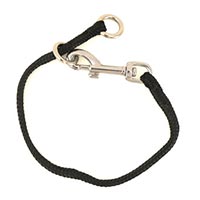
Thanks for answering these questions, it helps a lot! When it comes to preventing the dog from biting you, I'd actually recommend a dominant dog collar. If sized correctly, high and tight under the jaw and behind the ears, it will take very little pressure to get the dog's attention and prevent the bite.
Beyond that, I think you have a good assessment of what he is doing and why. In addition to the things we have already talked about, I'd recommend adding some capping (impulse control) exercises and drills. Here are a handful of free videos from our website:
- https://leerburg.com/flix/player.php/1889/Capping_Drills_with_Michael_Ellis (Michael demonstrates with a toy here, for you I'd recommend using food first then building up to the toy given your dog's excitement for the toy)
- https://leerburg.com/flix/player.php/260/Michael_Ellis_on_Capping_a_Dog's_Drive
- https://leerburg.com/flix/player.php/2057/Michael_Ellis_on_Finding_the_Balance_Between_Capping_and_Motivating_Behaviors
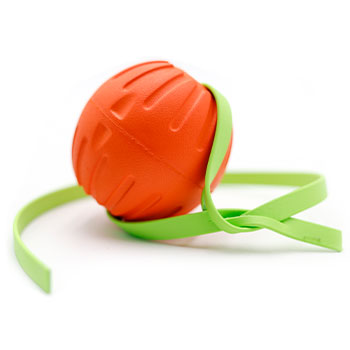
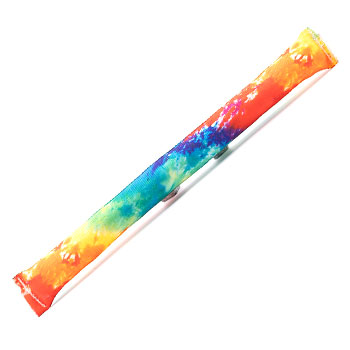
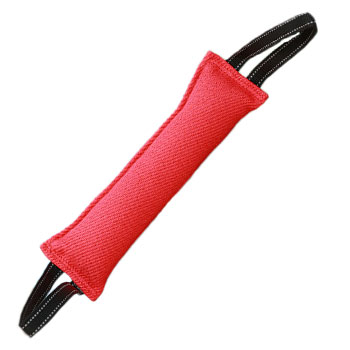
The other thing I was thinking about for you is a smaller toy like a foam ball or ball tug for the dog to hold and carry like you suggested when getting ready for mushing. Combining these toys with some targeting and timing practice would be less cumbersome than your current toy. You might find a tug to be easier to start with when teaching targeting skills. I don't know what your current ritual or routine is, but maybe a little bit of tug play before getting to the lineup, and letting him carry that toy to the lineup might help too, like a little warm up before you start your activity to channel his excitement.
I'd definitely do more "Relaxing" sessions in the yard because it sounds like he has been conditioned to anticipate excitement in that location. Using a placeboard or a raised bed in the yard would be a good way to tell the dog that when you go out to the yard and tell them to lay down, you are out there to relax and not play. Speaking of conditioning, equipment can play a huge role in the dog's mindset. It wouldn't be the worst idea to have a collar specifically for relaxing, a flat collar would be fine, but the dog wouldn't be able to wear this type of collar for any other activity. I'd consider using the flat collar for relaxing and down time and then for your detection work using a different harness than your mushing one, like the lightweight tracking one I added below. Then, for activities where the dog would be higher arousal I'd make sure they have the dominant dog collar on so when the excitement turns into frustration, you can quickly get control of the dog.
Beyond that, I think you have a good assessment of what he is doing and why. In addition to the things we have already talked about, I'd recommend adding some capping (impulse control) exercises and drills. Here are a handful of free videos from our website:
- https://leerburg.com/flix/player.php/1889/Capping_Drills_with_Michael_Ellis (Michael demonstrates with a toy here, for you I'd recommend using food first then building up to the toy given your dog's excitement for the toy)
- https://leerburg.com/flix/player.php/260/Michael_Ellis_on_Capping_a_Dog's_Drive
- https://leerburg.com/flix/player.php/2057/Michael_Ellis_on_Finding_the_Balance_Between_Capping_and_Motivating_Behaviors
The other thing I was thinking about for you is a smaller toy like a foam ball or ball tug for the dog to hold and carry like you suggested when getting ready for mushing. Combining these toys with some targeting and timing practice would be less cumbersome than your current toy. You might find a tug to be easier to start with when teaching targeting skills. I don't know what your current ritual or routine is, but maybe a little bit of tug play before getting to the lineup, and letting him carry that toy to the lineup might help too, like a little warm up before you start your activity to channel his excitement.
I'd definitely do more "Relaxing" sessions in the yard because it sounds like he has been conditioned to anticipate excitement in that location. Using a placeboard or a raised bed in the yard would be a good way to tell the dog that when you go out to the yard and tell them to lay down, you are out there to relax and not play. Speaking of conditioning, equipment can play a huge role in the dog's mindset. It wouldn't be the worst idea to have a collar specifically for relaxing, a flat collar would be fine, but the dog wouldn't be able to wear this type of collar for any other activity. I'd consider using the flat collar for relaxing and down time and then for your detection work using a different harness than your mushing one, like the lightweight tracking one I added below. Then, for activities where the dog would be higher arousal I'd make sure they have the dominant dog collar on so when the excitement turns into frustration, you can quickly get control of the dog.
100% (1 out of 1)
respondents found this answer helpful


Can't find what you're looking for?
100% (1 out of 1)
respondents found this answer helpful