



How to Select a Muzzle for Your Dog


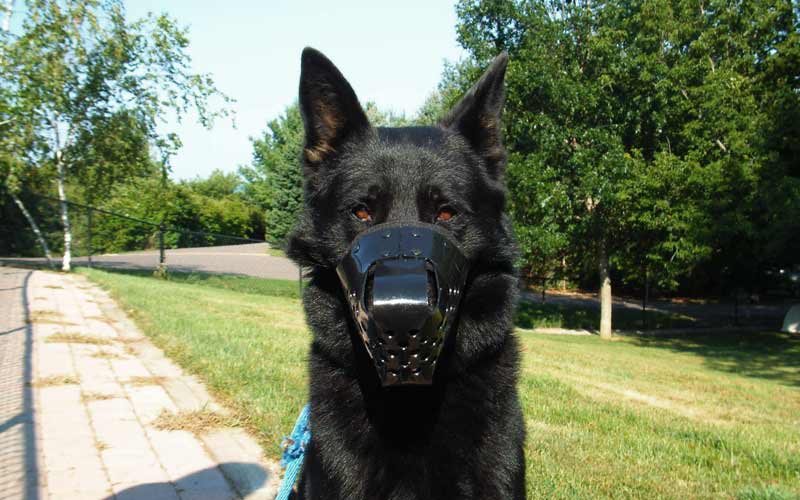
I have used muzzles to train dogs since 1974 and sold them for 20 years. This article is an overview of the different kinds of muzzles and how they work.
I need to start this article with a warning: if you think you need a muzzle, you obviously are concerned about aggression problems with your dog. Novice trainers need to work under the supervision of a professional if they have aggression problems.
Most people are only familiar with the cloth fabric muzzles used at most vet's offices. In Europe, there are cities where certain breeds of dogs (pit bulls, Rottweilers, etc.) are required by law to wear a muzzle when they go out in public.
There are many different types and uses for muzzles. I'll overview that in this article. I'll also go through muzzles that shouldn't be used with dogs.
Types of Muzzles You Can Use
Police Training Muzzles
There are a number of companies that make muzzles sold to police departments to be used in bite development. Because of the nature of the work (putting a dog on a man with no protective clothing), I only recommend one or two of these muzzles.
Leerburg's Heavy Duty Police Fighting Muzzle
The Heavy-Duty Police Fighting Muzzle is the most expensive muzzle on the market. When properly fit, it is also one of the safest muzzles on the market. This is the muzzle we recommend for Police K9 or Military K9 muzzle fighting. Leerburg has a very detailed online course on teaching Muzzle Fighting for Police Service Dogs. If you are a K9 officer, we strongly recommend that course.
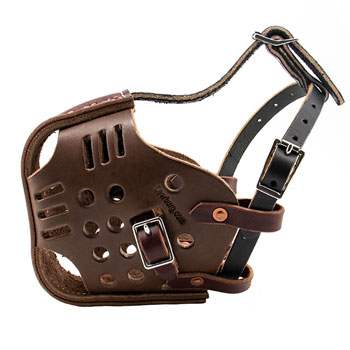
Leerburg's Leather Police Agitation Muzzle
The Leather Police Agitation Muzzle is another muzzle we would recommend for Police K9 or Military K9 muzzle fighting. There is inside nose padding for a comfortable fit, adjustable straps, and a leather covered steel bar in the front for extra protection.
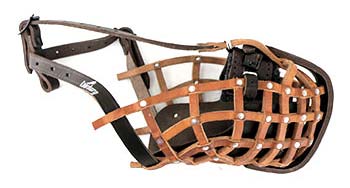
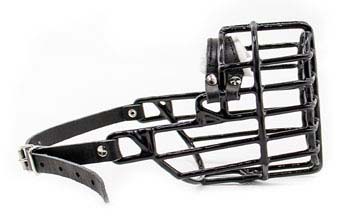
Wire Basket Muzzles
I like the wire basket muzzles for pet owners. The airflow is excellent and the dogs can drink with the muzzle on. These muzzles are secure and the dogs seem to have less problems with these muzzles than with the enclosed muzzle.
If I have a dog that has to breed (where he breathes hard) or when he has to wear the muzzle for a long period of time, I would choose this muzzle. They come in a variety of different styles and sizes to fit different dogs' muzzles.
I don't use or recommend these muzzles for protection training. For one thing, they are going to hurt you if you are hit hard with them.
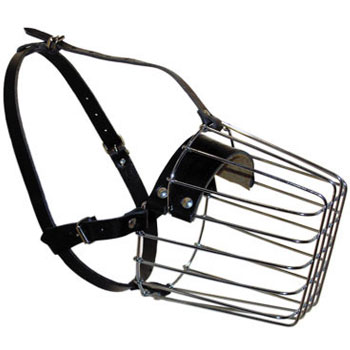
Plastic Basket Muzzles
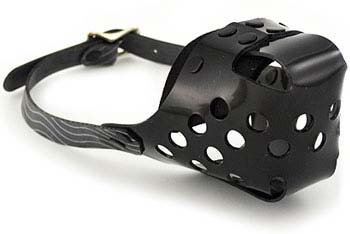
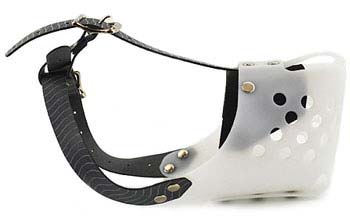
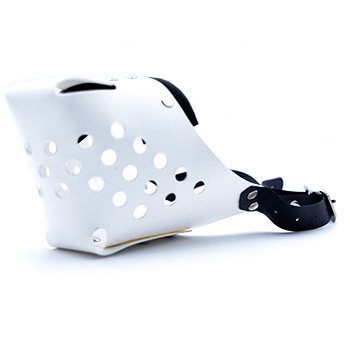
The plastic JAFCO muzzles that we sell are a good inexpensive option for people who only need to use a muzzle every now and then. If a dog has to go to a groomer, the vet, or a walk in the park, this is a good choice.
We sell a lot of these muzzles and they hold up well and we don't get complaints on their construction or quality.
Cloth Muzzles
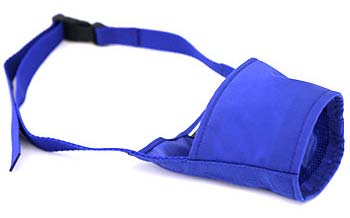
Cloth muzzles are good for a vet's office or to carry in a vehicle, backpack, or emergency medical kit. They should not be used for training.
Cloth muzzles restrict a dog's ability to pant and it's not recommended to leave them on while the animal is unattended. If it's hot out or the dog is stressed in a warm environment that dog could over heat and possibly die. So these fabric muzzles should only be used while the dog is being supervised by the owner.
Cloth muzzles are inexpensive and can be used while grooming or nail clipping. I tell people not to think that a dog cannot bite you through these fabric muzzles. They can still pinch you and it will hurt.
Types of Muzzles You Shouldn't Use
Head Halters
Misguided behaviorists and inexperienced dog trainers push head halters as a muzzle with clients. I am not a fan of head halters. The only possible use that I can think of would be to have it be a middle step between a muzzle and no muzzle. Frankly, if there is a question about needing a muzzle, the dog should have an actual muzzle—not a head halter as a substitute.
A trainer that tells the novice dog owner that a head halter will keep the dog's mouth closed when pressure is applied has not worked with enough dominant and aggressive dogs.
Soft Leather Muzzles
This type of muzzle uses a thinner leather that is soft and pliable. This isn't secure and can result in a dog bite.
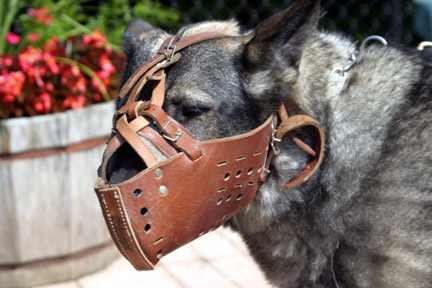
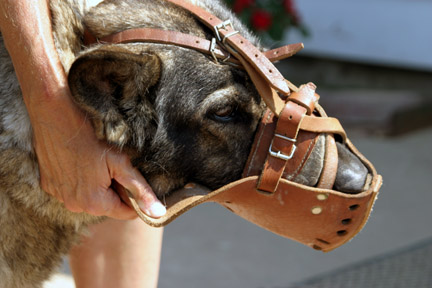
Thick Leather Muzzle with Restricted Airflow
While these types of muzzles use stiff and heavy leather, there is only one small hole located at the snout. If a dog is training with you, it will need more airflow than this. These types of muzzles are also too heavy.
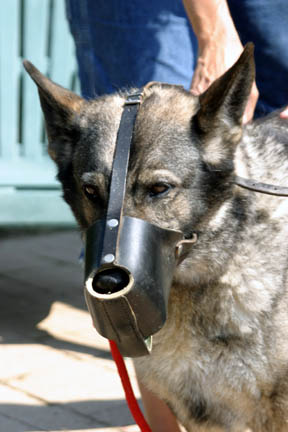
There are KNPV style leather muzzles that are made in Europe and sold in this country. They are leather muzzles like you see in the photo above with a strap behind the ears. These muzzles are designed to be worn during a portion of the dog competition. In my opinion, they serve one purpose and that is to satisfy the requirement of the dog having a muzzle on. In an ordinary situation, these muzzles come off too easily.
Training the Dog to Wear the Muzzle
Dogs must learn to accept and wear a muzzle. No dog likes a muzzle the first few times it's put on. They all try and get it off. But through training, they can learn to accept the muzzle and, in some cases, even come to like putting them on.
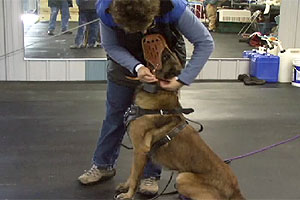
To get your dog used to a muzzle, we must first show our dog that the muzzle is a good thing. We do this by putting a treat in the muzzle and letting the dog take it out. Note that we aren't even trying to fasten the straps yet. When the dog takes the food, we “mark” the moment with a YES. If you are unfamiliar with markers, you can read the article I wrote on The Power of Training Dogs with Markers.
This should be done 4 or 5 times a day for a week. Our goal is to desensitize the dog from having its nose in the muzzle. When we see that it is eagerly looking to stick his nose in the muzzle, this is where we will fasten the straps.
The muzzle is never taken off until the dog settles down and accepts it. If we take it off while it is acting inappropriately, we are reinforcing that bad behavior. We only want to take it off when the dog has calmed down and accepted it. As soon as we take it off, we mark with YES and reward the dog with a treat. Doing so will help take the dog's attention off the muzzle.
Regardless of why you are giving the dog a muzzle, you must get the dog used to the muzzle before training him with a muzzle. For example, if you want to use the muzzle to control your dog in the presence of other dogs, be sure that the dog can at least wear the muzzle in the house and on walks without trying to get it off. If your dog can't accept the muzzle, it is highly implausible to expect him to keep it on.
If you need more information on conditioning your dog to a muzzle, I suggest you enroll in my in-depth online course. It is a self-study course with several video demonstrations that will teach how to get your dog used to a muzzle.
How to Test the Muzzle's Fit
A muzzle is only going to accomplish its task (which is protection) if it stays on. So every time you put your muzzle on, you need to test the fit to make sure its not going come off. I recommend you watch my video on muzzle sizing to ensure the fit of your dog's muzzle is correct.
What are Muzzles Used For?
The primary use of a muzzle should be for safety and testing your training. If a dog has gone through re-training for dog aggression, we can use the muzzle to see if the dog will now take direction from us while in the presence of the things he gets aggressive with whether it be another dog, the handler, etc.
Here are a few other things you can use a muzzle for:
- To protect helpers who train police service dogs or personal protection dogs.
- To protect people and other dogs from overly aggressive dogs.
- To stop dogs from chewing when the owner is gone.
- They can be effective to test the training when a dog is added to a home with other dogs or cats.
- To use at the vet or grooming salon.
- To wear when there is a risk of aggression towards visitors or when the dog has growled near children.
When Muzzles Are Not the Answser
I get a lot of emails asking what muzzles to buy for dogs who live together that are constantly fighting. I am not a fan of muzzles being used in this type of scenario. Dog crates and serious obedience training are the solution to this problem.
Muzzles only mask a dog's aggression problems, they don't cure them. So while a muzzle is going to protect one dog from biting another dog, it is not going to solve the aggression issue. If control isn't addressed, the problem will remain.
When it comes to dogs that have aggression problems with children, a muzzle is only part of the solution. No aggressive dog should ever be left with a child even if the dog has a muzzle on. One only needs to be hit by a dog wearing a muzzle to realize how much damage can be done with the dog slamming you with its head. Police helpers can testify to this. A dog with a muzzle can still knock your teeth out or give you a black eye or worse. So do not for one minute think that a muzzle is the only solution to aggression. Supervision, training, control of the environment and a leash are the only sure ways to control aggression.
If you are dealing with a dominant or aggressive dog, I highly suggest you go through these programs: Dealing With the Dominant Dog, Establishing Pack Structure with the Family Pet, and Basic Dog Obedience.


Most Popular Articles
-
01
-
02
-
03
-
04
-
05
Related Products
-
 $38.00 - $46.20



Ask Leerburg.