



National Dog Bite Prevention Week


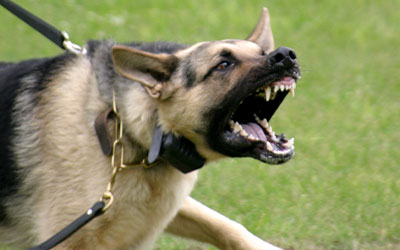
Introduction
National Dog Bite Prevention Week® — What It Is and Why It Matters
National Dog Bite Prevention Week® is observed each year during the third full week of April. In 2026, that's April 12–18. The week is a coordinated public awareness effort — supported by veterinary associations, insurance industry groups, and dog training professionals — aimed at reducing the number of dog bites that happen every year in the United States.
The numbers behind this week are sobering. According to the U.S. Centers for Disease Control and Prevention (CDC), approximately 4.5 million people are bitten by dogs in the United States each year.1 Of those, an estimated 800,000 to 885,000 require medical attention.1,2 Children are disproportionately represented among the most seriously injured — accounting for roughly half of all bite victims and the majority of bite-related fatalities1 — and most bites are not from stray dogs or unknown animals. Research consistently shows that 77% of biting dogs belong to the victim's family or a friend,3 and 80% of incidents occur at home.3
That last fact is the most important one to carry through this article. Dog bites are not random events. They follow patterns. They are preceded by warning signs. They can, in the vast majority of cases, be prevented — not by eliminating dogs from our lives, but by understanding them better.
This article draws on the training philosophy and research developed by Ed Frawley and the team at Leerburg over more than 60 years of professional dog training experience. It is a practical guide for dog owners who want to understand aggression, recognize warning signs early, and build a safer life with their dog.
A note before we begin: Dog aggression is one of the most complex subjects in the training world. A week of social media posts — or even a comprehensive article like this one — cannot cover everything you need to know. If your dog is showing signs of aggression, the resources at leerburg.com offer the most thorough free library of aggression content available, backed by decades of real-world experience. Use it.
The Scope of the Problem
Why Dog Bite Prevention Deserves a Full Week of Attention
Dog bites are among the most common and most preventable injuries in the United States. The CDC estimates 4.5 million bites occur annually, with approximately 800,000 to 885,000 serious enough to require medical care.1,2 About half of all dog bite victims are children,1 and children between the ages of 1 and 4 represent the single largest group of fatality victims.4 Their injuries tend to be the most severe — often to the face, head, and neck — because of their size and their tendency to approach dogs at eye level.
One of the most striking facts in the bite prevention literature: 77% of biting dogs belong to the victim's family or a friend,3 and 80% of incidents happen in the home, not in public spaces.3 This is not a problem of stray dogs or irresponsible strangers. It is a problem that plays out in living rooms, backyards, and family kitchens — with dogs that are loved, that are kept as pets, and whose warning signs were missed or minimized until something went wrong.
The insurance industry reports billions of dollars in dog bite claims annually. But no statistic captures the real cost: a child's face, a neighbor's hand, a family dog that has to be surrendered or euthanized because an escalating problem was never addressed.
Dog bite prevention is not about fear of dogs. It is about understanding them well enough to live with them safely — and taking responsibility for that understanding seriously.
Puppy Biting vs. Real Aggression
The Most Common Misconception New Dog Owners Have
One of the most important distinctions in dog behavior — and one that trips up new owners constantly — is the difference between puppy biting and actual aggression. They can look similar. They can feel alarming. But they are fundamentally different in origin, meaning, and how to respond to them.
Puppy biting is play drive. When puppies play with their littermates, they use their mouths — they bite, chase, and wrestle. When a puppy comes into a human home, they play with their new human family the same way they played with their littermates. They don't know any differently. The biting is not about aggression or dominance. It's about the natural games of pack behavior — and it is the human family's job to redirect it, not panic about it.
As Ed Frawley writes at Leerburg: "When a pup chews on your hands or your pant leg — even if it's verbalized by growling — it's only displaying play and prey drive. Puppies play with their littermates by using their mouth. They bite each other, they jump on each other, and they growl at each other."
True handler aggression in a dog under 10 months of age is extremely rare. In 35 years of breeding working-line German Shepherds, Ed Frawley cannot recall a single case. What owners are almost always dealing with in a young puppy is misdirected drive — a lot of energy and instinct that hasn't been given the right outlet yet.
The solution is not punishment. It is redirection: give the puppy a high-value food treat or toy, interrupt the biting, and teach the puppy what to do with that energy instead.
Important: Puppy biting is not the same as aggression — but it still needs to be addressed promptly. A small dog allowed to bite as a puppy because it seems harmless or cute will bite as an adult. The jaws get stronger. The behavior becomes entrenched. Don't let size fool you into ignoring it.
Warning Signs Every Owner Should Know
Aggression Doesn't Appear Overnight — But Many Owners Miss the Signs
An overly aggressive dog does not simply become a monster one day. Throughout its life, it has displayed warning signs that things are not normal. The tragedy is that many of those signs are missed — written off as personality quirks, breed traits, or temporary phases — until something serious happens.
Recognizing the progression is the first step in prevention. Here are the warning signs that warrant attention, not dismissal:
-
Growling around food, toys, or resting spots Dogs that growl when approached near their bowl, when someone reaches for a toy, or when disturbed on the furniture are displaying resource guarding. This is not cute or funny. It is an early and reliable warning sign of a dog that does not accept the owner's position as pack leader.
-
Hard staring or stiffening when approached A dog that freezes, stiffens, and fixes a hard stare on a person or another animal is communicating a threat. This is body language that precedes a bite. It should never be ignored or challenged without professional guidance.
-
Growling or snapping at children or strangers Dogs that are uncomfortable around children, guests, or unfamiliar people — and communicate that discomfort through growling or snapping — require intervention immediately. This is not a dog that is "just shy." It is a dog communicating its threshold.
-
Reactivity on leash toward other dogs A dog that lunges, barks, and explodes at other dogs while on leash is over threshold and not under control. Left unaddressed, leash reactivity frequently escalates. It is also a common injury risk — to the handler, to other dogs, and to bystanders.
-
Escalating behavior over time The most important pattern to watch: is the behavior getting worse? A dog that growled once becomes a dog that growls regularly becomes a dog that snaps becomes a dog that bites. Aggression that is not addressed tends not to plateau. It escalates.
A critical distinction: Very few dogs are truly dominant. The vast majority of owners who believe they have a dominant dog actually have a dog that has never learned pack structure rules. A dog without rules bites just as hard and does just as much damage as a dominant dog — but it is far easier to rehabilitate. Before assuming the worst, assess whether your dog simply lacks structure and consistent leadership.
What the research says about breed and aggression: A landmark 2008 University of Pennsylvania study — Duffy, Hsu & Serpell, published in Applied Animal Behaviour Science — surveyed owners of more than 30 breeds using a validated behavioral assessment tool (C-BARQ). The study found significant breed differences in aggression, but critically noted that existing bite statistics are misleading because larger breeds cause more visible injury, skewing perception of which dogs are "dangerous." Dachshunds and Chihuahuas ranked among the highest for aggression toward strangers and owners — breeds rarely associated with danger in the public mind. The finding reinforces a core principle of this article: the warning signs of aggression are not breed-specific. They show up in every breed, at every size, and they deserve the same response regardless of how small or familiar the dog is.6
Muzzle Training: Every Dog, Not Just Aggressive Dogs
The Tool Most Owners Overlook Until It's Too Late
A muzzle is not a punishment. It is not a label. It is not an admission that your dog is dangerous. It is a tool — and at Leerburg, every dog is conditioned to wear one. Not because every dog is aggressive, but because every dog will at some point in its life face a situation where a muzzle could make the difference between safety and a serious injury.
Veterinary visits. Grooming. Injury and pain. Socialization work with a dog that has shown reactivity. Recovery from surgery. Emergency situations where even a friendly dog might bite out of fear or pain. These moments arrive without warning. A dog that has never been conditioned to a muzzle becomes a dog that is extremely difficult to handle safely when those moments come.
The time to introduce a muzzle is before you need it. When a dog learns to associate a muzzle with feeding, walks, and play — before any stressful event — wearing one becomes a neutral or even positive experience. Start early, go slowly, use high-value food, and build the association across many repetitions.
Three conditioning methods work well:
- 1Free shaping — allow the dog to offer behaviors that gradually lead to wearing the muzzle, marking and rewarding each step toward the final behavior.
- 2Luring — use high-value food placed inside or near the muzzle to encourage the dog to put their nose in voluntarily, building duration incrementally.
- 3Compulsion — a last resort for dogs with significant prior negative experiences with muzzles, and best undertaken with professional guidance.
Most dogs — including those with a history of negative experiences — respond best to reward-based conditioning. The process takes patience, but the result is a dog that accepts the muzzle comfortably and a handler who has a critical safety tool available whenever they need it.
80 videos covering every aspect of muzzle conditioning — from choosing the right style and fit, to all three conditioning methods, to walking comfortably in a muzzle. Taught by Ed Frawley. Includes a muzzle with enrollment.
Enroll in the Course »Managing an Aggressive Dog Safely
Management Is Not Failure — It Is Responsible Ownership
This is the part of dog aggression that nobody wants to hear: there are no secret training methods that will change most aggressive dogs. What there are — and what Leerburg's entire course on dominant and aggressive dogs is built around — are ways to manage and safely live with them, if owners are willing to do the work.
Management means controlling the dog's environment so that biting opportunities are eliminated. It is not a substitute for training, but for many owners of truly aggressive dogs, it is the most important piece of the solution — and the piece most often skipped.
Core management principles for dogs with aggression:
- 1Crates and ex-pens. An aggressive dog should never have unsupervised freedom in the home when guests are present. A crate is not punishment — it is a management tool that prevents incidents before they happen.
- 2Leashes indoors. Keeping an aggressive dog on a leash in the home during high-risk situations gives the handler immediate control. It also prevents the dog from rehearsing aggressive behavior unsupervised.
- 3No dog parks. Ever. Dog parks are one of the most dangerous environments for a dog with any history of aggression or reactivity. The combination of unknown dogs, no strong human pack leader, and high arousal creates ideal conditions for a fight.
- 4Mealtime separation. A dominant dog should not be in the kitchen or dining room while the family eats. The pack leader eats first — this is a pack structure rule, and allowing a dominant dog to challenge it reinforces the wrong hierarchy.
- 5No unsupervised time with unknown dogs. A dog aggressive dog should never be allowed to interact with unknown dogs. Ever. No exceptions for "friendly" dogs or controlled introductions without a professional present.
- 6Muzzle for high-risk situations. If the dog must be in a situation that carries risk — the vet, a groomer, a new environment — a properly conditioned muzzle is non-negotiable.
Management is not giving up on your dog. It is protecting your dog, your family, and your community while you do the work of training. A dog that is well-managed is a dog that doesn't bite. That outcome is worth every inconvenience of the management routine.
Read: My Dog Is Dog Aggressive — What Can I Do? » Read: Dog Parks — Why They Are a Bad Idea »Counter Conditioning Without Going Over Threshold
The Most Important Rule in Working with a Reactive Dog
Counter conditioning is one of the most powerful tools available for reactive and aggressive dogs — but it only works under one condition: the dog must be below threshold when you use it. A dog that is already "fired up," lunging, barking, or fixated on a trigger cannot learn. The brain is in survival mode. No amount of food or praise will reach them in that state.
This is the mistake most owners make. They see a trigger, they try to redirect with treats, and the dog is already too far gone to respond. The session becomes a reinforcement of the reactive state rather than a building of a new association. And the next session starts at an even higher baseline of arousal.
The Threshold Rule
Exposure must happen at a distance — or intensity — where the dog notices the trigger but is not reacting to it. The dog may look. They may stiffen slightly. But they can still take food, still respond to their name, still make eye contact with the handler. That is the working zone. That is where learning happens.
The progression looks like this:
-
Identify the trigger and the threshold distance At what distance can your dog notice the trigger without reacting? Start there — or further back. Distance is your most important variable. It is always better to start too far away than too close.
-
Mark and reward calm observation When the dog notices the trigger but does not react — mark the moment (with a clicker or verbal marker) and deliver a high-value food reward. You are building the association: trigger appears ? good things happen. Do this repeatedly at the same distance until the dog is reliably calm and orienting to you rather than fixating on the trigger.
-
Decrease distance gradually — over many sessions Only move closer once the dog is fully relaxed at the current distance across multiple sessions. If the dog reacts, you have moved too close, too fast. Step back. There is no failure in going slowly. The only failure is pushing too hard and sensitizing the dog further.
-
Use a muzzle to expand your working zone A properly conditioned muzzle allows you to work at closer distances with a margin of safety — for the dog, for other dogs, and for the handler. It removes the consequences of a momentary lapse in threshold management and gives you room to train without catastrophic risk.
-
End every session before the dog reacts This is non-negotiable. End on a calm note. A dog that ends a session in a reactive state has been pushed too far — and has practiced the exact behavior you are trying to extinguish. Quit early. Quit calm. Come back tomorrow.
Critical caution — avoid sensitization: Every time a dog is pushed into full reaction, the fear and aggression can deepen. Repeated over-threshold exposure does not build resilience. It causes sensitization — the dog becomes more reactive, not less, and the triggers that set them off expand to new stimuli. Slow progress is real progress. Fast progress that breaks the dog is not progress at all.
A 10-module course designed specifically for dog owners whose dogs lunge, bark, and pull at other dogs or people on leash. Tyler Muto takes a systematic, beginner-friendly approach — starting with foundation obedience and management, then building through body language theory, threshold work, and progressive tool introduction. Suitable for owners with no prior experience with Muto's training system.
Enroll in the Course »The Role of Obedience Training
12% of the Solution — But a 12% You Cannot Skip
Obedience training is not the solution to dog aggression. This is a point Ed Frawley makes repeatedly and emphatically throughout his work on aggression — and it is one of the most important things an owner of an aggressive dog can internalize. If you take your reactive dog to a group obedience class and come home expecting the problem to be solved, you will be disappointed. And potentially in danger.
The solution to dog aggression, broken down honestly, looks something like this:
| Component | Approximate Weight | What it means |
|---|---|---|
| Pack Structure | 30% | The dog must accept the owner as pack leader before any other work has traction |
| Management | 25% | Crates, leashes, routines, no dog parks — controlling the environment so biting opportunities are eliminated |
| Counter Conditioning | 18% | Systematic, below-threshold work to build new emotional associations with triggers over time |
| Obedience Training | 12% | The communication system — necessary but not sufficient; a dog compliant in class can still be dominant at home |
| Genetics & Temperament | 10% | Some dogs cannot be rehabilitated regardless of training — poor breeding sets a ceiling on what's possible |
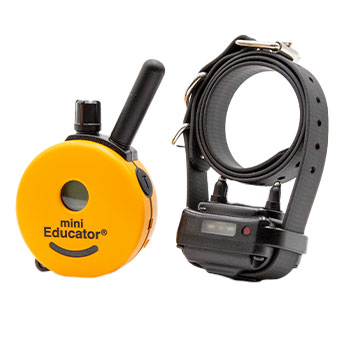
| Equipment | 5% | Muzzles, dominant dog collars, remote collars — tools that enable the other work, not substitutes for it |
A dog that has a solid obedience foundation — that responds reliably to a recall, that will sit and down and wait on command, that understands and accepts corrections — is a dog you can work with. It is a dog you can manage in the real world. Obedience builds the communication system.
Obedience training for a dog with aggression issues should not be purely motivational. Motivation is used — but it must be paired with the expectation that commands will be followed, and appropriate consequences when they are not. A dog that only works when it feels like it is not a dog under control. Especially not in a high-arousal, aggressive situation.
A dog that doesn't see you as a true pack leader will love you and still not respect you. And the vast majority of so-called professional trainers don't have real experience with aggressive dogs — it can take more than a decade to be truly qualified.
Before working with any trainer on aggression, ask about their actual experience. Not just their credentials.
8 hours of structured obedience instruction covering the full communication system used at Leerburg — marker training, corrections, leash work, and the foundational relationship between dog and handler that all further training depends on.
Enroll in the Course »Dogs and Children: A Special Responsibility
The Highest-Risk Combination — and How to Make It Safe
Children are the most frequent victims of serious dog bites. About half of all bite victims are children,1 and children ages 1–4 represent the largest single group of fatality victims — accounting for roughly 30% of all dog bite deaths in recent CDC data.4 They are bitten most often on the face, head, and neck — 77% of the time when the victim is under age 10.5 They are frequently bitten by dogs they know, in homes they are familiar with. And they are frequently bitten because no adult in the room understood what the dog was communicating in the moments before the bite.
This is not a reason to keep children away from dogs. It is a reason to take the combination of children and dogs seriously — with appropriate supervision, appropriate rules, and appropriate education for both the child and the dog.
A practical, 4-module course taught by Carrie Wooddell — dog trainer, breeder, and mother of two — designed specifically for families navigating puppyhood with young children in the house. Covers puppy-proofing, correcting biting and mouthing around kids, introducing a new puppy to household dogs, socialization, and crate training — all in real-life family environments, not a quiet training studio.
Enroll in the Course »Rules for Children Around Dogs
- 1Always ask permission before approaching or petting a dog you don't know — and wait for the owner to confirm the dog is comfortable with contact.
- 2Never approach a dog that is eating, sleeping, or caring for puppies.
- 3Never tease, chase, or startle a dog — even one you know well.
- 4Never run past a dog. Running triggers prey drive, and even a friendly dog can react to a running child in a way that causes injury.
- 5If a dog approaches and you feel scared: stand still, arms at sides, avoid eye contact. Do not run. Do not scream. Be a tree.
Rules for Dog Owners with Children in the Home
- 1Supervision is not optional. A dog and a child should never be left alone together unsupervised — regardless of the dog's history.
- 2A dog that growls at children has communicated something important. Do not correct the growl in isolation — address what is driving it.
- 3Dogs with a history of any aggression should be crated or separated when children are present. Management is not paranoia — it is responsibility.
- 4Do not allow mouthy puppies around very small children. The puppy is playing — but the child does not experience it that way, and incidents at this stage shape both the child's relationship with dogs and the dog's behavior going forward.
Finding Qualified Help
What to Look For — and What to Watch Out For
If your dog is showing signs of aggression, finding a qualified trainer to help you is an important step. But this is a case where qualifications matter enormously — and where the gap between a good trainer and an unqualified one can have serious consequences.
The hard truth: the vast majority of professional dog trainers are not qualified to offer advice on dog aggression. Obedience training can be learned in a couple of years. Genuine expertise in aggression takes far longer — Ed Frawley estimates it can take more than a decade of hands-on experience before a trainer is truly equipped to handle serious aggression cases safely and effectively.
When evaluating a trainer to help with an aggressive dog, ask:
- 1How many aggressive dogs have you worked with, and over how many years? Look for decades of hands-on experience, not certificates.
- 2What is your approach to serious aggression? Be wary of any trainer who promises a fix — or who uses only positive reinforcement without acknowledging the role of corrections and pack structure in working with truly dominant dogs.
- 3Have you worked with cases as serious as mine? A trainer with experience in sport dogs or police K9 work is not automatically qualified to work with a handler-aggressive family dog. The contexts are different. Ask specifically.
- 4What do you expect from me? A qualified trainer will make clear that the owner's work — consistency, management, follow-through — is a large part of the outcome. Be skeptical of anyone who takes your dog away and returns it "fixed."
On realistic expectations: There are no secret training methods that will change most aggressive dogs. What there are are ways to manage and safely live with them — if the owner is willing to do the work. A good trainer will be honest with you about this. One who promises a complete behavior transformation without caveats is one to approach with caution.
About Ed Frawley — Leerburg
Ed Frawley has been training dogs seriously since the 1960s. He was a police K9 handler for 10 years, bred working-line German Shepherds and Belgian Malinois for over 35 years, and has produced more than 190 full-length training videos and 95 online courses over the course of his career. His course on Dealing with Dominant and Aggressive Dogs — released in 2023 with nearly 200 videos — represents over 60 years of experience distilled into the most comprehensive resource on aggression he has ever produced.
Enroll: Dealing with Reactive, Aggressive & Dominant Dogs »Further Reading & Resources
Everything You Need — In One Place
One week is not enough. Dog bite prevention is a year-round practice — built into how you raise your puppy, how you manage your adult dog, how you supervise interactions between dogs and children, and how seriously you take the early warning signs that too many owners miss until something goes wrong.
The following resources from Leerburg represent the most thorough free and paid library of aggression content available. Use them.
| Resource | Type | Best For |
|---|---|---|
| Training Puppies Not to Bite | Free Article | New puppy owners, mouthing and play biting |
| Dealing with the Dominant Dog | Free Article | Understanding pack structure and dominance |
| Dealing with the Aggressive Dog | Free Article | Overview of aggression types and causes |
| My Dog Is Dog Aggressive: What Can I Do? | Free Article | Dog-to-dog aggression and management |
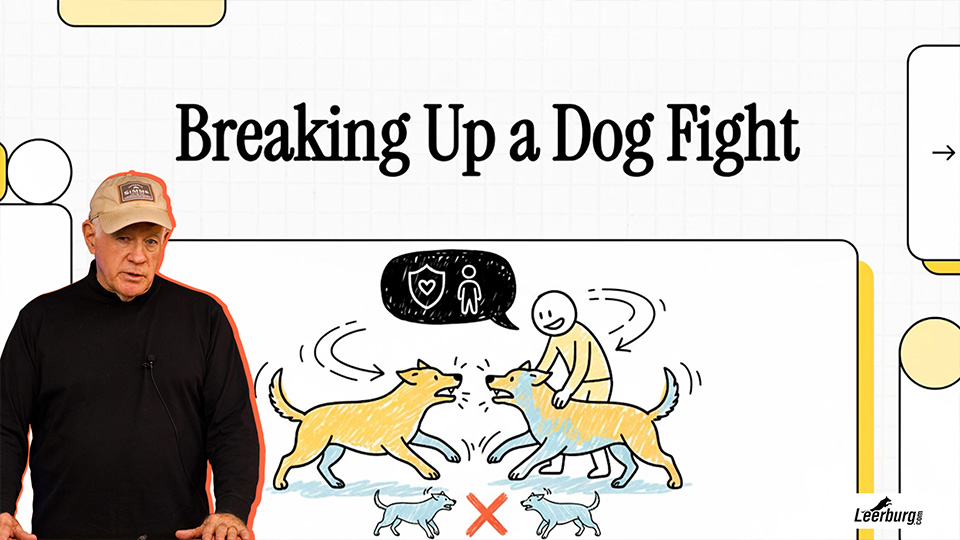
| How to Break Up a Dog Fight Without Getting Hurt | Free Article + Podcast | Emergency preparedness, multi-dog households |
| Dog Parks: Why They Are a Bad Idea | Free Article | Owners of reactive or dominant dogs |
| Preventing Dog Bites in Children | Free Article | Families with children and dogs |
| Conditioning Your Dog to a Muzzle | Online Course | All dog owners — start before you need it |
| Establishing Pack Structure with the Family Pet | Online Course | Dogs with no rules, early prevention |
| Basic Dog Obedience | Online Course | Foundation for all further training |
| Raising a Puppy in a Household with Kids | Online Course | Families with young children and a new puppy |
| Leash Reactivity with Tyler Muto | Online Course | Dogs reactive to other dogs on leash |
| Dealing with Reactive, Aggressive & Dominant Dogs | Online Course — 200 videos | Serious aggression — the most comprehensive resource available |
For questions specific to your dog's situation, the Ask Leerburg Q&A on leerburg.com is answered almost daily by a professional trainer with decades of experience in behavior, breeding, and working dogs. It is one of the most valuable and underused resources on the site.
Visit leerburg.com — Free Articles, Q&As, and Courses »Sources & References
- American Veterinary Medical Association (AVMA). Why Breed-Specific Legislation Is Not the Answer. Citing CDC data: "More than 4.5 million people in the United States are bitten by dogs each year, and more than 800,000 receive medical attention for dog bites, with at least half of them being children." avma.org
- Kessler, M.R., et al. (2023). "Clinical and epidemiologic features of persons accessing emergency departments for dog and cat bite injuries in California (2005–2019)." Journal of the American Veterinary Medical Association, 261(5). "Of the approximately 4.5 million people bitten by dogs each year, 885,000 (20%) seek medical care." avmajournals.avma.org
- Multiple public health surveillance studies, as cited by Canine Journal and CDC-affiliated researchers: 77% of biting dogs belong to the victim's family or a friend; 80% of dog bites occur in the home or on private property. See also: Sacks JJ, Kresnow M. "Dog bites: still a problem?" Injury Prevention 2008;14(5):296–301. caninejournal.com
- Centers for Disease Control and Prevention (CDC). CDC Wonder Multiple Cause of Death Files. Data on dog bite-related fatalities by age group. Children ages 1–4 consistently represent the largest single group of fatal bite victims; children under 17 accounted for 56.7% of all fatalities in 2022. wonder.cdc.gov
- Firewall Times / multiple pediatric studies: "When a dog bite involves a child under the age of 10, facial injuries occur 77% of the time." Children under 12 account for nearly half of all emergency department visits for dog bites, with the highest incidence in the 5–9 age group. firewalltimes.com
- Duffy, D.L., Hsu, Y., & Serpell, J.A. (2008). Breed differences in canine aggression. Applied Animal Behaviour Science, 114(3–4), 441–460. doi: 10.1016/j.applanim.2008.04.006. University of Pennsylvania study of 30+ breeds using the validated C-BARQ instrument. Key finding: existing bite statistics overrepresent larger breeds due to injury severity bias; small breeds including Dachshunds and Chihuahuas ranked highest for owner- and stranger-directed aggression. sciencedirect.com · researchgate.net
Statistics on dog bites are drawn primarily from CDC surveillance data and AVMA research. Specific figures may vary slightly across sources depending on methodology and year of study. All figures cited reflect the most current reliable data available at time of publication.


Most Popular Articles
-
01
-
02
-
03
-
04
-
05
Related Products
-
 $65.00
 -
 $16.99
 -
$219.99 - $349.99
$199.99 - $309.99 -

$65.00$19.99



Ask Leerburg.